
Metal additive manufacturing (AM) systems generally utilize lasers with spot sizes that fall into a range of 80 micrometers (μm) to 100μm, although dynamic beam shaping may soon lead to spot sizes larger than 100µm being more and more commonplace. At the same time, meanwhile, there’s reason to think that smaller spot sizes could make a comeback, as well.
The Chinese AM OEM Farsoon, for one, is leveraging lasers with spot sizes of 40µm to enable what the company is calling its Fine Laser Spot metal AM process, which it announced last year. Leading up to RAPID + TCT 2026 in Boston, Farsoon gave an update on the process that illustrates just how quickly it’s scaling deployment of smaller spot sizes for industrial production.
In 2025, when the company originally announced the 40µm solution (paired with its FS200M medium-sized system), it was boasting .05 millimeter (mm) resolution: solid, but not earth-shattering. However, Farsoon is now announcing that its Fine Laser Spot method is accurate down to 0.03 mm, putting the company in a league with the most accurate industrial-scale printers on the market.
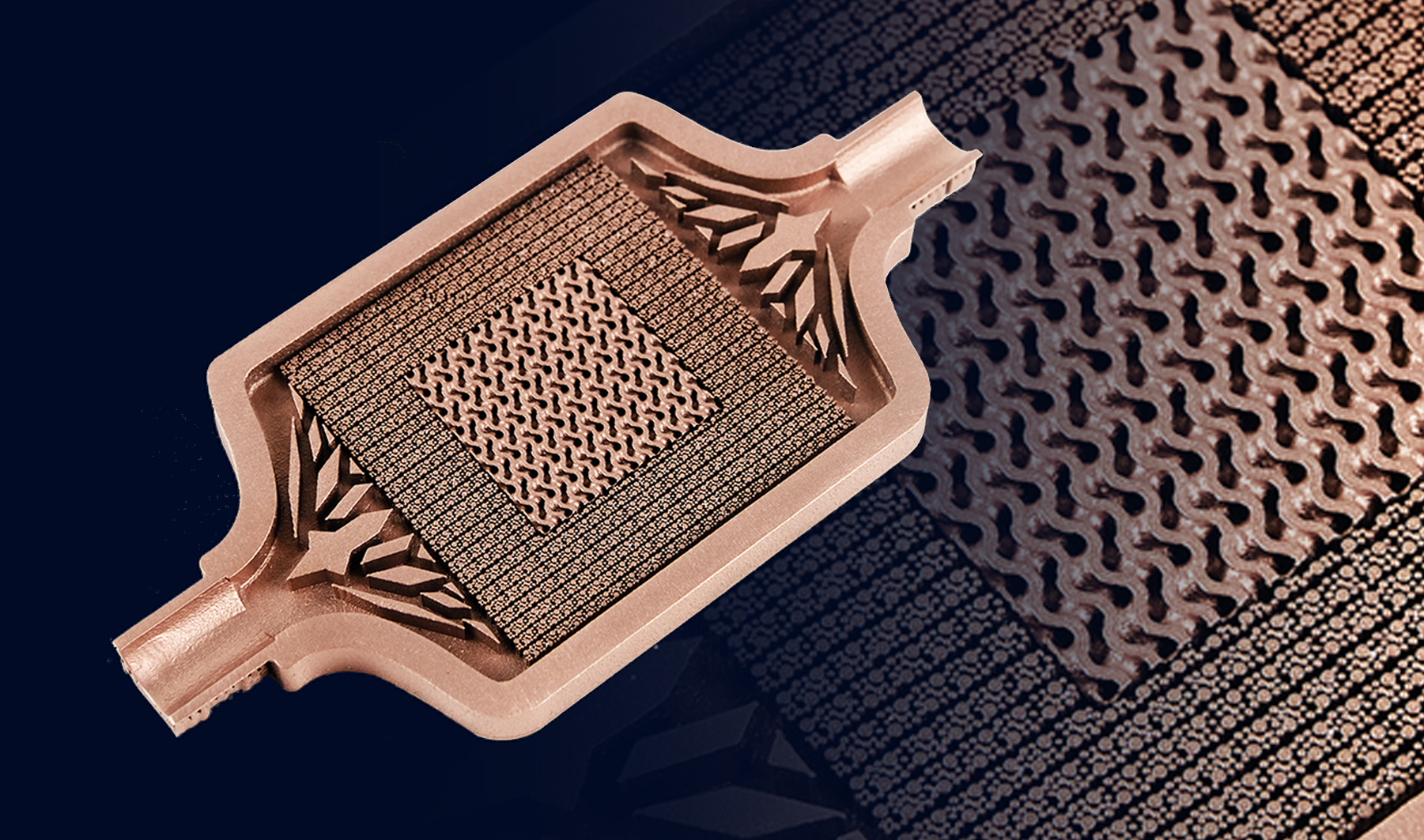
Of course, while that achievement is impressive, it doesn’t do much on its own. The key is that Farsoon has determined the perfect use-case category for the combination of accuracy and productivity that it’s delivering: thermal management applications for electronics components. Most notably, these include copper cold plates, perhaps the best opportunity for the 3D printing industry to capture the data center hardware market.
According to Farsoon, it’s able to consistently produce parts with layer thicknesses as low as 10µm, maximizing the company’s ability to capitalize on the power efficiency unlocked by geometrical complexity. Attendees of RAPID + TCT 2026 can learn more by visiting Farsoon’s booth, #1211.
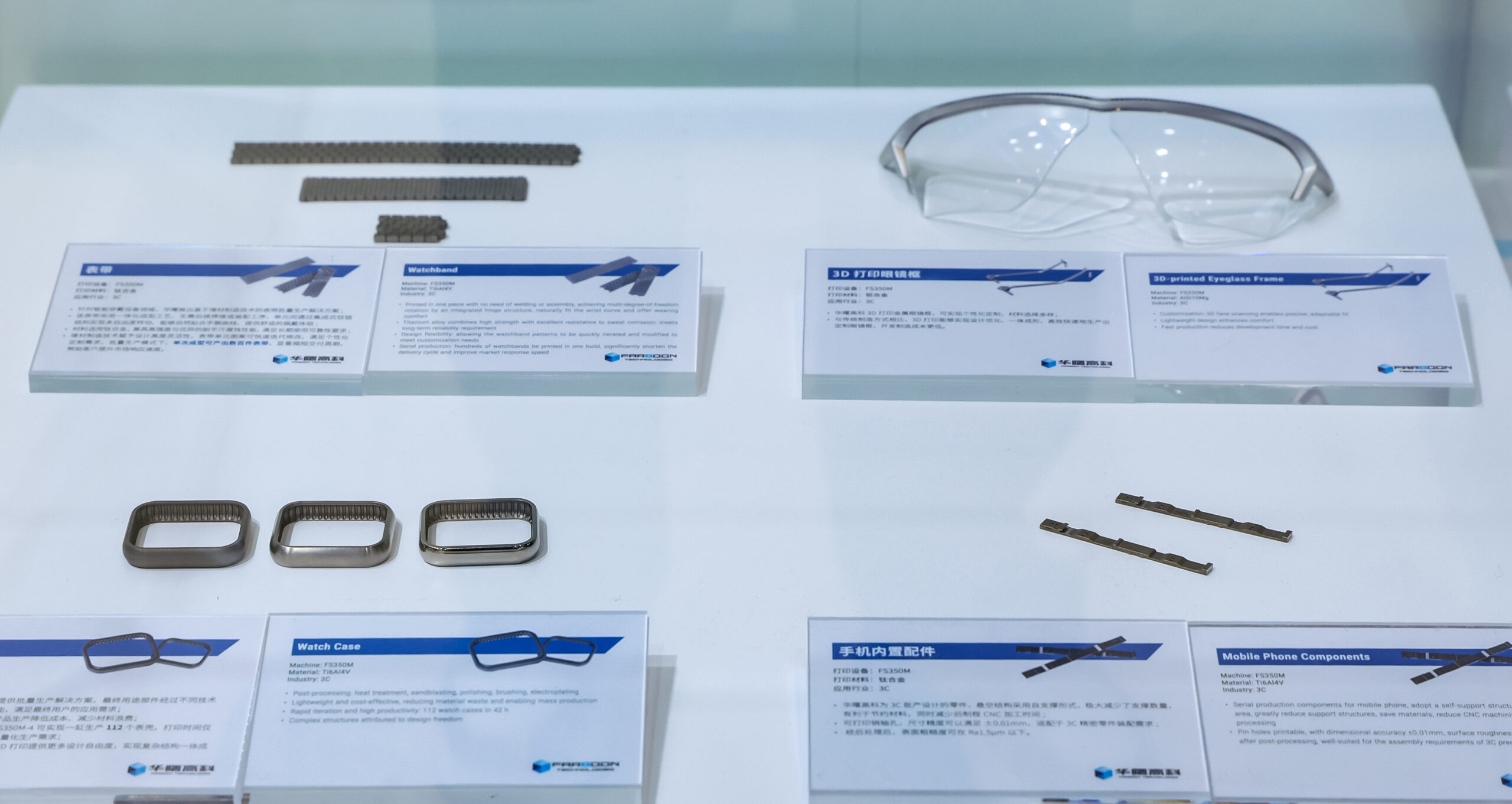
Farsoon’s announcement is of the same ilk as BLT’s work on the OPPO Find N6 hinge that I wrote about recently. This is perhaps an overgeneralization, but for years, the narrative surrounding the West vs. China was that the former delivered on precision and the latter delivered on price point.
Now, printers made by Chinese OEMs are being used to produce components at scale for the industries in which the highest premium is placed on component precision: computing and consumer electronics. What’s more, even with a sample size of just two companies — Farsoon and BLT — we see two highly differentiated ways of achieving the same result. Whereas BLT combines two different forms of 3D printing, one metal and one polymer, to make the OPPO hinge, Farsoon is combining the small spot size from the earliest years of metal AM with the throughput gains that have accumulated in all the years since.
In both cases, the result is the best of all worlds, supplying precision at mass output levels and minimal post-processing. The squaring of that circle has implications far beyond the 3D printing industry, as a race for data center supremacy amidst a world increasingly mired in geopolitical muck means that local production capabilities for thermal management solutions are more valuable than ever.
China always had an edge over the West when it comes to scale, and the West now appears to have given up its lead in the realm of technological sophistication, as well. Situations like this can ultimately become advantageous for the laggards, as it creates the pressure that can catalyze an urgent drive to turn weaknesses into strengths. But the first step for Western companies (and governments) is to admit that they have a problem.
Images courtesy of Farsoon
Subscribe to Our Email Newsletter
Stay up-to-date on all the latest news from the 3D printing industry and receive information and offers from third party vendors.
Upload your 3D Models and get them printed quickly and efficiently.