One of the many companies that attended last week’s Formnext 2026 was Israel-based XJet, which develops systems and materials for 3D printing complex metal and technical ceramic parts with its patented NanoParticle Jetting (NPJ) technology. At the trade show, the company showcased its expanded NPJ platform and growing materials portfolio.
XJet’s Print-Wash-Sinter workflow makes it possible to achieve fine features and complex internal geometries, with support removal pre-sintering. It’s important to remember that NPJ is material jetting, not binder jetting. The process jets liquid dispersions containing metal or ceramic nanoparticles, along with a separately jetted paired soluble support material.
At Formnext, XJet showed the different ways it’s expanding access to its technology, starting with on-demand manufacturing through XPARTS. The company’s new metal and ceramic 3D printing service supports application assessment, prototyping and validation, and small batches and serial production. Customers all around the world now have access to XJet’s 3D printing capabilities, engineering expertise, and full materials portfolio, even if they don’t own an XJet Carmel printer. With XPARTS, XJet will work directly with customers, whether they need help evaluating a complex application, or moving their design towards production.
XJet also continues to grow its materials portfolio, which includes stainless steel, technical ceramics, precious metals like Sterling Silver and gold alloys, and copper alloys. You can even work with the company on joint or customized material development if you have a need for something specific that’s tailored to your application but not in the XJet portfolio.
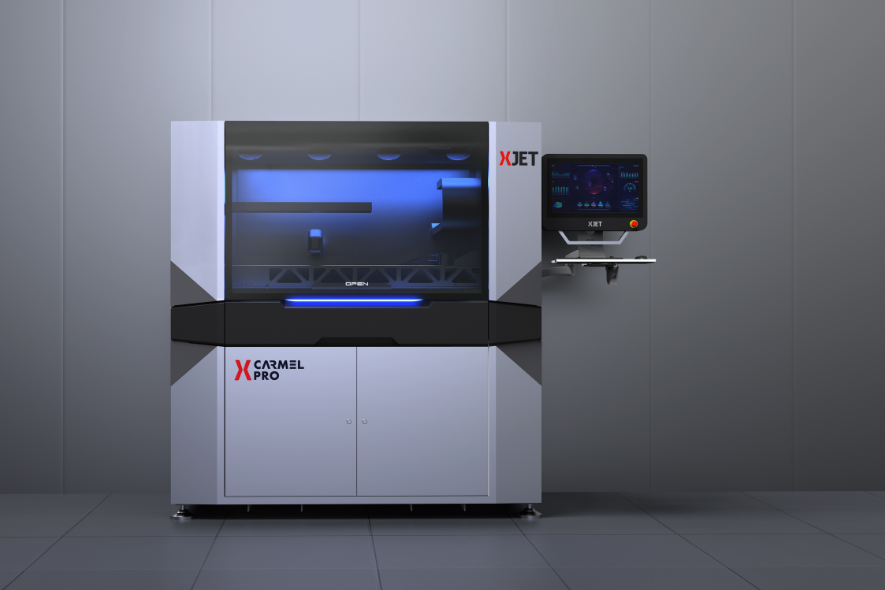
XJet Carmel Pro Compact System with four channel printhead.
The company introduced the compact Carmel Pro last year as a more accessible alternative to XJet’s other Carmel solutions for advanced metal and ceramic printing. It’s over 75% more lightweight than its predecessors, with a four-channel printhead configuration, and XJet also says the cost-of-ownership of the Carmel Pro is 60-70% lower than previous models. This makes it a good model for SMEs and research centers that couldn’t initially afford it.
At last week’s Formnext, XJet announced that it had secured its first customer orders for the Carmel Pro, as well as the Carmel ORO. The latter was introduced at T.Gold 2026, an international trade show for jewelry machinery, processing, and tools. This makes sense, as the new Carmel ORO was purpose-built for printing jewelry, and is compatible with all of XJet’s current precious metal materials. With its smaller footprint and multi-channel configuration, it sounds like a great choice for jewelry and watch manufacturers, boutique designers, and established brands.
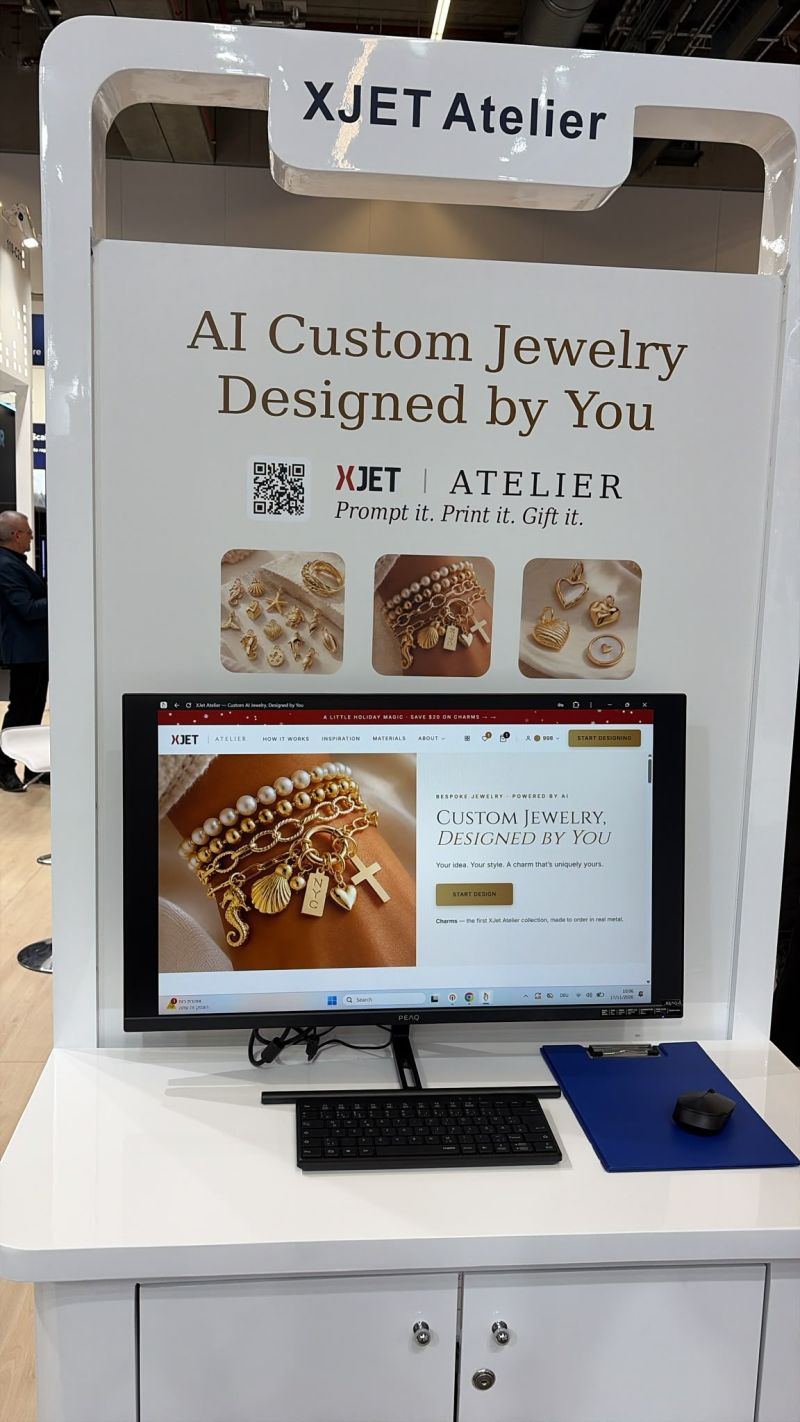
Speaking of jewelry, XJet also had the global premiere of XJet Atelier, its AI-assisted jewelry design experience, at Formnext. Attendees had the chance to try it out for themselves at the booth, and it looks pretty easy to use for creating custom charms and rings.
Start with a photo or a few words, and the AI creates four different designs. You can even look at the Inspiration Gallery if you’re having trouble coming up with an idea. Pick your favorite and refine it until you’re satisfied, then choose your metal (stainless steel or sterling silver) and size. Finally, preview the piece in 360° before saving your configuration and sending it to be 3D printed via XJet’s NPJ workflow. Production takes up to 14 days, with free standard shipping adding up to an extra 14 days.
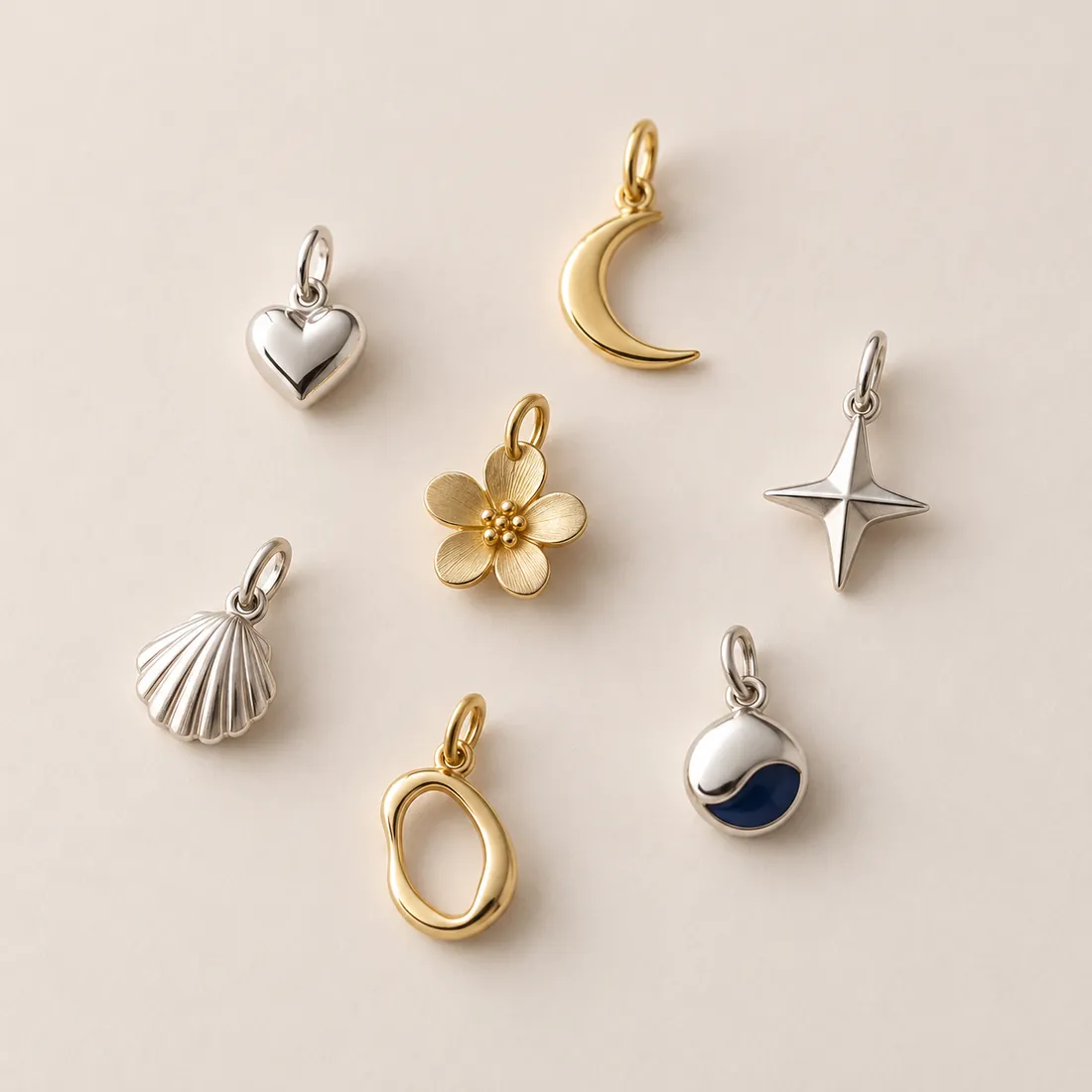
Because NPJ can achieve 8-micron layer precision, it’s a perfect technology for this kind of detailed application. Two years ago, XJet entered the fashion and luxury sector through a collaboration with Italian group XOLUTIONS, which hoped to improve its value proposition by acquiring a Carmel 1400M printer for its fashion accessory manufacturer clients. With XJet Atelier and the new Carmel ORO, XJet is definitely doubling down in this market.
Guy Zimmerman, CEO of XJet, said, “We are making the full capabilities of XJet available to more customers, whether they need finished parts, their own production system or a way to turn a personalized design into jewelry.”
As part of its strategy to “expand its addressable market without diluting its core strengths,” XJet chose four key high-value verticals to pursue, instead of trying to compete across the entire AM landscape, and one of those verticals is luxury manufacturing. Broadening its customer base with the more accessible Carmel Pro was also part of XJet’s strategy. As evidenced by its Formnext offerings, it seems like the strategy is paying off.
Images courtesy of XJet
Subscribe to Our Email Newsletter
Stay up-to-date on all the latest news from the 3D printing industry and receive information and offers from third party vendors.
Upload your 3D Models and get them printed quickly and efficiently.