
Sangmin Lee went to TCT Asia back in March and reported on the event for 3DPrint.com. He wrote two articles arguing that China’s AM industry looks “ready to scale.” This observation seems both very astute and, if anything, an understatement.
Last week, for the first time, the Chinese government held a National Advanced Manufacturing Conference, at which President Xi Jinping stated that China’s plans are to “continue making advanced manufacturing bigger and stronger, [and] enhance the autonomy and controllability of industrial chains.” This in itself isn’t so remarkable, as Chinese higher-ups say this sort of thing quite often.
But the combination of Xi himself making the statement, in that particular setting, and against the backdrop of the 15th Five-Year Plan that was approved earlier this year, dramatizes the occasion. Meanwhile, Chinese companies, including BYD, are currently in the process of “scouting existing car assembly plants” in Europe to find suitable options for foreign investment. As Reuters reports, all this is happening while the EU continues work on its ‘Made in Europe‘ bill that aims to set minimum ‘European content’ requirements for certain strategic goods produced in member nations; batteries are among those goods.
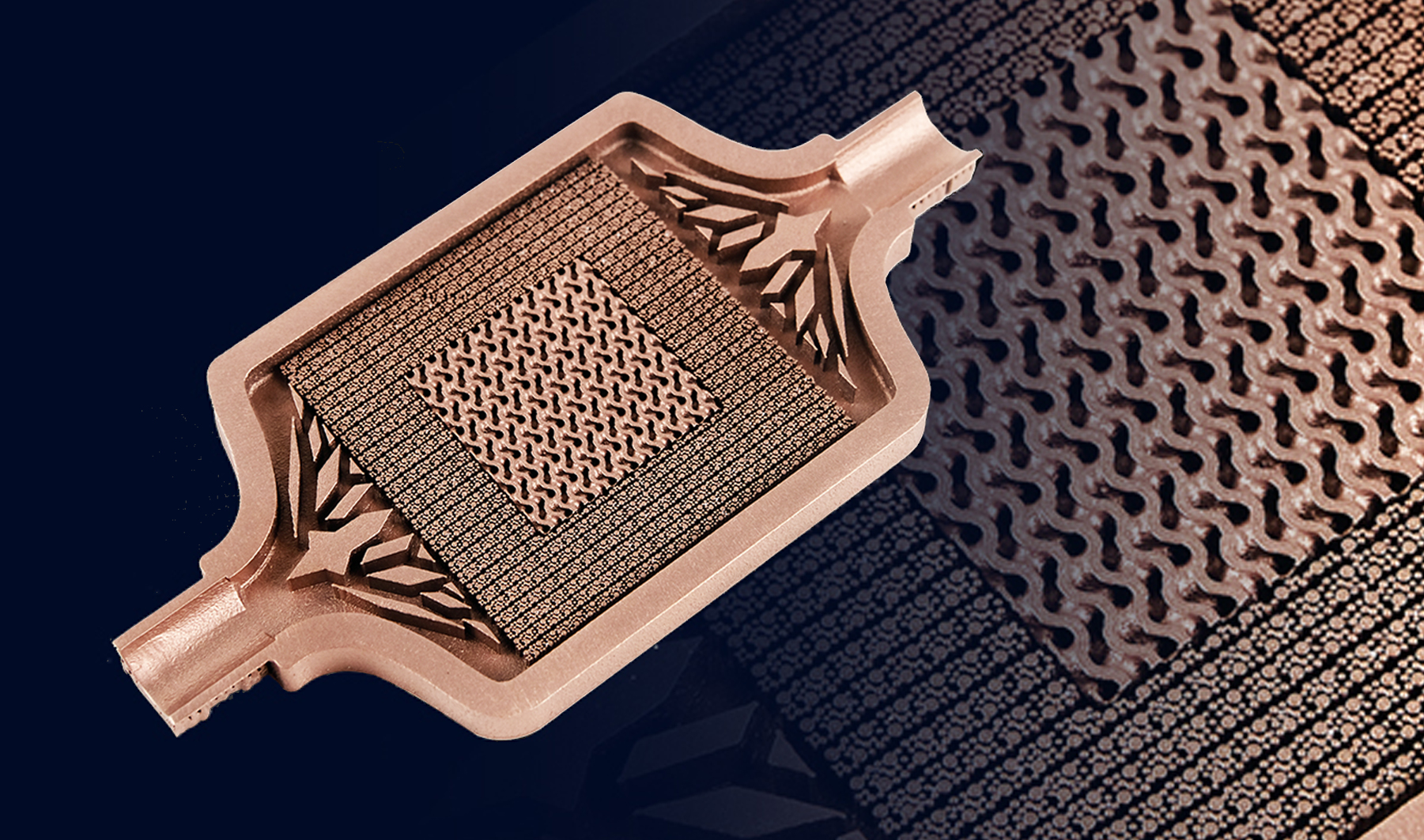
AI chip cold plate. Image courtesy of Farsoon
As for the latest Five-Year Plan, which covers this year through 2030, China views its objectives through the lens of the “New New Three.” In contrast to the “Old Three” (apparel, home appliances, and furniture) and the “New Three” (EVs, batteries, and solar), the “New New Three” are AI infrastructure, especially chips; robotics; and next-generation pharmaceuticals. The overlaps between all three of those targets are notable, as is the overlap of all three with China’s constantly accelerating AM prowess.
With that in mind, it’s also worth mentioning that Chinese Premier Li Qiang emphasized at the National Advanced Manufacturing Conference the goal of “deepening the ‘AI plus manufacturing’ initiative” and that “next-generation intelligent manufacturing should serve as the primary direction” for China’s overall advanced manufacturing strategy. All of this is a not-so-subtle allusion to a production philosophy centered around AM, with Chinese companies frequently referring to 3D printing and intelligent manufacturing as a tandem.
Chinese companies have also grown accustomed to view robotics and AM as a natural pair, with 3D printers seen as essential for producing robots and the incorporation of more robotics in AM processes being considered a key objective for long-term industrial progress. The US government has responded to China’s general robotics push by banning imports of new Chinese humanoid systems into the country.
That is the same approach that, when Trump imposed it with respect to Huawei and a few other companies in his first administration, ultimately led to Huawei’s decision to pivot to chips. In conjunction with another ban related to ASML semiconductor equipment sales into the Chinese market, Huawei’s chip buildout has resulted in Chinese semiconductor technology approaching performance parity with chips produced by global leaders. As I’ve explained in my posts on the overlap between 3D printing and advanced chip packaging, AM has been integral to the sort of breakthroughs at the heart of China’s semiconductor progress.
US AI giants have also recently called for “a slowdown” in AI, which they have presented as a measure needed due to “safety concerns.” Chinese media sources immediately referred to this as a “Cold War” tactic. They have a point, although the geopolitical state of the world suggests it is more of a “hot war” tactic. At any rate, if US companies want a slowdown, it could have more to do with the West’s lagging in the infrastructure required for the AI infrastructure buildout, rather than the relative strengths of AI technology itself.
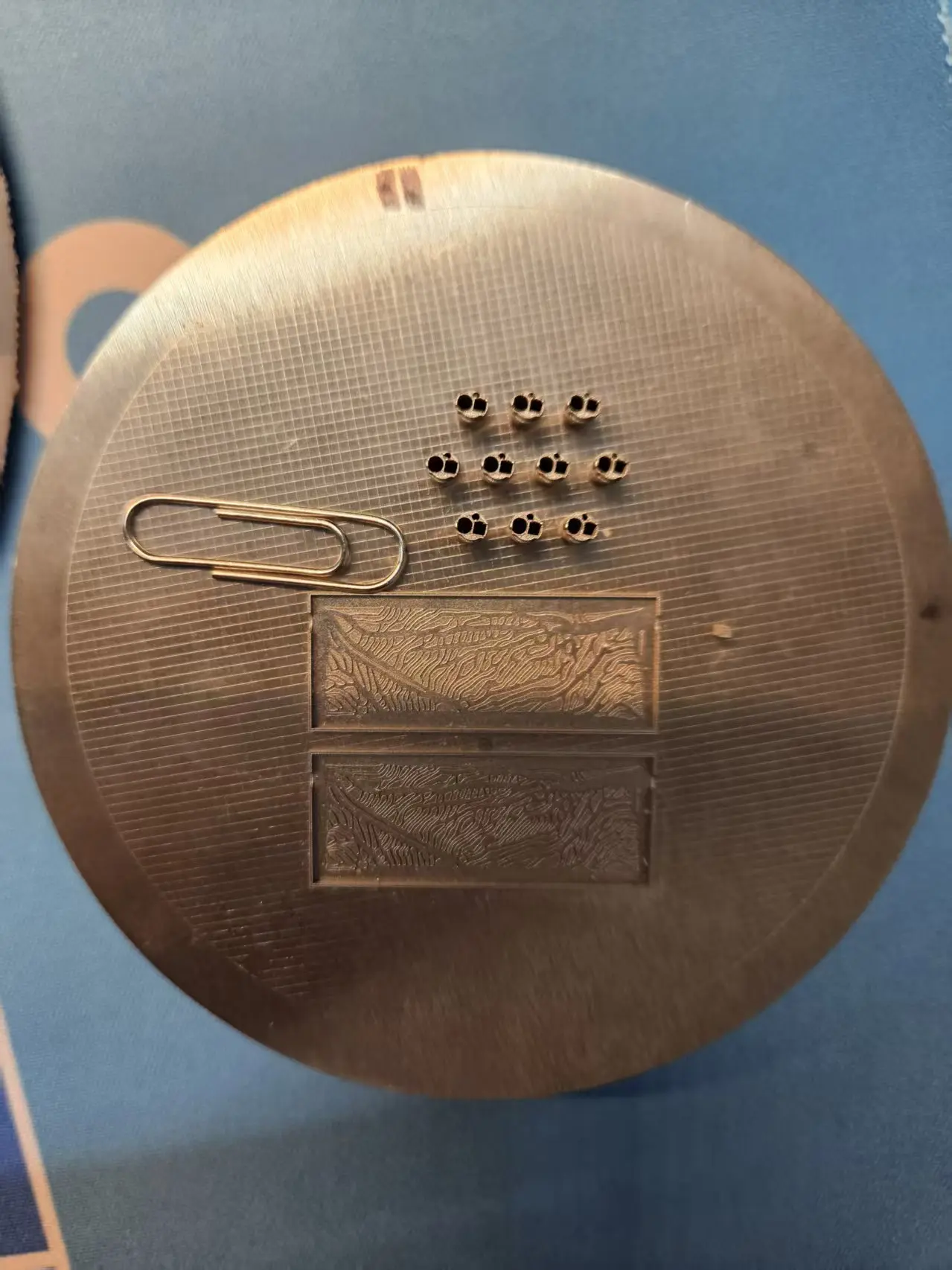
Image courtesy of Dewu Technology
That is, the West likely has less to fear from China in terms of the power of the latter’s AI models, and much more to fear from things like cooling hardware, critical materials, power generation equipment, etc. In this context, keep in mind that, all year, Chinese AM companies have been touting their ability to leverage AM for AI-relevant thermal management solutions. Chinese 3D printer OEM Dewu Technology, which recently closed a seed round, says that it has targeted the market for the smallest industrial metal components — above all, those in the 3C industries (computers, communications, and consumer electronics), which seem to be household words in China — by drastically reducing post-production costs. According to the company’s founder, their strategy is a direct response to market demand for electronics-relevant AM capacity.
Is China gearing up for yet another manufacturing showdown with the West and its allies? It certainly looks that way, but I will do my best to keep you apprised as the saga continues.
Featured image from TCT Asia, courtesy of Sangmin Lee/3DPrint.com
Subscribe to Our Email Newsletter
Stay up-to-date on all the latest news from the 3D printing industry and receive information and offers from third party vendors.
Upload your 3D Models and get them printed quickly and efficiently.