Every kilogram sent into space comes at a cost. So engineers have spent decades finding ways to make spacecraft lighter. The next frontier will be producing some of the parts they need in orbit, instead of launching everything from Earth.
Nikon Advanced Manufacturing believes additive manufacturing (AM) could play a key role in making that possible. The company sees 3D printing eventually becoming an important tool for future commercial space stations, allowing them to produce replacement parts, specialized tools, and potentially even larger structures in orbit, rather than relying entirely on resupply missions from Earth.
“Space is one of the most compelling examples of where additive manufacturing delivers clear and measurable value,” Hamid Zarringhalam, CEO of Nikon Advanced Manufacturing, told 3DPrint.com. “The industry demands lightweight, high-performance components, rapid innovation cycles, and increasingly resilient supply chains, which are all areas where additive manufacturing has a distinct advantage.”

At the Long Beach, California, State of the City 2025 address, Mayor Rex Richardson invited Nikon Advanced Manufacturing CEO Hamid Zarringhalam on stage to share the news of the Nikon AM Technology Center’s Grand Opening.
The comments come as commercial space activity continues to accelerate. Companies developing private space stations and in-space manufacturing platforms are exploring ways to reduce costs, improve flexibility, and eventually produce hardware beyond Earth.
According to Zarringhalam, Nikon does not view space as a standalone business strategy. Instead, it is part of the company’s broader push to move AM beyond prototyping and into production.
“For Nikon, space is not a separate strategy but a part of a broader vision to industrialize additive manufacturing and enable next-generation production across critical sectors,” he noted. “The same capabilities that are transforming defense, aviation, and energy, including capabilities for producing complex geometries, material efficiency, digital manufacturing, and localized production, are equally relevant to the future of space.”
That production mindset is already visible today. Nikon says its metal AM systems are operating at several leading space companies, giving it firsthand insight into how the industry is evolving. As launch costs continue to fall, Zarringhalam expects AM to become even more important.
“Space has consistently demonstrated a willingness to adopt advanced manufacturing technologies when they provide technical and competitive advantages,” he said. “As launch costs decrease and commercial space activity expands, additive manufacturing will become increasingly important for accelerating development, lightweighting parts, and producing components that simply cannot be manufactured conventionally.”
Zarringhalam points out that AM is already used across today’s state-of-the-art launch vehicles, but Nikon sees another opportunity further ahead: manufacturing in orbit.
“For commercial space stations to make economic sense, the constraints of lifting mass and volume must continue to be reduced significantly,” Zarringhalam explained. “We can imagine the possibility of in-space manufacturing since that would enable building structures that are too large, fragile, or not shaped to fit inside the rocket or deal with launch forces. If that materializes, additive manufacturing will be at the center of that.”
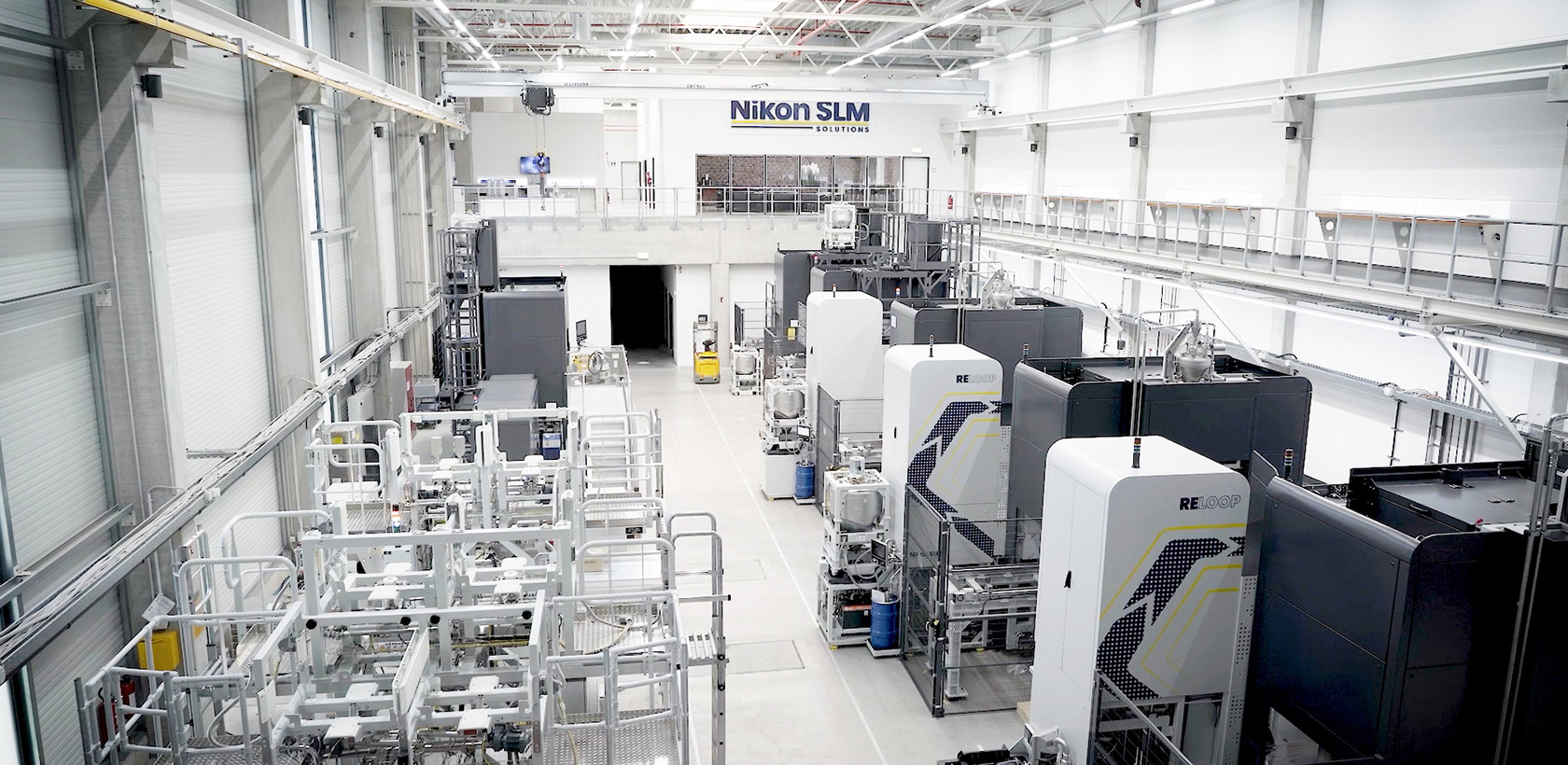
Metal 3D printing business at Nikon headquarters.
Future commercial stations will also need a steady supply of replacement parts, maintenance tools, and upgrades without waiting for cargo missions from Earth.
“Commercial space stations will also need replacement parts, specialized tools, upgrades, and repairs throughout their operational lives,” he said. “Additive manufacturing offers a pathway to producing those items on demand rather than maintaining large inventories or waiting for resupply missions. That’s not just an efficiency gain—it can become an operational, mission-safety, and resilience advantage.”
Rather than shipping physical inventory, Nikon envisions a future in which qualified digital designs are securely transmitted and manufactured wherever needed.
“The long-term vision could encompass an increasingly digital manufacturing ecosystem, where qualified designs can be produced where and when they’re needed,” Zarringhalam said. “We see that trend emerging today in other industries, and many of these same principles will eventually extend to new manufacturing environments.”
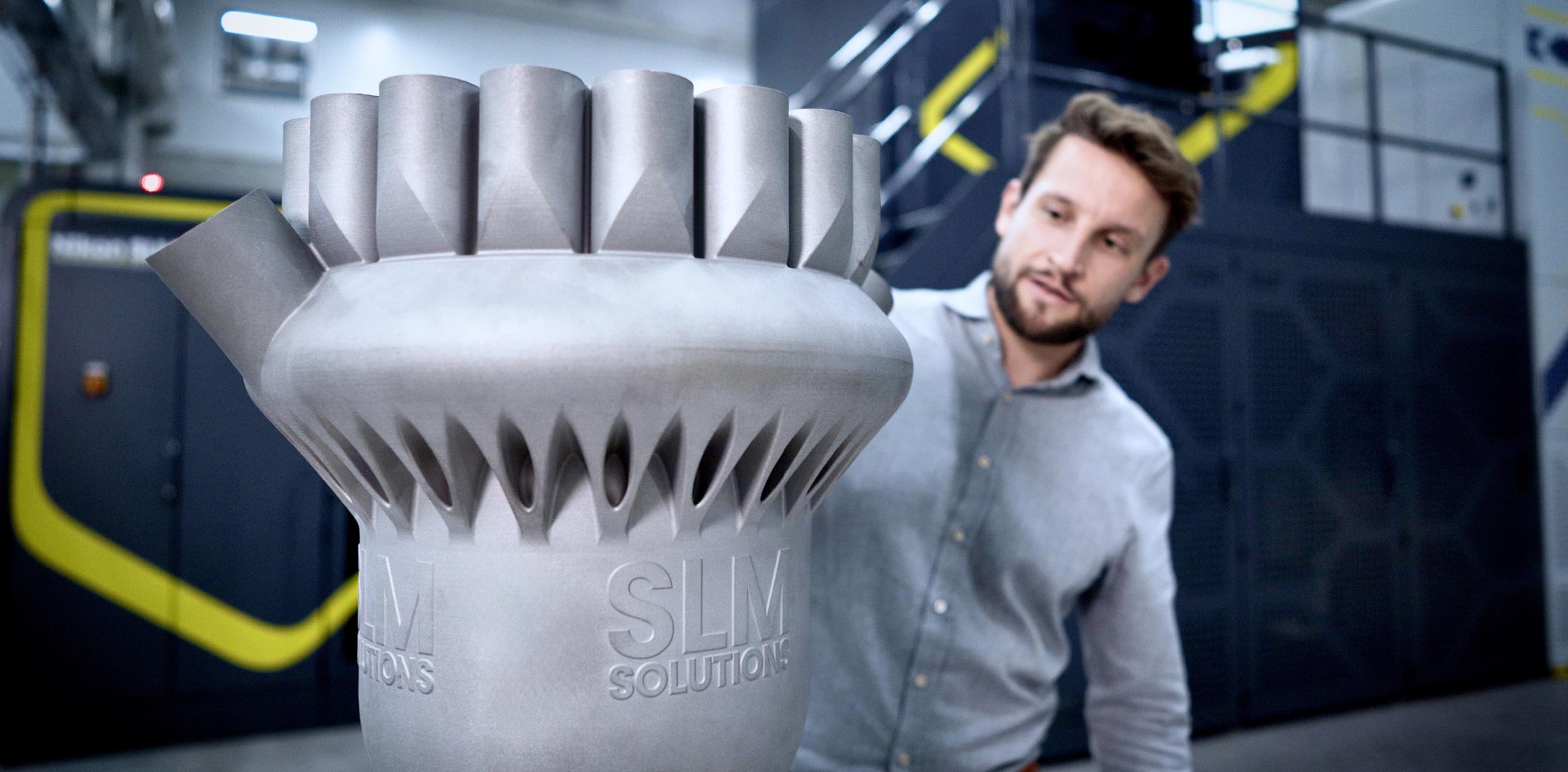
Revolutionizing the space industry with metal 3D printing.
For Nikon, space manufacturing is also expected to drive innovations that reach far beyond the aerospace industry.
“What excites me most is the convergence of advanced manufacturing, digital engineering, automation, and space commercialization,” Zarringhalam said. “Additive manufacturing is consistently advancing beyond prototyping and becoming part of the critical production infrastructure for some of the world’s most demanding applications.”
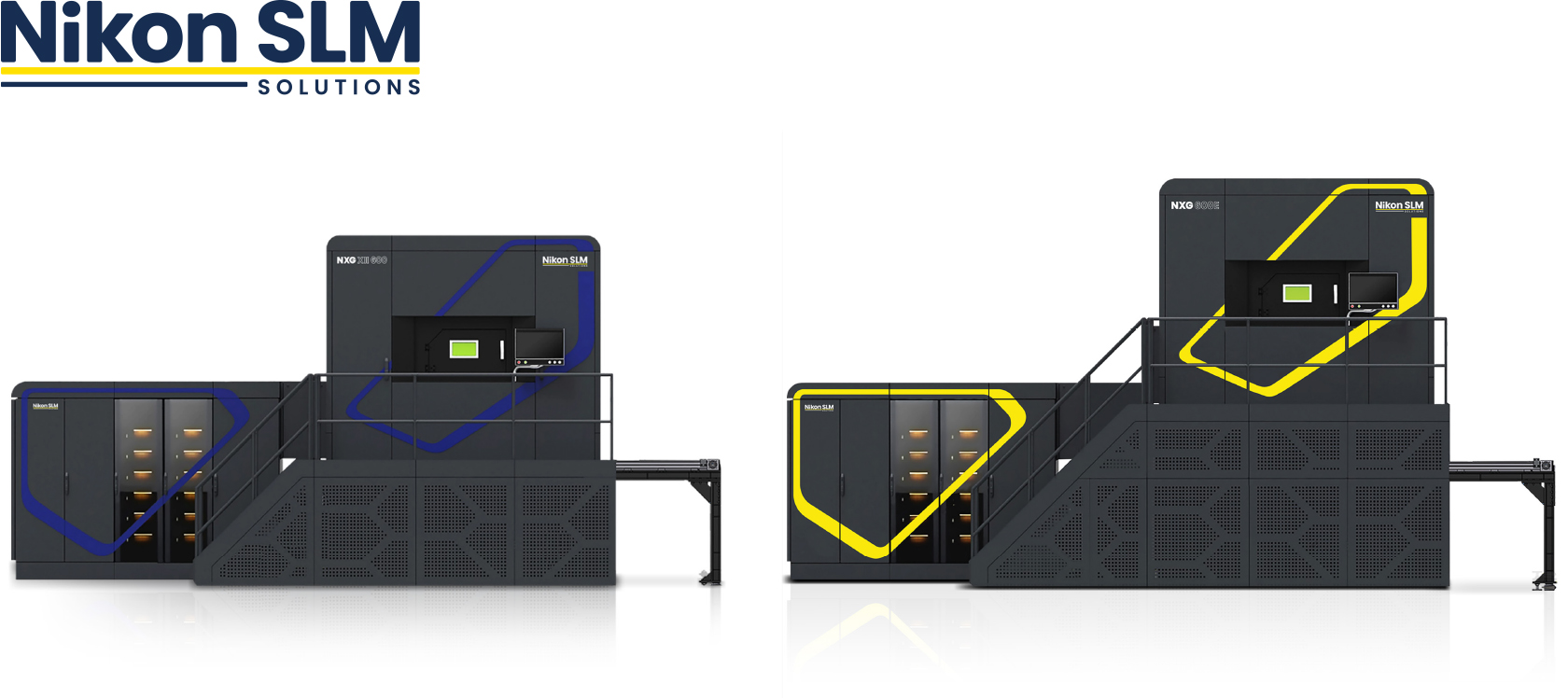
Nikon SLM Solutions machines.
He believes many of the technologies developed for future space missions will ultimately find applications back on Earth.
“Ultimately, space manufacturing represents more than a new market,” he said. “It’s an opportunity to continue to push the boundaries of what’s possible in production technology. The innovations developed for space often find their way back into other industries, creating benefits across defense, aviation, energy, and advanced manufacturing as a whole.”
Whether manufacturing in orbit becomes commonplace is still years away. But as commercial space stations move from concept to reality, companies like Nikon are already preparing for a future in which AM becomes as important in space as it is increasingly becoming on Earth.
Images courtesy of Nikon Advanced Manufacturing
Subscribe to Our Email Newsletter
Stay up-to-date on all the latest news from the 3D printing industry and receive information and offers from third party vendors.
Upload your 3D Models and get them printed quickly and efficiently.