
In Japan, architect Yuko Oka and her studio, Oka Architecture Design & Co., Ltd., are doing something special. Rather than using 3D printing as a novelty, they’ve made it part of how they think about architecture, materials, and long-term use.
Based in Yokohama, the firm works at the intersection of design and digital fabrication, using large-scale 3D printing to create architectural elements that are lightweight, adaptable, and meant to evolve over time. Their projects are not about printing buildings for the sake of it, but about exploring what architecture can look and feel like when design and fabrication are closely linked.
One of the best examples of their approach is CIRCULUS Atelier, a working studio in Yokohama that shows how 3D printing can be used in real buildings, not just concepts or prototypes.
A Facade That Looks Like Knit Fabric
Instead of the typical flat wall or rigid paneling, the exterior surface of CIRCULUS Atelier almost looks like a piece of knitted fabric wrapped around the building. That’s intentional, since the designers at Oka Architecture Design call the system KNIT and developed it specifically for 3D printing as the production method.
Rather than repeating the same panel over and over, this 3D printed facade is made up of many unique modules. Each piece is a little different in shape and depth, creating shadows, texture, and a sense of movement as the light changes during the day. This kind of variation is hard to achieve with traditional building materials, but 3D printing makes it possible without a large increase in cost.
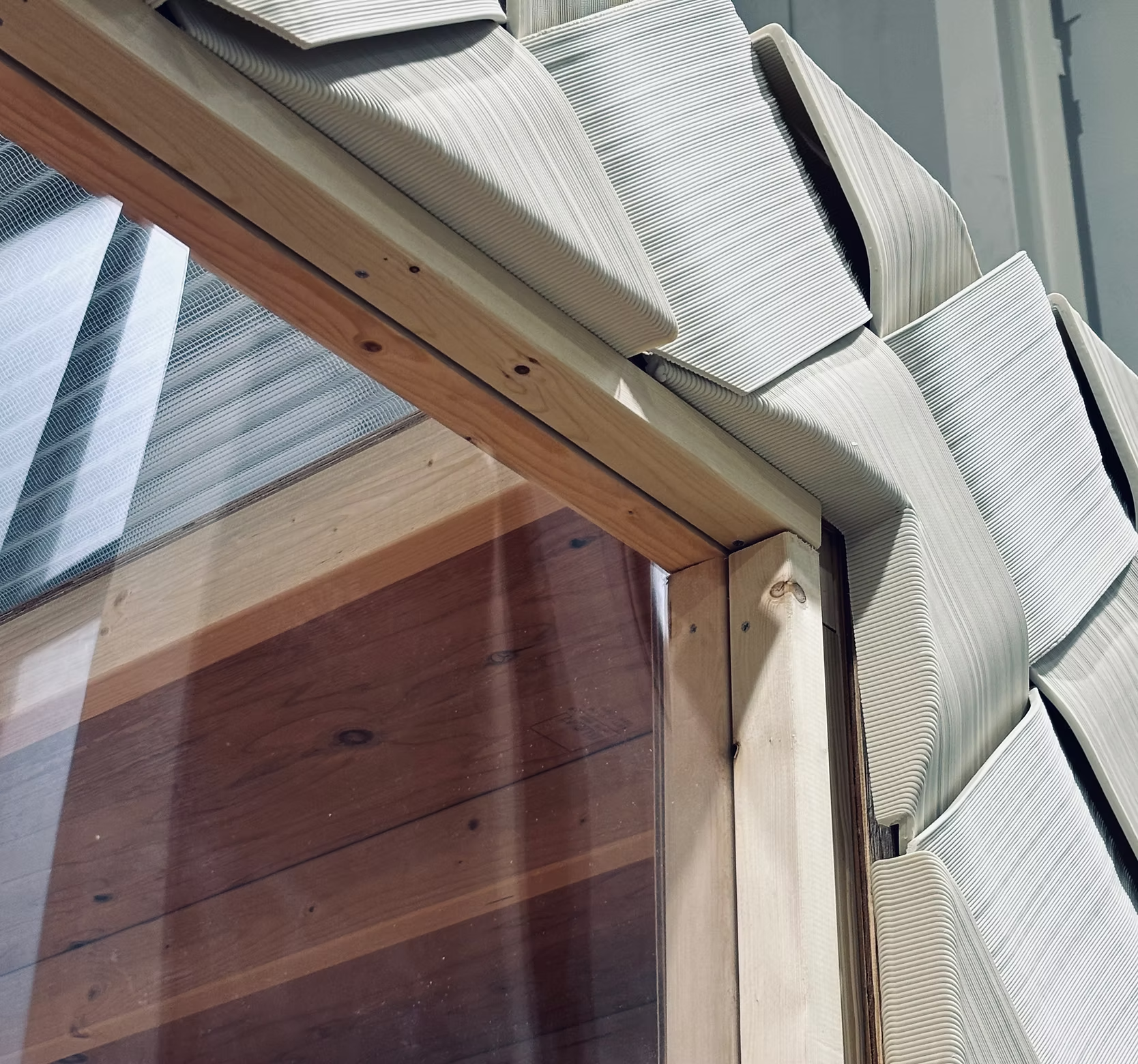
Detail of the KNIT facade around the window opening reveals the layered rhythm of the 3D printed components. Image courtesy of Oka Architecture Design & Co., Ltd.
Inside, It’s Just as Interesting
But the creative thinking doesn’t stop at the outside. Inside CIRCULUS Atelier, the designers used 3D printing again to make a series of suspended elements hanging from the ceiling.
These pieces hang overhead like soft fabric, shaping light and space. They help filter daylight, calm sound in the workspace, and subtly define different areas of the interior, all without putting up walls or tough looking dividers.
Here, the designers used a flexible printed material that can bend and drape. This allows the pieces to shape light, soften sound, and create different areas without walls. It’s a different take on 3D printing, which is usually associated with hard, rigid parts.
Designed to Change Over Time
What really defines Yuko Oka’s work is not just how things look, but how they’re meant to be used over time.
Both the facade elements and the interior components at CIRCULUS Atelier are designed to be taken apart, repaired, and reconfigured. This reflects the studio’s broader CIRCULUS approach, which focuses on reuse and flexibility rather than permanence.
Instead of treating a building as a finished object, the designers treat it like a “living assembly,” something that grows, shifts, and responds over time. That’s a great way of looking at architecture, especially when combined with the design freedom that 3D printing can provide.
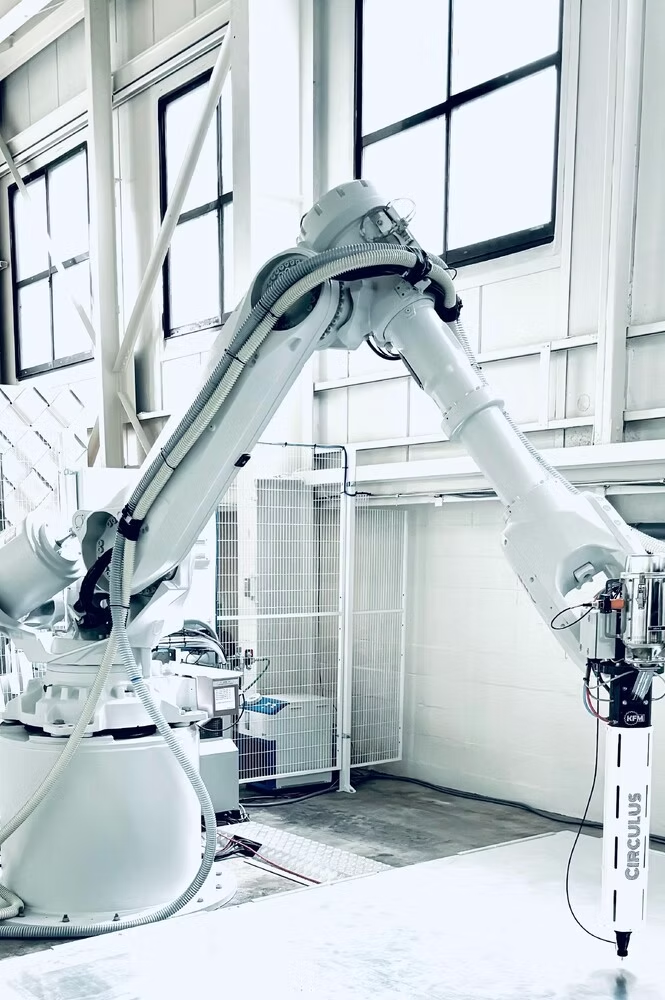
Circulus robot-arm 3D printing. Image courtesy of Oka Architecture Design & Co., Ltd.
Beyond One Project
Buildings made with 3D printing aren’t entirely new. Some projects have explored printing large elements or whole structures, and construction 3D printing (especially with concrete) is getting plenty of attention globally. But what sets Oka Architecture apart is how deeply integrated 3D printing is in their design process.
For Yuko Oka and her team, additive manufacturing isn’t just a tool to make unusual shapes. It’s a way to rethink facades, interiors, materials, and even the lifespan of architecture itself. Their work shows that 3D printing can support buildings that are not only functional but also flexible and responsive to how people actually use them.
CIRCULUS Atelier shows that 3D printing has a lot to do with new ways to design buildings. Instead of seeing a facade as a flat surface, architects can think about it as something that moves with light and can even play with space. They can design interiors that are not just functional but also able to adapt and change.
The firm is constantly adapting, using large robot-arm 3D printers to produce architectural spaces, furniture, and components from reusable synthetic resins, all made in their own atelier.
Subscribe to Our Email Newsletter
Stay up-to-date on all the latest news from the 3D printing industry and receive information and offers from third party vendors.
Upload your 3D Models and get them printed quickly and efficiently.