If one of the primary advantages of additive manufacturing (AM) is that it’s “digitally-native,” then the hardware will ultimately only be as good as the software guiding the process. That has arguably become the principal driving force shaping investment cycles and strategic partnerships in the AM industry, and it should be a main determining factor in separating winners from losers going forward.
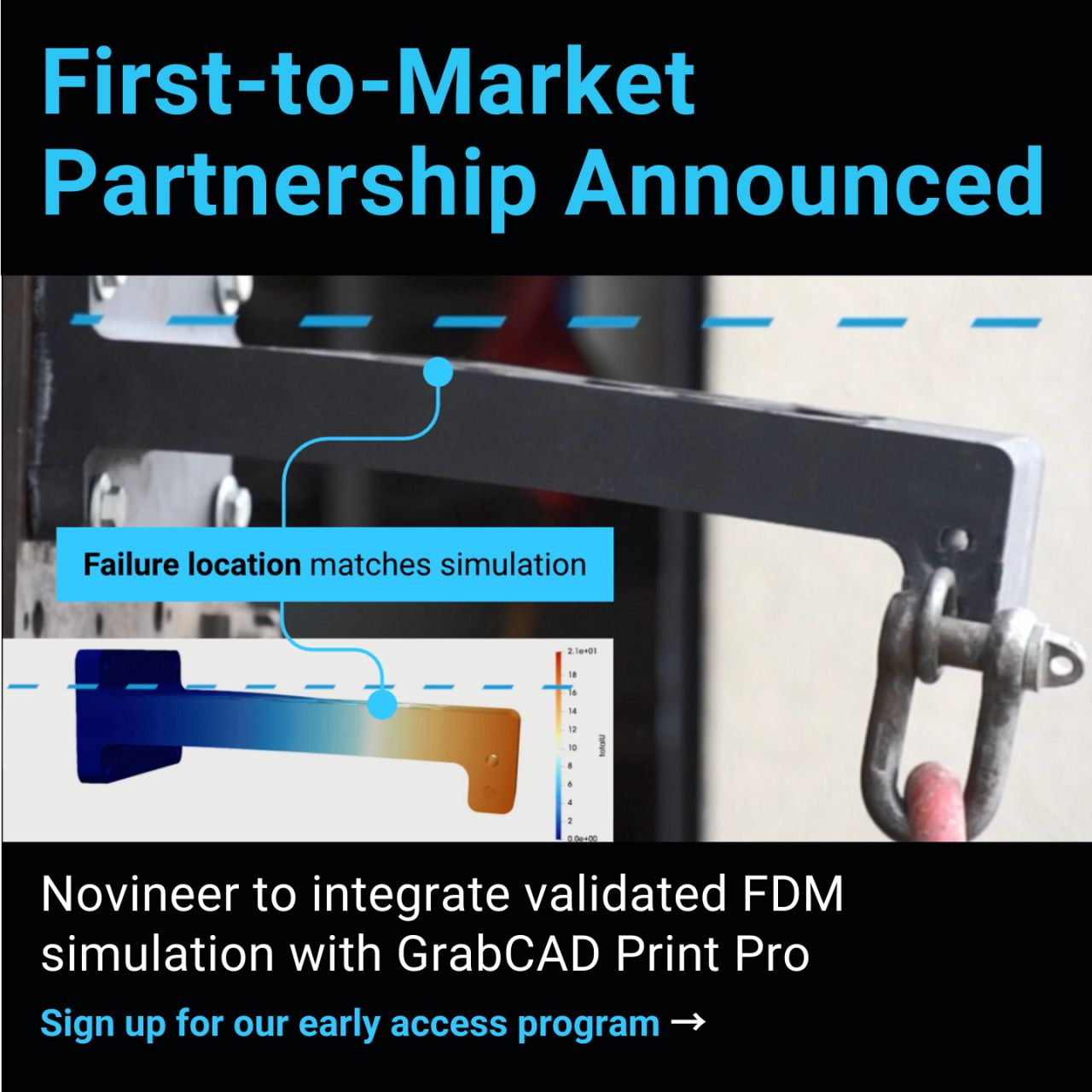
Stratasys has always excelled at picking the right strategic partners, and its collaboration with software provider Novineer, announced at the end of 2025, is one of the latest examples. Stratasys integrated Novineer’s NoviPath polymer performance software simulation capability into GrabCAD Print Pro, which, as Vanesa Listek explained in her article on the partnership published earlier this year, allows users to “launch simulations using actual print toolpaths, define application-specific loads and safety factors, identify likely failure locations, and iterate designs virtually until performance targets are met.”
As Vanesa also explained, “Traditional simulation tools don’t always work well for FDM parts. They treat a printed part as one solid piece, forgetting how it’s actually built layer by layer.” During a conversation in December 2025, the CEO and co-founder of Novineer, Ali Tamijani, and Victor Gerdes, the VP of Software at Stratasys, explained to me why the gap in the market, and the solution that the two companies are providing — beginning with a pilot program that will be available starting in Q2 — represent such a milestone business opportunity for the partners and their users.
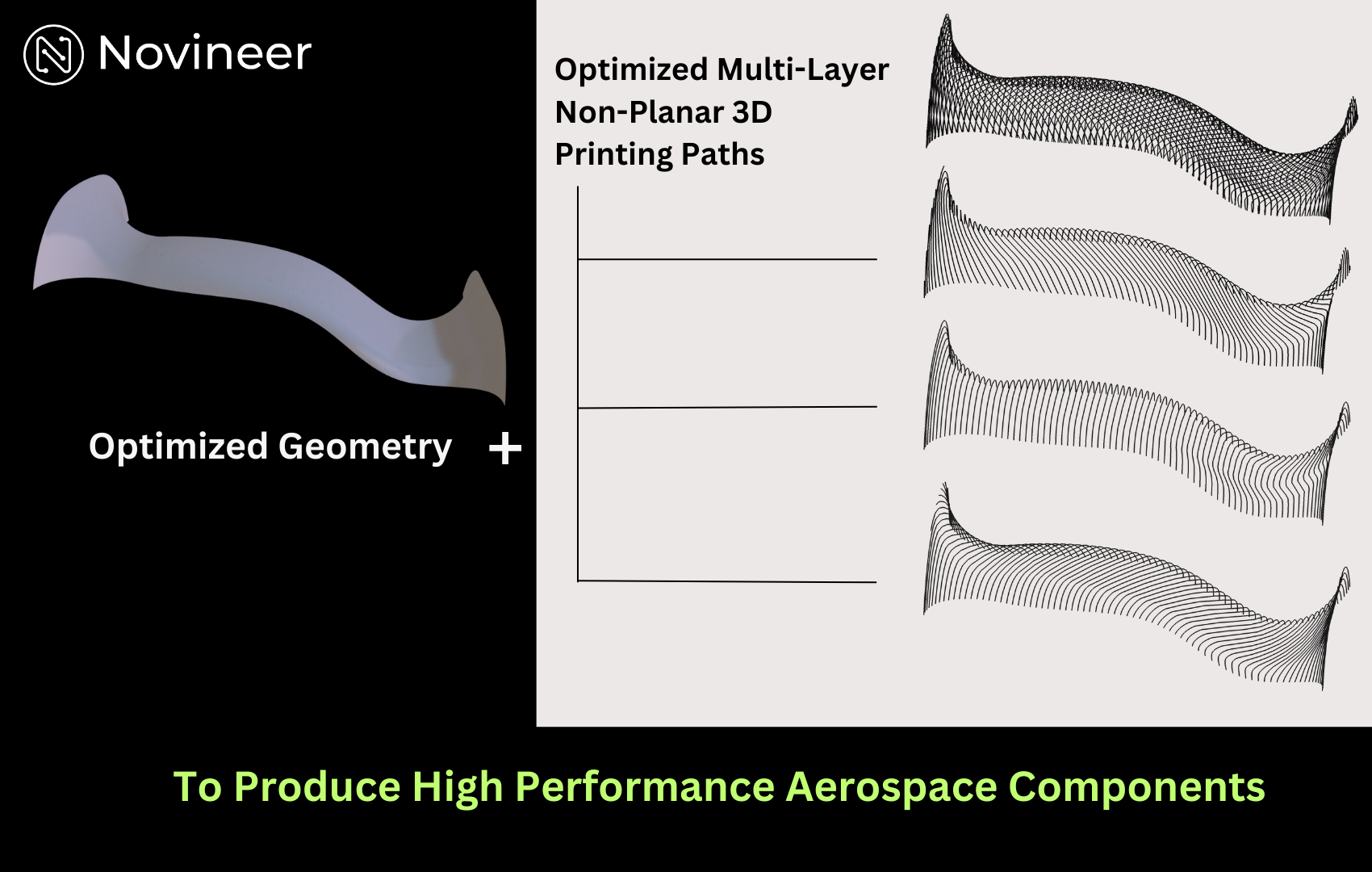
While Stratasys and Novineer have worked together before, including on Air Force-funded SBIR project aiming to improve non-planar tool-path optimization for AM, the integration of NoviPath into GrabCAD Pro took the partnership up a notch. Like I said, Stratasys doesn’t select its partners haphazardly, and Gerdes confirmed that the AM pioneer chose Novineer for a reason:
“We call it getting the voice of the customer — the due diligence of working with our customers in order to establish the confidence that we’re addressing their needs with precisely the right solution. When we started this process, I was kind of shocked at how few good options there were for simulation in the FDM space. What that meant is that our customers would have to physically print parts and do substantial mechanical testing for every phase of the iteration loop, which costs time and money,” Gerdes said.
“We talked to a number of software providers, and while there were some other offerings out there, nothing else was as accessible as Novineer.”
In addition to user experience, Novineer’s other key advantage is that its prior work with Stratasys gives it familiarity with the real-world tool-path data being integrated into GrabCAD Pro. As Tamijani noted, this is a major differentiator from the general purpose simulation software solutions that dominate the options from which FDM users are currently choosing.
“The competition is very powerful in the general purpose world they exist in,” Tamijani began, “but the essence of FDM is layer by layer, and general purpose software treats simulated parts as blocks of plastic. This is why you have to have the tool-path data built into the process.
“If you change the tool-path, the properties, the performance, the strength and stiffness and parts are all going to change, which can lead to part failure. General purpose simulation software ignores all of that, so industrial FDM users are currently stuck in an expensive and time-consuming product development cycle where they can only find out that their parts are failing after real-world testing, and even then, it takes further trial and error to find out exactly why the parts are failing. With NoviPath and GrabCAD Pro, you just have to enter the loads that the part being designed will need to be able to withstand, and press simulation.”
NoviPath adds a new capability to Stratasys’s existing software repertoire, but it also reinforces the strengths that Stratasys is already known for, namely reliability. While the partners haven’t named the early users yet, Gerdes and Amijani agreed that those users would likely come from the industries with the most demanding requirements, like aerospace and automotive.
Those customers already choose Stratasys because they can’t afford to sacrifice quality, and Gerdes observed how the new simulation capabilities should enable such customers to achieve that objective even more easily, and affordably, than before:
“When it comes to production-level parts, manufacturers have to certify the process. For part number one, and part number 770, and part number 10,000, the process has to be identical,” Gerdes told me. “That’s one of the main reasons why customers choose our printers. You can go to some of our facilities and see, say, an F900, and you might see an aerospace company’s name written on the printer, and it’ll also say that the printer is certified for that aerospace manufacturer.
“Now, for those kinds of customers, it used to be that you needed something of an advocate for AM inside the organization in order for them to choose to print the parts over machining or some other method. As the technology has become more commonplace, that’s not as much of a prerequisite these days, but the simulation capability helps us move beyond that sort of scenario altogether.
“It helps us move beyond the need to have our potential customers take someone’s word for it in order to get them to adopt AM: they can just trust the data. So this isn’t only an engineering win. Our sales team is very excited about this, as well.”
Tamijani similarly framed the logic of the partnership in terms of how it accentuates what Stratasys already brings to the table.
“I’ve talked to Stratasys customers who have told me that the reason they keep buying the company’s printers is because of reliability,” the CEO said. “Having the ability to simulate parts grows the number of potential new customers, and it also helps existing users accelerate the number of use-cases they’re developing. We’re helping Stratasys customers achieve the same reliability when it comes to simulation that they’ve gotten used to when it comes to printing parts. We’re ensuring that part performance matches the design intent.”
Stratasys announced another partnership earlier this month, in which the company will qualify nylon parts made with its Selective Absorption Fusion (SAF) process in collaboration with a group of defense primes and service bureaus. While that’s an entirely different production process from FDM, it’ll be interesting to see if the NoviPath/GrabCAD Pro pilot program involves similar customers, or indeed some of the same customers.
In any case, both partnerships illustrate how Stratasys has systematized the process of developing an application, then validating it with input from ‘power-users’. While the pilot program for NoviPath’s integration into GrabCAD Pro hasn’t officially launched yet, Stratasys’ track record with this sort of work suggests it’s an effort the industry should keep tabs on.
Images courtesy of Stratasys and Novineer
Subscribe to Our Email Newsletter
Stay up-to-date on all the latest news from the 3D printing industry and receive information and offers from third party vendors.
Upload your 3D Models and get them printed quickly and efficiently.