
Dutch firm Hembased is launching a cold compostable filament. Cold compostable means that the material should return completely to nature in a regular compost bin that you may already have in your home. This contrasts with industrially compostable materials, which are meant to break down in heated industrial composting sites.
Cold compostable materials must degrade within a year in temperatures between 20-30°C. They must also not leave anything harmful behind and theoretically should compost in the soil. ColorFabb´s allPHA has led the way in compostable, actually sustainable biomaterials for 3D printing. Companies such as Regen filaments have followed suit. Usually PHA is used, which can be made from agricultural waste or byproducts. PHA turns into water, biomass, and Co2. PHA prints well, albeit very differently than other materials, and has higher Continuous Service Temperatures than many other materials.
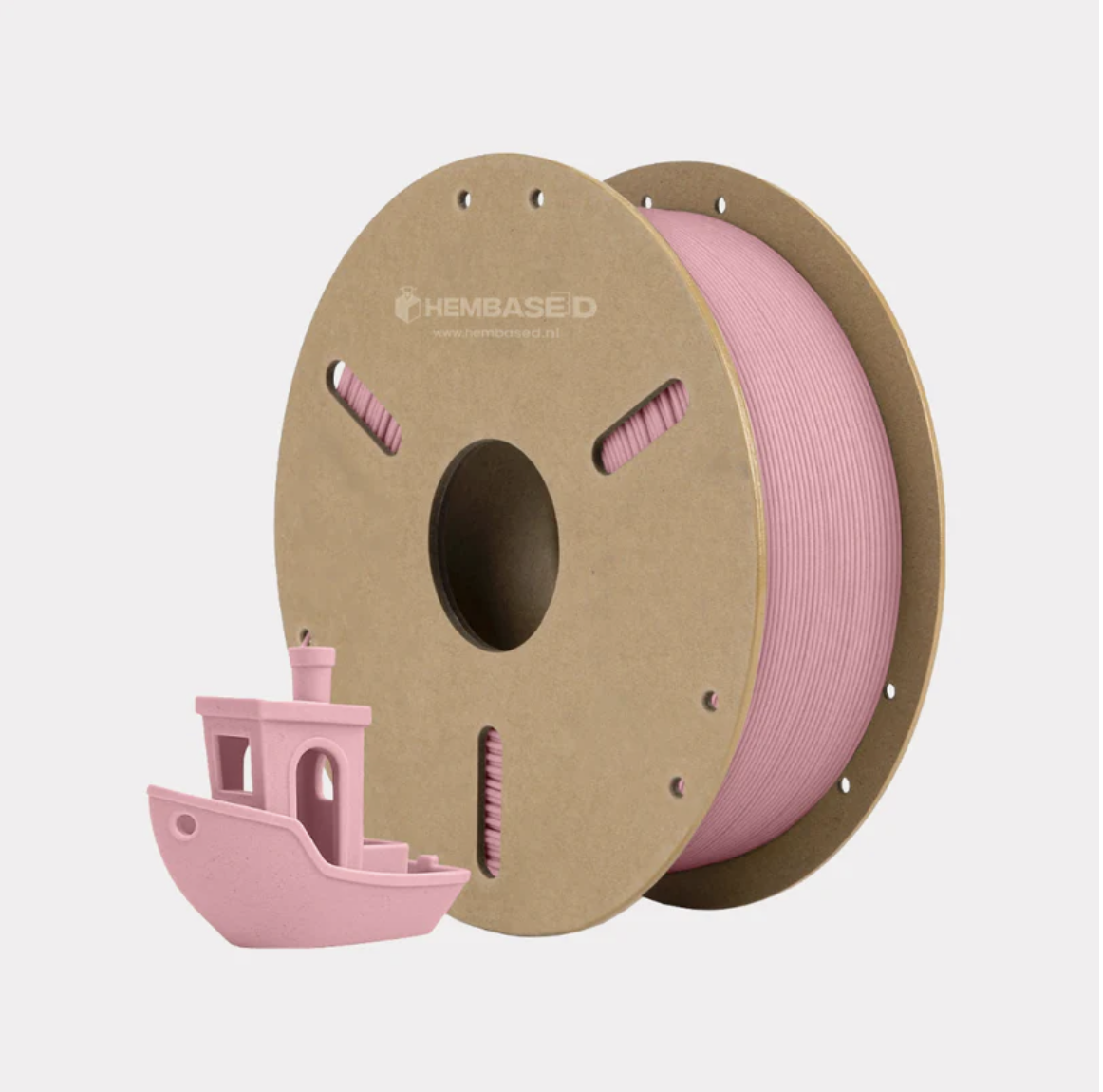
In this case, the material has been made from a palm leaf byproduct. The company states that, “with the launch of this new filament, Hembased positions itself as the first company in the world to offer a cold-compostable, biobased alternative to traditional 3D printing materials.”
This is incorrect, as it is at best the sixth company with a cold compostable bio-based alternative to 3D printing materials. ColorFabb, Phanbulous, Ecogenesis EcoFab, Regen, and Loopha were all on the market before Hembased. Indeed, Colorfabb released its first blended PHA in 2013, and its Pure PHA variant in 2022. We wrote a nice review paper on making PHA in 2020, while Canadian firm Genecis has been trying to make PHA from food waste since 2018. Genecis has a partnership with Helian, which is helping its related firm Colorfabb make PHA filament.
Hembased Founder Erik Janssen said,
“3D printing is a powerful tool for rapid innovation, but current materials do not yet align with what the future demands. We believe that materials should not only perform well during use, but should also have a credible and responsible end-of-life solution.”
The company says that “one of the greatest challenges in developing and manufacturing the filament was combining reliable print performance with an end-of-life solution that aligns with the principles of circular design. For us, cold compostable means that a product does not cease to be useful once its original function has been fulfilled. Under the right conditions, a printed object can ultimately serve as a nutrient source within a biological system.” Hembased also says that its mission is to “print what you need, use it with confidence, and when it has fulfilled its function, choose an end-of-life solution that aligns with responsible innovation.”

The palm leaves it uses come from agricultural waste. I hope that they don’t come from palm plantations, which are being used to make palm oil that’s responsible for a lot of deforestation. Hembased says that the material comes from palm leaves that could have been burned but have fallen on the ground. They are then dried and ground into a fine powder using local machines. The powder is then turned into HemCell-granulate, which the company turns into all sorts of things. From that explanation, it does seem like the company is somehow working with the palm oil industry, or at least working with locals to pick up palm leaves at the plantations. If it somehow pays for these leaves, then doesn’t it make palm oil more profitable, which would lead to more deforestation? Or because they’re not burned, is the deforestation less harmful? I guess you can now burn palm leaves in your own home, rather than someone else doing it in Malaysia.
The company also wants to work with research partners on new projects. This would seem to be ideally for those with a passion for end of life solutions and palm oil. The colors seem nice, kind of Faberdashery-ish natural hues, and are available from €32 per kilo (around $36).
Images courtesy of Hembased
Subscribe to Our Email Newsletter
Stay up-to-date on all the latest news from the 3D printing industry and receive information and offers from third party vendors.
Upload your 3D Models and get them printed quickly and efficiently.