
At the recent Additive Manufacturing Strategies (AMS) 2026 in blizzard-stricken New York City, those who were able to make it through the wind and snow got right down to business.
I touched on some of these discussions in an earlier piece, but today I’m going more in-depth and sharing about some other aspects of the event.
Opening Presentation
The opening keynote at AMS, “3D Printing in a Fractious World,” didn’t begin with a hype chart or a “look how great we’re doing” industry recap. Rather, 3DPrint.com Executive Editor Joris Peels basically said leaders are either jumping from trend to trend or stuck in place, because things are changing so quickly that long-term planning feels shaky. He also said that things aren’t calming down anytime soon, stating that “There’s no sure footing.”
Peels also argued that, in an uncertain geopolitical climate and a business environment where technology is rapidly reshaping trust, what matters most becomes surprisingly old-school: knowing your customers, earning trust, and building real relationships.
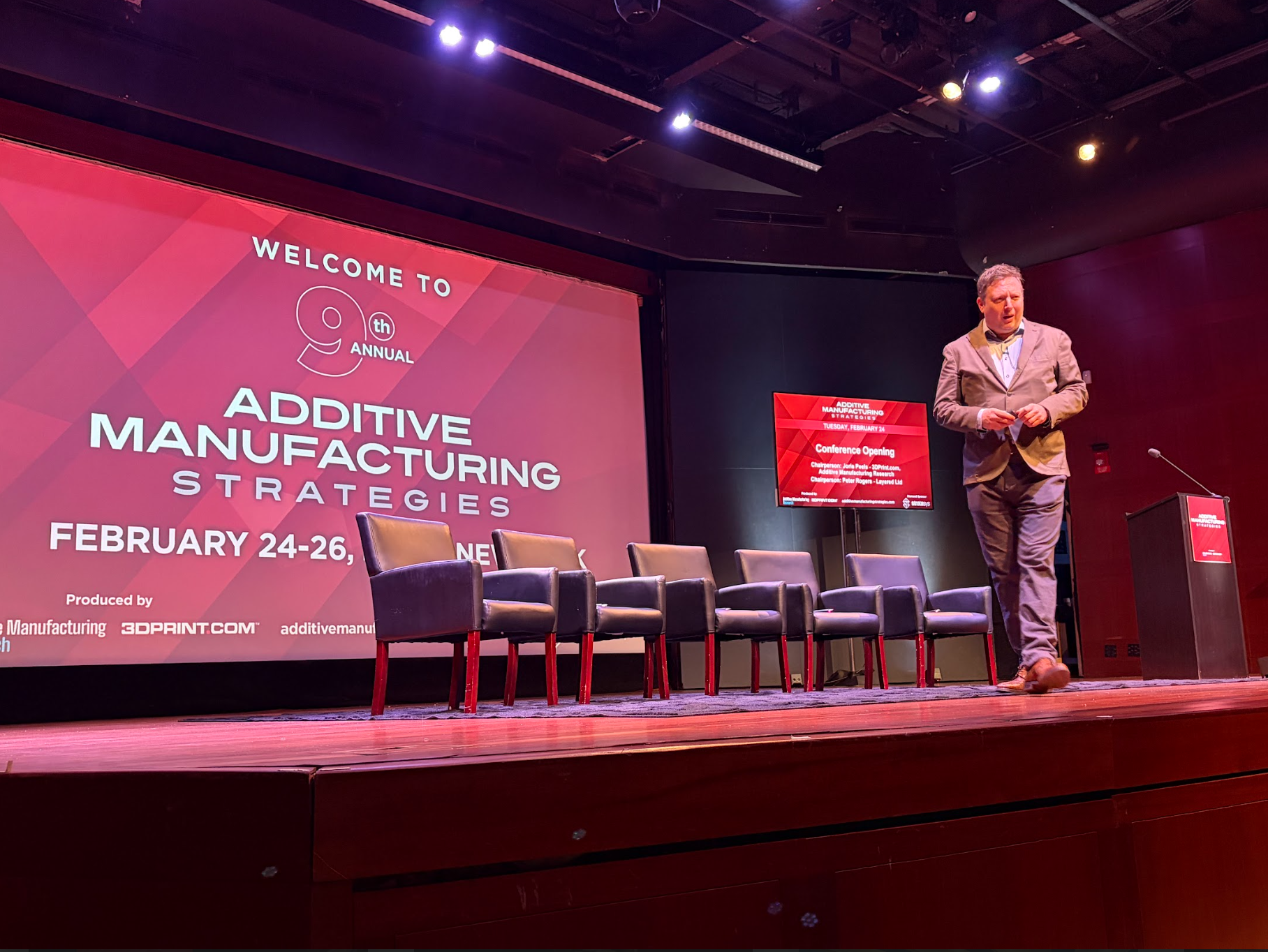
3DPrint.com Executive Editor Joris Peels at AMS 2026
Peels discussed “self-propagating cracks” in how people perceive the world, from shifting alliances to growing suspicion of institutions. He pointed out that people are even debating ideas such as the “end of the American century” and the rise of a “Chinese century.” He said the “discussion itself matters, whether or not the predictions turn out to be true.”
“It’s irrelevant if this will happen or not, but the fact that we are having this discussion is relevant, and it will change things.”
That sense of fragmentation, he added, is not just geopolitical. It’s social.
“We’re also seeing a fragmentation of society as we know it; a fragmentation of the social contract. And that fragmentation will only accelerate. All of these things will be exacerbated by AI.”
He also warned about the broader AI economy, calling it a Ponzi scheme and saying, “I don’t think it’s going to be able to fulfill the obligations that the counterparties have within that Ponzi scheme.” But, he also said that AI itself isn’t coming for your job per se, but that someone just as capable might use AI to move faster, learn faster, and compete for the same opportunities.
Moving on, Peels said that the biggest disruption in AM may be happening in plain sight as desktop machines become more reliable, scalable, and increasingly relevant to real production. He cited examples like Bambu Lab print farms, improved hardware and software tools, and other technical advances, better workflows, and the kind of extreme iteration speed we’re seeing in Ukraine, where low-cost printers have been used as “duct tape” across society.
“We may actually have a desktop 3D printing revolution. We may be one to two machine generations, and that’s two years away.”
Current State of the Industry
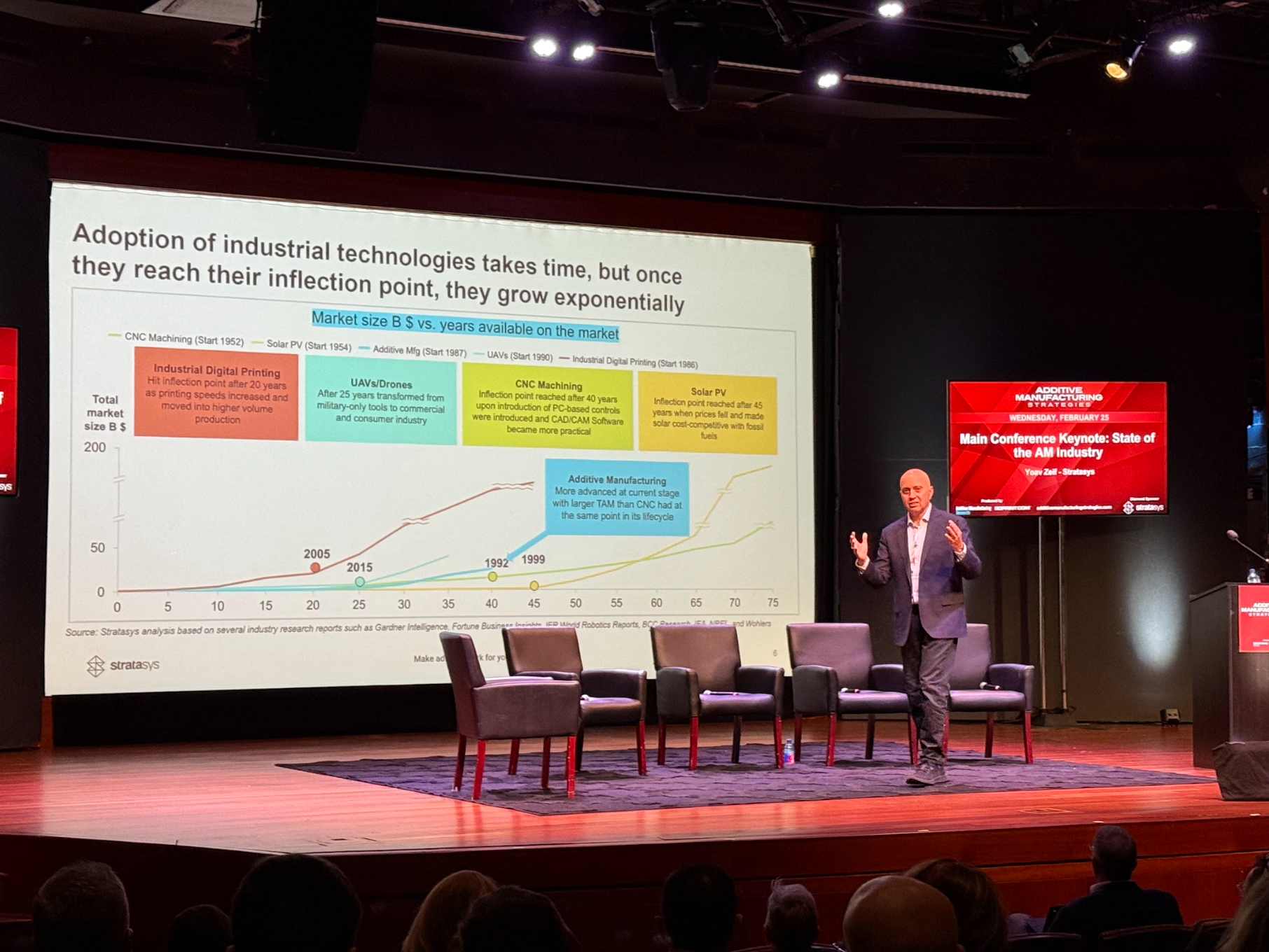
Stratasys CEO Yoav Zeif at AMS 2026
In his keynote on the “State of the AM Industry,” Stratasys CEO Yoav Zeif reminded us that it takes a long time to adopt new technology, but that we’re in “a good place” as an industry.
“We are still a very small industry, I recognize most of the faces in here, and we have our own challenges. The most significant is the rise of the low-end,” Zeif said. “Desktop is taking over the industry, especially in the last three to four years.”
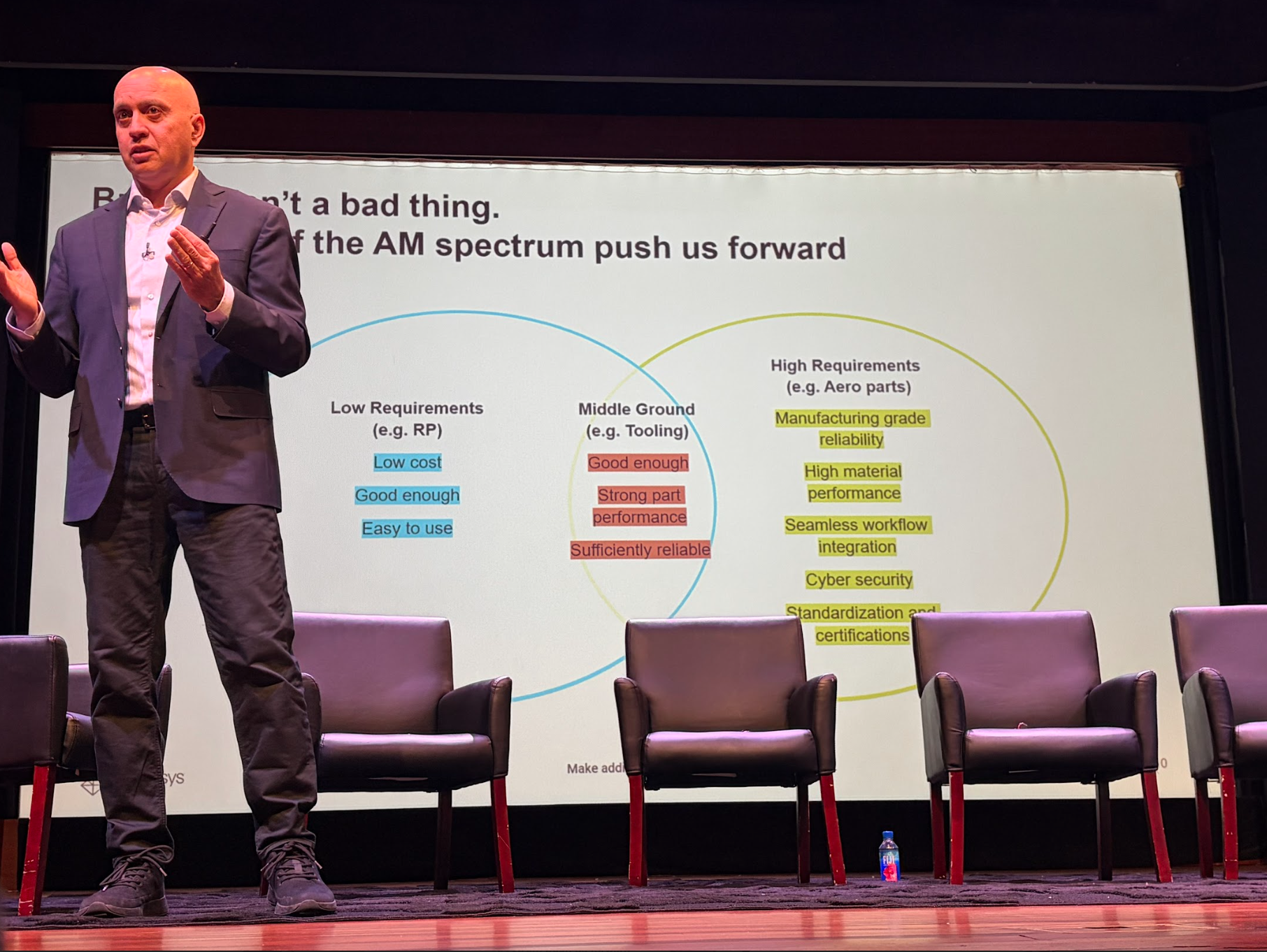
He said this is great because it’s helping to expand the industry. Zeif said the AM sector has three main segments: low requirements (one end of the spectrum), middle ground, and high requirements (the other end of the spectrum).
Stratasys CEO Yoav Zeif at AMS 2026
The low requirement segment is our “bread and butter,” like low-cost, easy to use, good enough parts, while the middle is mainly tooling—stronger part performance, sufficiently reliable, but still just good enough. The high requirements are things like aerospace-certified parts with manufacturing-grade reliability. In terms of desktop printing, the low requirement segment is helping to drive awareness of the technology. Then, when we grow in the high requirement side, “we’re providing more value to specific needs.”
“The competition in the middle is also intensifying,” Zeif said. “That’s what we are witnessing now. It’s very positive that the low end is driving more adoption and awareness, and the high end is opening up new applications.”
Zeif believes that the AM industry should focus on several specific areas, which he calls “only additive can do it.” These include geometries that create lightweight parts, being sustainable, and increasing speed for prototyping and production.
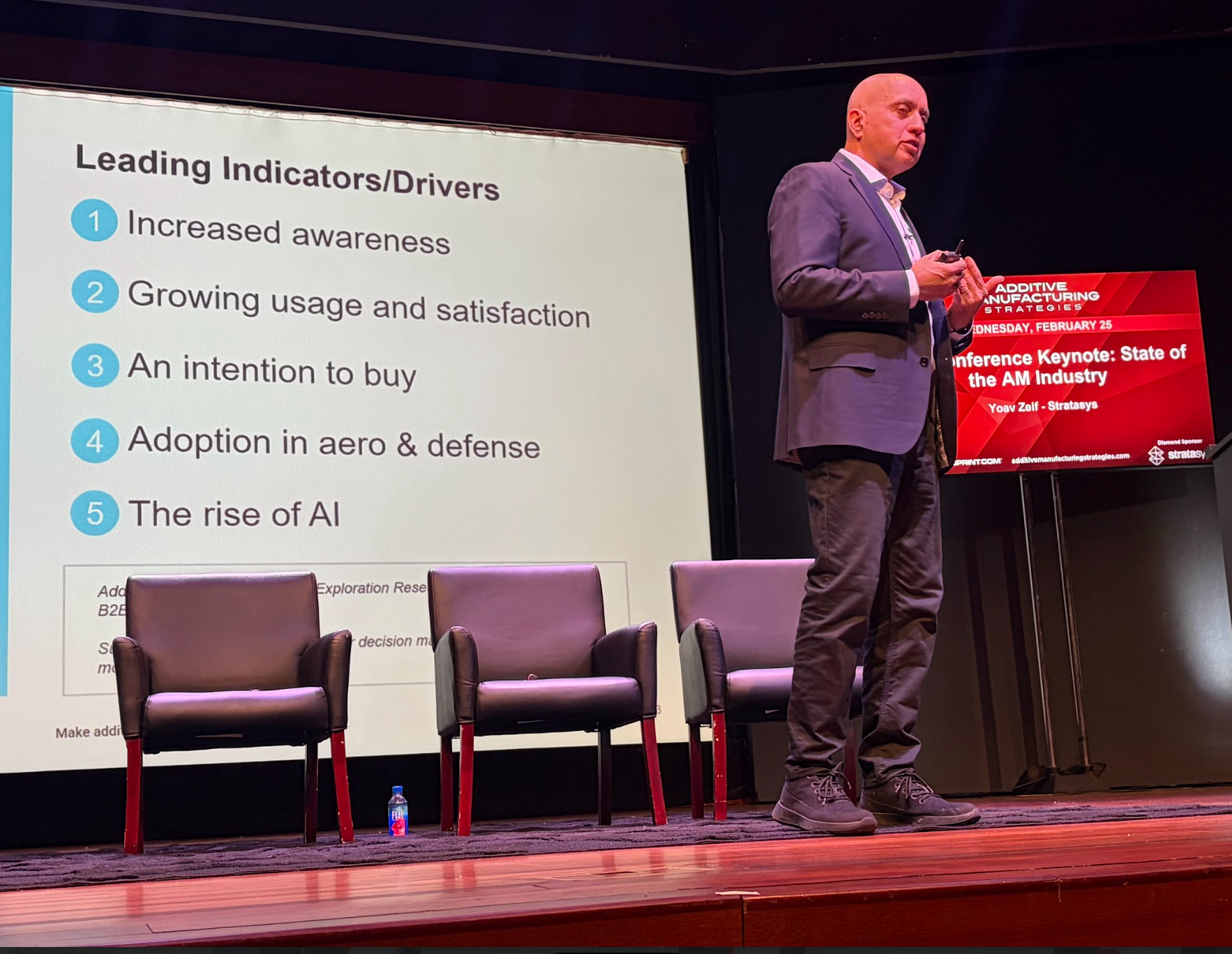
Stratasys CEO Yoav Zeif at AMS 2026
“I believe we’re on the right path to reach sustainable growth because when you look at the world and you read the signs, they are there,” he concluded. “The drivers and the applications are there. There is more awareness, growth in usage and utilization, there is growth and increase in the intent to buy. The leading verticals signaling to all the others that you should adopt this technology are ahead of the curve—aerospace and defense. AI is also a great driver.
“We’re on the right course. Let’s enjoy the journey.”
East vs. West: The Battle for 3D Printing
Josef Prusa, CEO and Founder of Prusa Research, said we need to talk to more people outside of our industry and get them excited about 3D printing.
“I will be very blunt,” he told us. “Our industry, we are living in a huge bubble and we very rarely go outside that bubble and speak to the people and make them excited about 3D printing, talk about how 3D printing is interesting.
“The regular people, they usually know that 3D printing exists. They know it’s cool, but if you ask them about one thing that can be only done by 3D printing, they have absolutely no clue.”
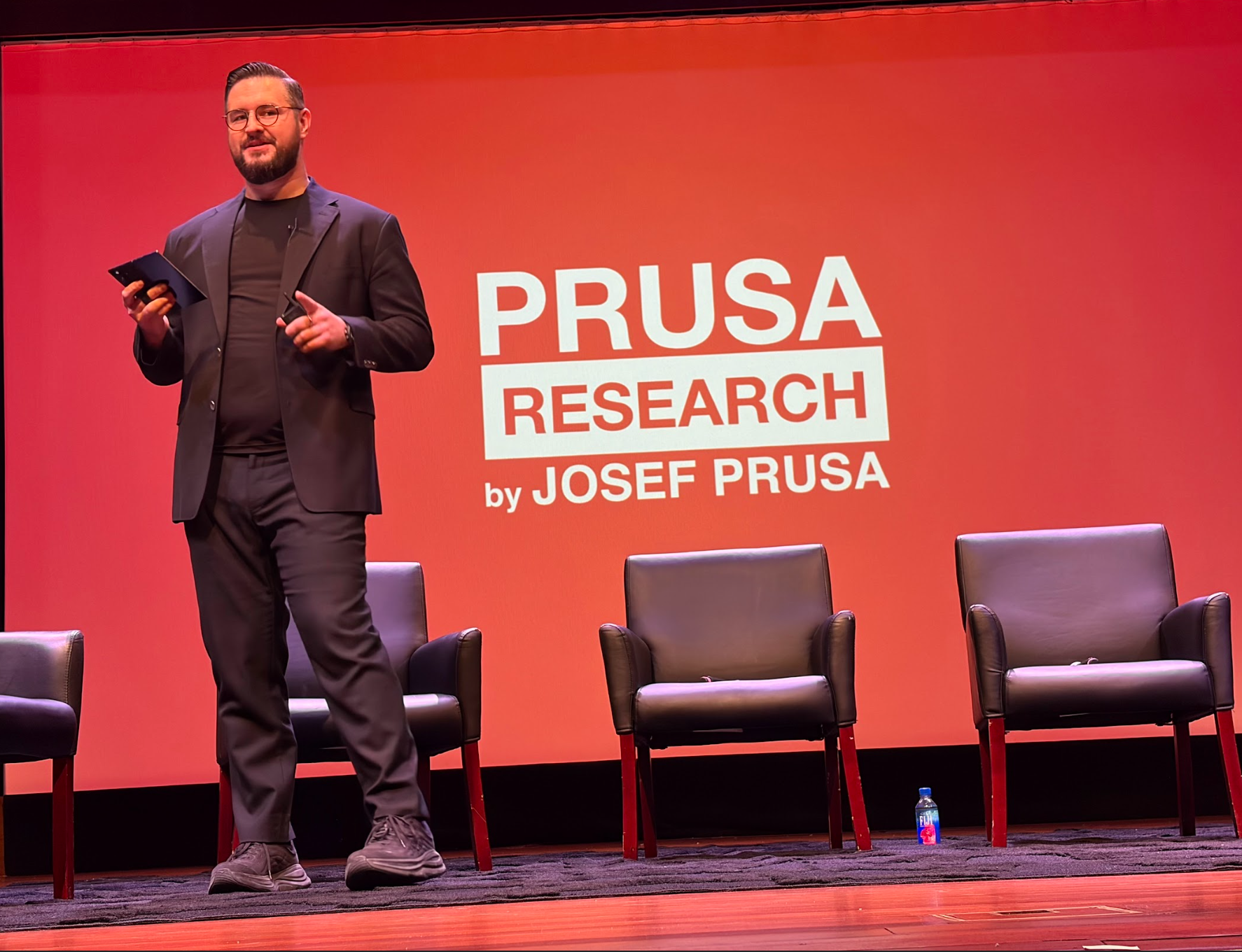
Josef Prusa, CEO and Founder of Prusa Research
China first mentioned 3D printing as a strategic industry in 2020. Now, of the top 10 desktop and entry-level 3D printer manufacturers, one is Prusa, and the others are all Chinese companies. Prusa said that if a firm starts its 3D printing journey by adopting Chinese systems, it can be hard for them to later move to printers manufactured in Western countries.
He talked about the “unfair advantage” that Chinese companies have, first noting that there is very little chance to bootstrap a new desktop 3D printing company in the U.S. or Europe these days.
“There are very aggressive tax incentives and subsidies, you can get tax holidays for years, you can get 0% interest loans,” Prusa said about Chinese printer manufacturers. “If I as a business owner have access to 0% interest rate loans, that sounds like a dream. And the Chinese founders are openly bragging that they got their factory for free, and it stands on land which they got for free too.”
Prusa also said that while the U.S. and EU are “playing by the rules” when it comes to the international patent system, Chinese companies are exploiting it. He also shared four laws set up by the Chinese government designed for gaining access to intellectual property (IP), including the National Intelligence Law, the Cryptography Law, the Counter-Espionage Law, and the scariest of all, the Data Security Law, which allows the Chinese authorities to demand data if one of its printers or servers “speaks to service” anywhere else in the world.
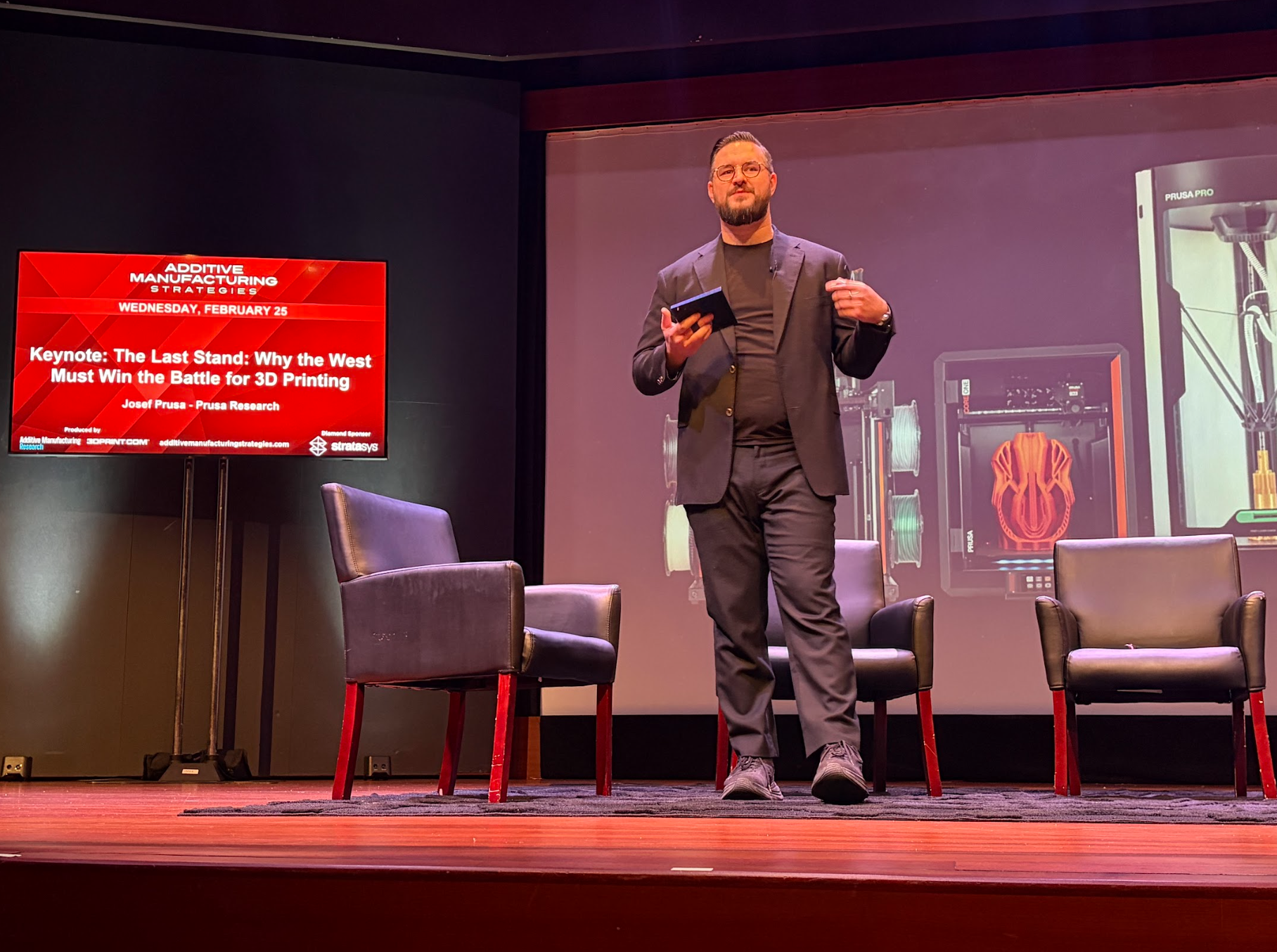
Josef Prusa, CEO and Founder of Prusa Research
3D printers are still used all the time for rapid prototyping, and as such, are “heavily concentrated in places where new IP is created.” Also, as Prusa said, we are very close to printing parts of high enough quality that they pass the “look test,” in which you can place the part in a room, and even professionals won’t realize that it’s 3D printed.
“I feel that China also sees this and that is why they push so hard,” he concluded.
So what can we do? Prusa says we need to communicate more clearly with the public about what we know.
“It’s all about the small and medium businesses where it’s like a 30-50 person machine shop. They do not have cybersecurity experience,” Prusa said. ‘They are suppliers for aerospace or for other critical infrastructure. And their livelihood depends on what they are making. So we really, really, really need to work on this together and get outside of our 3D printing bubble.”
3D Printing in Dentistry
I was very glad that the blizzard did not keep Scott Dunham, Senior Vice President of Research for AM Research, from opening the healthcare session at AMS 2026 with his “Dental AM Market Forecast.” I completely agree with him that the dental market is “one of the most interesting industry case studies.”
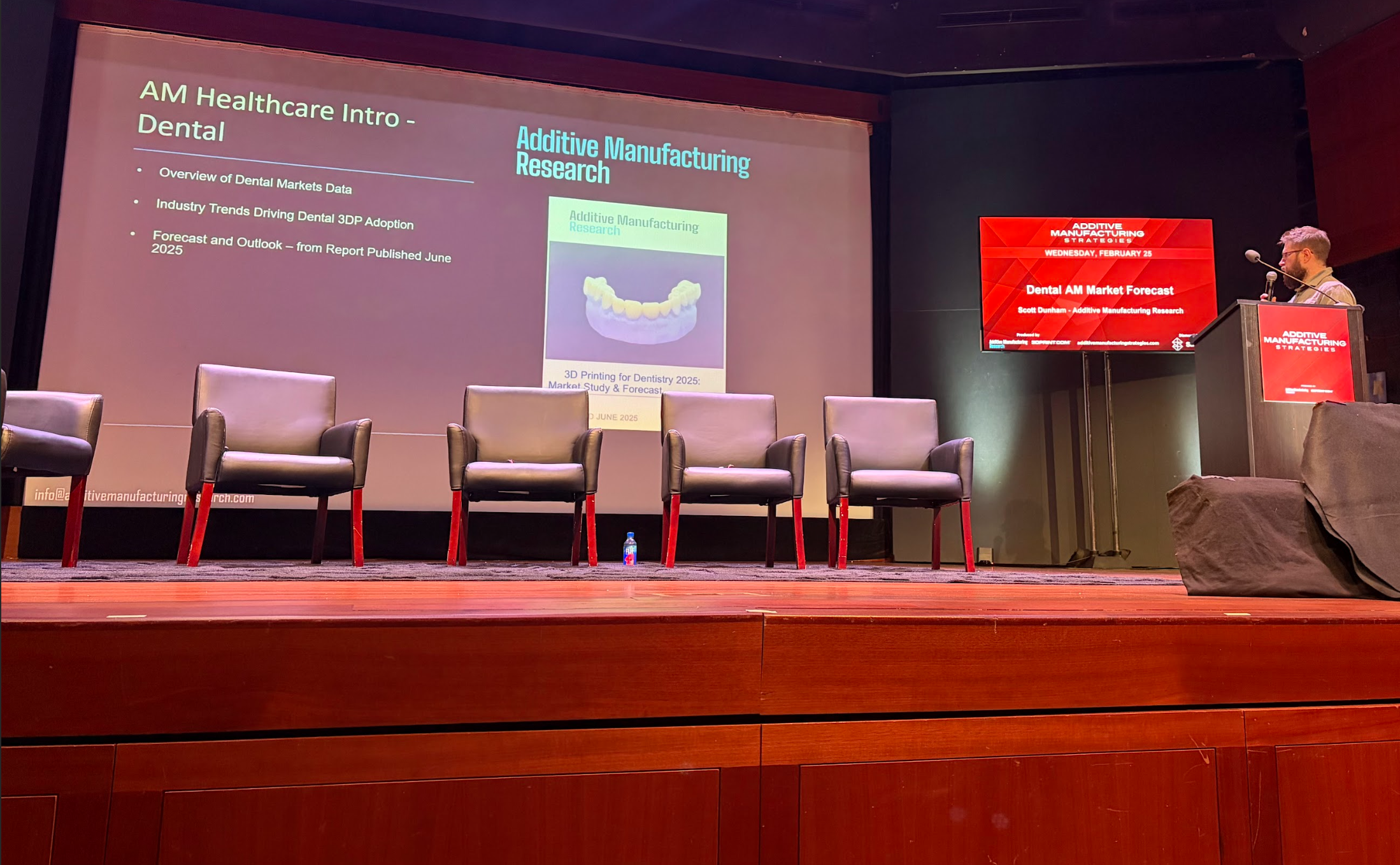
Scott Dunham, Senior Vice President of Research for AM Research
According to “3D Printing in Dentistry 2025: Market Study & Forecast” by AM Research, the AM dental market is estimated to reach $9.6 billion in revenue by 2033. Onstage, Dunham said there are “forces at work,” mostly in the western part of the world, which are positively impacting dental AM adoption. For instance, dental AM success is enabled by more capable, less costly systems.
In addition, a major consolidation of dental practices and resources is “reaching critical mass, creating unique challenges” with which digital manufacturing can help. For example, a lot of dental labs are being absorbed into larger groups as a result of M&A activity. Because AM is so adaptable, labs, businesses, and care providers are able to weather these shifts much more easily.
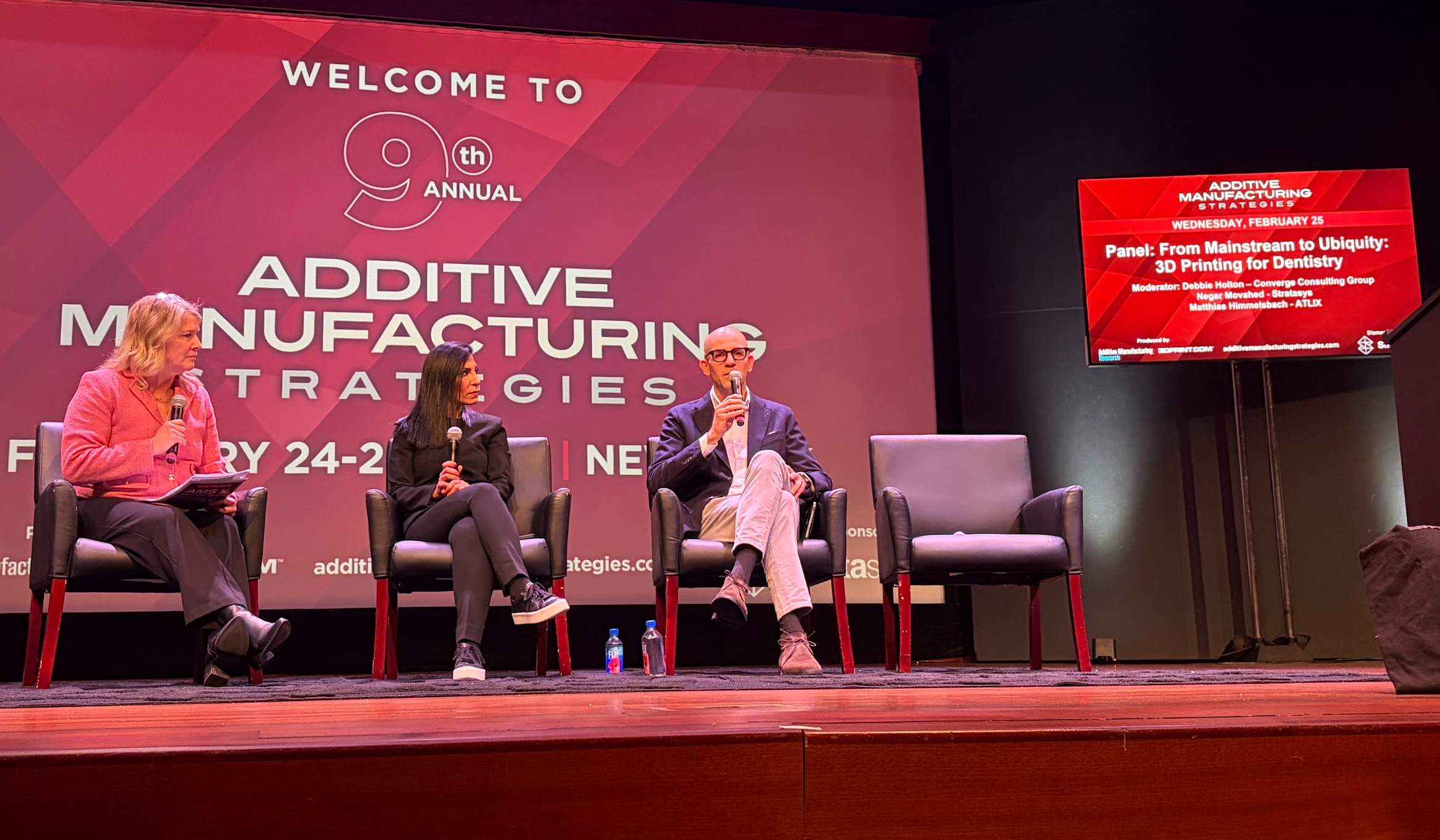
L-R: Debbie Holton, Negar Movahed, Matthias Himmelsbach at AMS 2026
We took a deep dive into this topic on our “From Mainstream to Ubiquity: 3D Printing for Dentistry” panel, moderated by Debbie Holton, Principal and Founder of Converge Consulting Group. She said that in an earlier panel on mass production, the audience learned that it’s possible to print fully featured dentures in two hours, and asked her panelists, “Why aren’t we doing that?”
Negar Movahed, Global Director of Product Lines – Dental for Stratasys, says she believes that adoption of AM in this sector is “actually pretty prevalent,” and that as material properties improve in the future, “we’ll be pretty well-positioned in the market.” Matthias Himmelsbach, the CEO of ATLIX (formerly TRUMPF Additive Manufacturing), said that adoption is “very widespread” on the metals side too, with dental being the first market to adopt AM at an industrial scale.
Holton asked why dental has been so successful at scaling AM, and Movahed said it’s because “we were solving a problem.”
“Photopolymers have really been used since the 1960s and 1970s in dental, so the transition was pretty easy,” she explained.
“The technicians were breathing in monomers, so there was a safety issue. And the digital twin really helped lab techs remake these appliances in a couple of hours. It strengthened their relationship with the dentist and improved their business.”
Himmelsbach said the value chain had already been digitized, with digital scans being taken, and introducing metal AM to the workflow brought down costs “by a factor of 10.”
An end-to-end workflow is important for most sectors that use AM, but especially in the dental sector. However, post-processing is not always well-understood, and can be a major bottleneck. Holton asked the panelists for their opinions on this. Movahed clarified that for Stratasys, post-processing means “a few different things,” from removing supports to post-curing, and said that the company is partnering with PostProcess Technologies “to ensure we can do this at scale.”
“On the metals side, customers are working to increase productivity, and we’re able to print 80 crowns in less than two hours,” Himmelsbach said. “But mitigating the bottleneck is what comes after.”
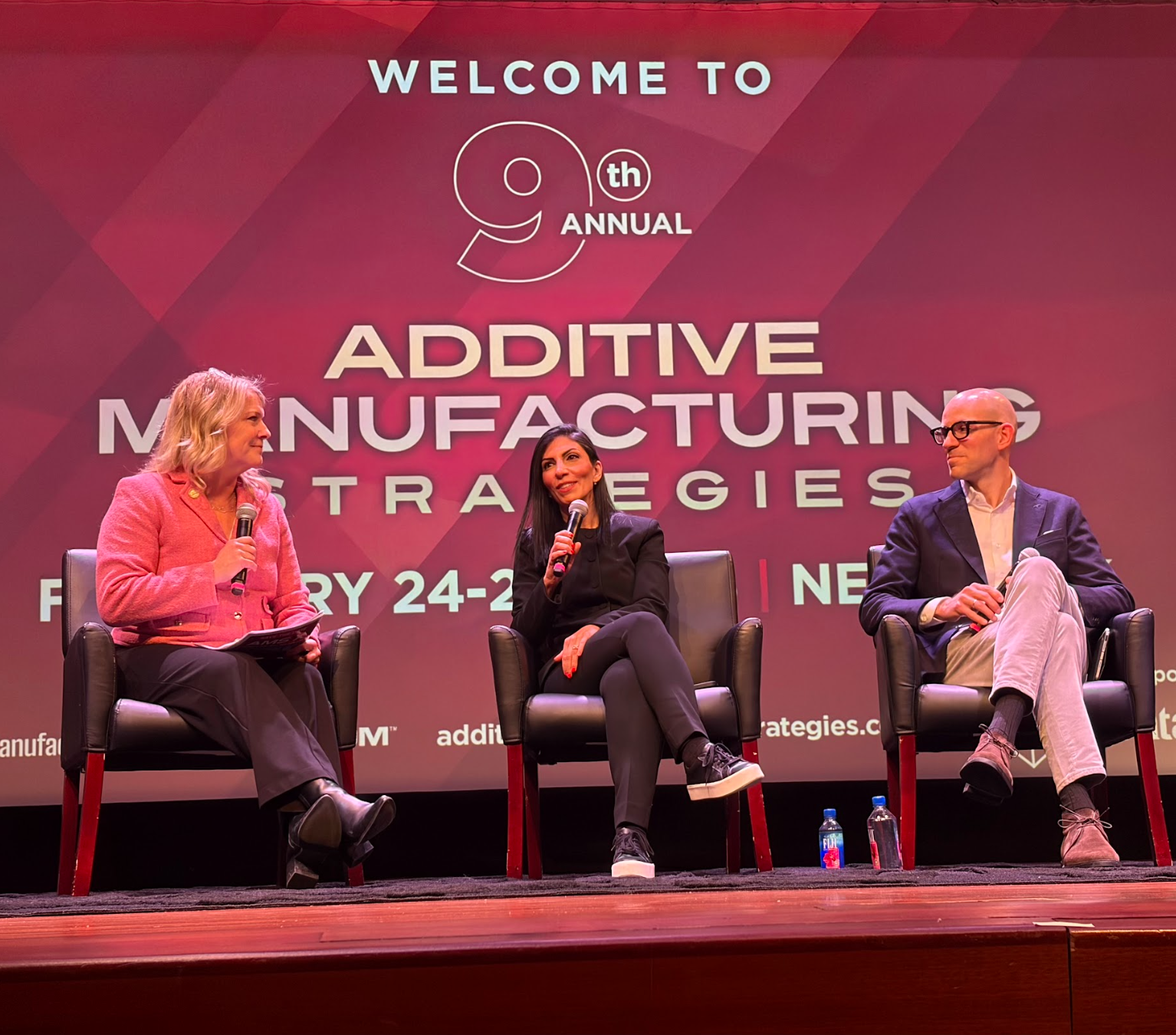
L-R: Debbie Holton, Negar Movahed, Matthias Himmelsbach at AMS 2026
Holton asked about the key attributes of scaling and what it really looks like. Himmelsbach said process integration is important, and that instead of printing parts, they’re actually “reverse processing” them at ATLIX. They start with inexpensively pre-milled elements and then integrate them with custom 3D printed metal shapes.
Movahed said that automation is required when you’re scaling, which Stratasys enables through GrabCAD software, and also mentioned integration.
“Workflow integration is really important, partnering upstream and downstream to ensure we have a validated process, so this translates into scaling,” she explained.
Finally, Holton asked about lessons learned in the dental AM industry. Going back to her answer to an earlier question, Movahed said 3D printing in dentistry has been so successful because of a focus on solving problems, rather than selling printers or resin.
“Also, the business case really relates to not one-size-fits-all products,” she said.
Himmelsbach agreed wholeheartedly, calling dental “a perfect business case.”
“A non-hyped segment of additive, you heard it here first!” Holton said.
Even though the blizzard canceled travel to NYC for many attendees, I think AMS 2026 was still a great success, and reminded everyone who was able to be there why this 3D printing community matters.
Images courtesy of 3DPrint.com
Subscribe to Our Email Newsletter
Stay up-to-date on all the latest news from the 3D printing industry and receive information and offers from third party vendors.
Upload your 3D Models and get them printed quickly and efficiently.