There’s a lot of crossover between ceramics and additive manufacturing (AM). Now, we just need to get the two industries to talk to each other more. It was nice to see this happening at the recent Ceramics Expo in Cleveland, Ohio.
Presentations and Panel Discussions
Ceramics have an obvious home in commercial and artistic applications, but these brittle materials are also corrosion- and heat-resistant, which means they can be used in more extreme environments, like fuel cells and hypersonics. At the event, there was a panel discussion on this very topic, moderated by Sinto Advanced Ceramics USA Business Development Manager Dave Diegel.
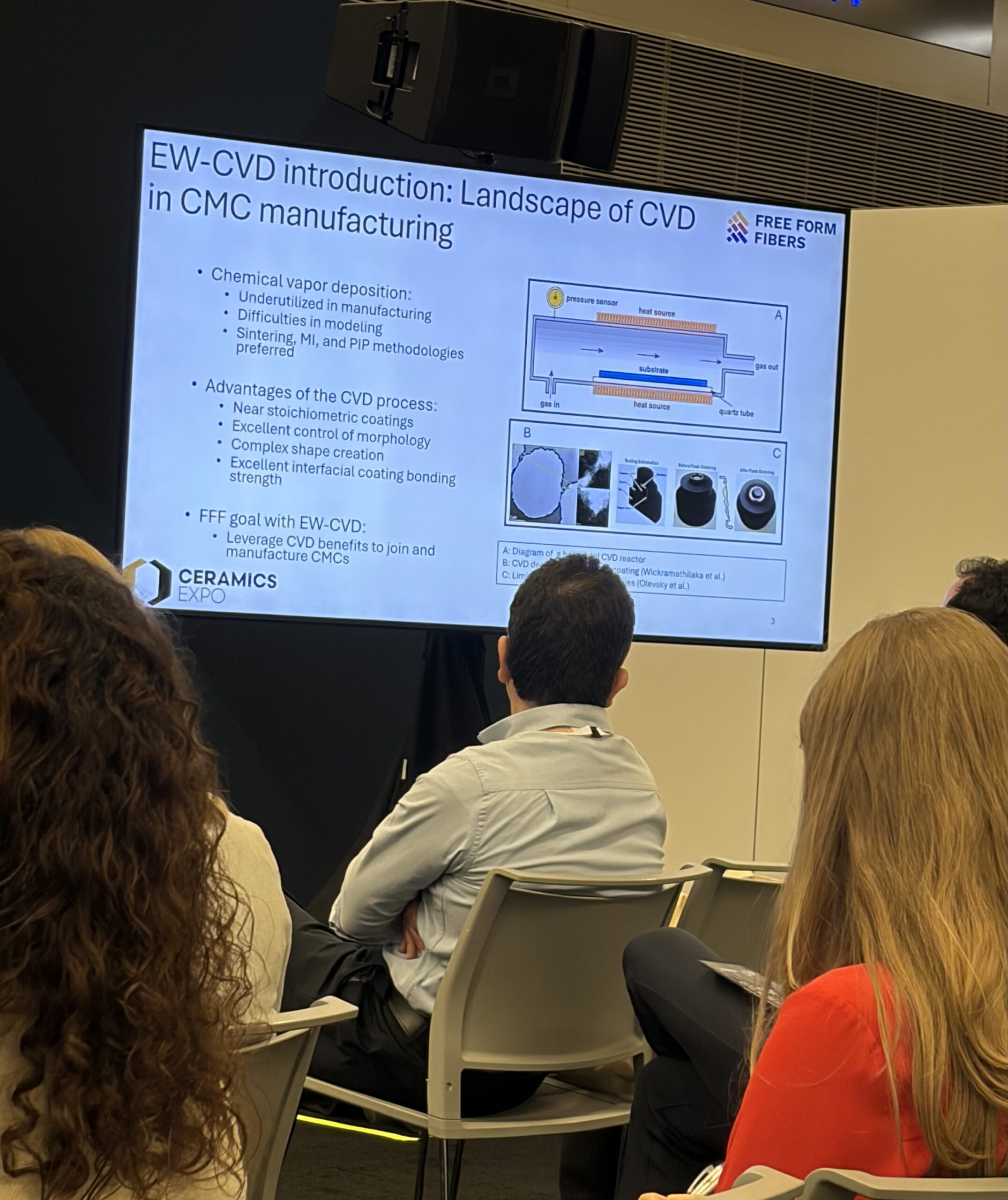
Seth Shuster, a research scientist at Free Form Fibers, explained the company’s chemical vapor deposition (CVD) process, which received government funding last year for semiconductor production with its ceramic matrix composites. The other panelist was Jonathan Volk, Director of Advanced Materials Applications at Starlab Space, which is working on a Low Earth Orbit (LEO) space station to eventually replace the ISS. Volk shared some examples of ceramics manufacturing in space, like Redwire 3D printing ceramic single-piece turbine blisks.
Diegel asked the two what role AM will play for their specific applications, and Volk made the very good point that “volume is precious in space. You’ll save a lot of weight and room if you have a printer in space, so you can make what you need on-demand, as opposed to having to send up a lot of different parts.
“What I’m most impressed about by 3D printing of non-oxide ceramics is the tolerance of shapes people can make in such a short time,” Shuster said. “When we need to join things that need a higher degree of conformity or unique tolerances, 3D printing is definitely an option. I definitely think it will be useful, and the combination of different manufacturing practices will be integral to the bigger picture.”
I was pleased that there was also a panel specifically about AM in ceramics. Moderator Jamie Scaglione, Market Development Manager at materials science consultancy Lucideon, shared about the UK’s AMRICC Centre, a full end-to-end ceramics processing pilot-scale facility. Using AM technologies like robocasting and vat polymerization, the center helps manufacturers with paste formulation, sintering, and debinding. It’s also home to the Ceramic Hybrid Additive Manufacturing Platform, or CHAMP, from Hydra Manufacturing.
Nikolai Sauer, CTO of Sinto Advanced Ceramics, explained that the contract manufacturer, which was previously part of Bosch, is focused on series production for industries like medical devices and semiconductors. Sauer shared a few use cases Sinto has worked on, like a laser cap with integrated extraction channels for automated laser welding in battery manufacturing, and a high-precision insulating sleeve for medical devices.
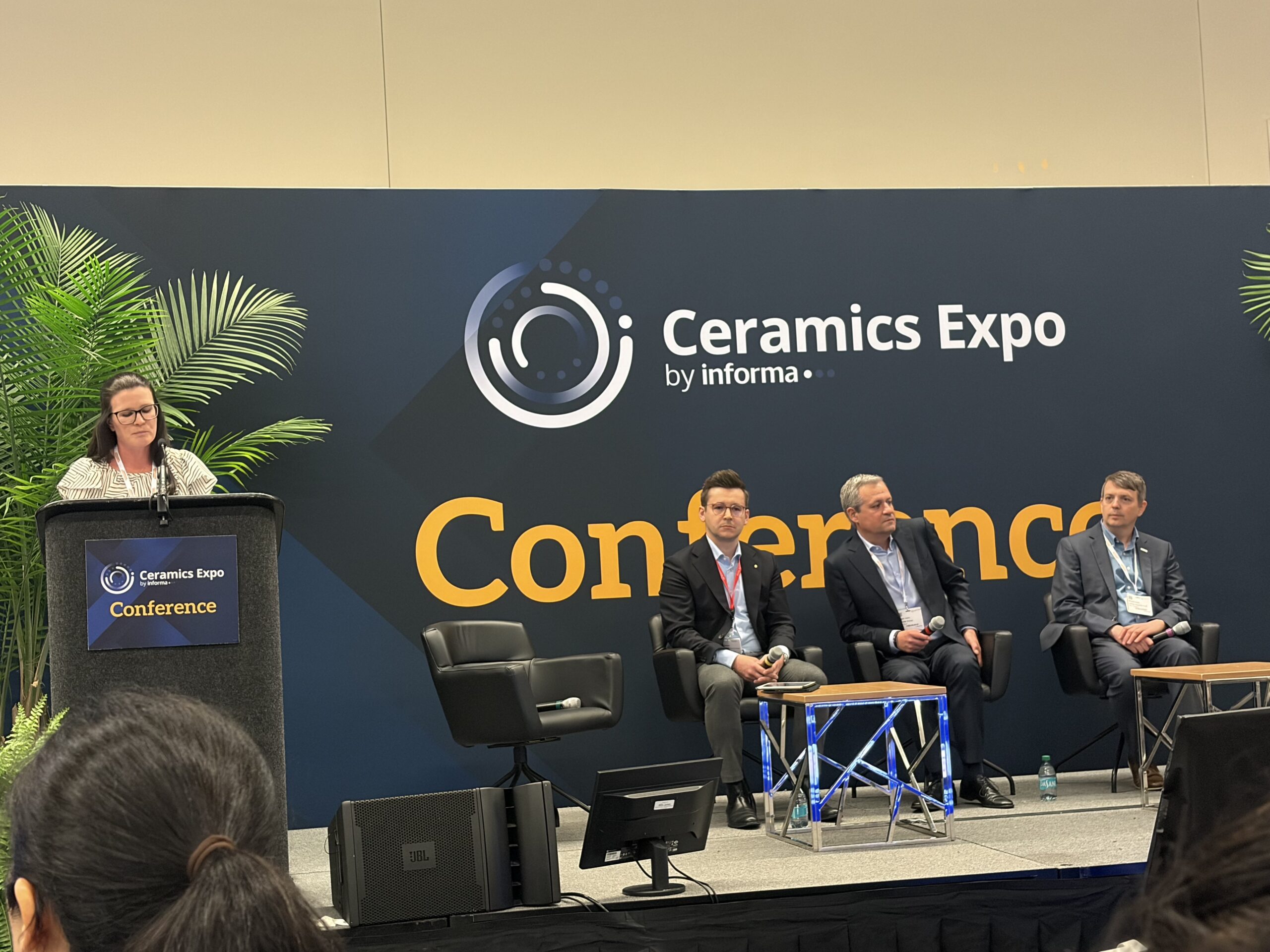
L-R: Jamie Scaglione, Lucideon; Nikolai Sauer, Sinto Advanced Ceramics; Srdan Vasic, Exentis Group; Shawn Allan, Lithoz America
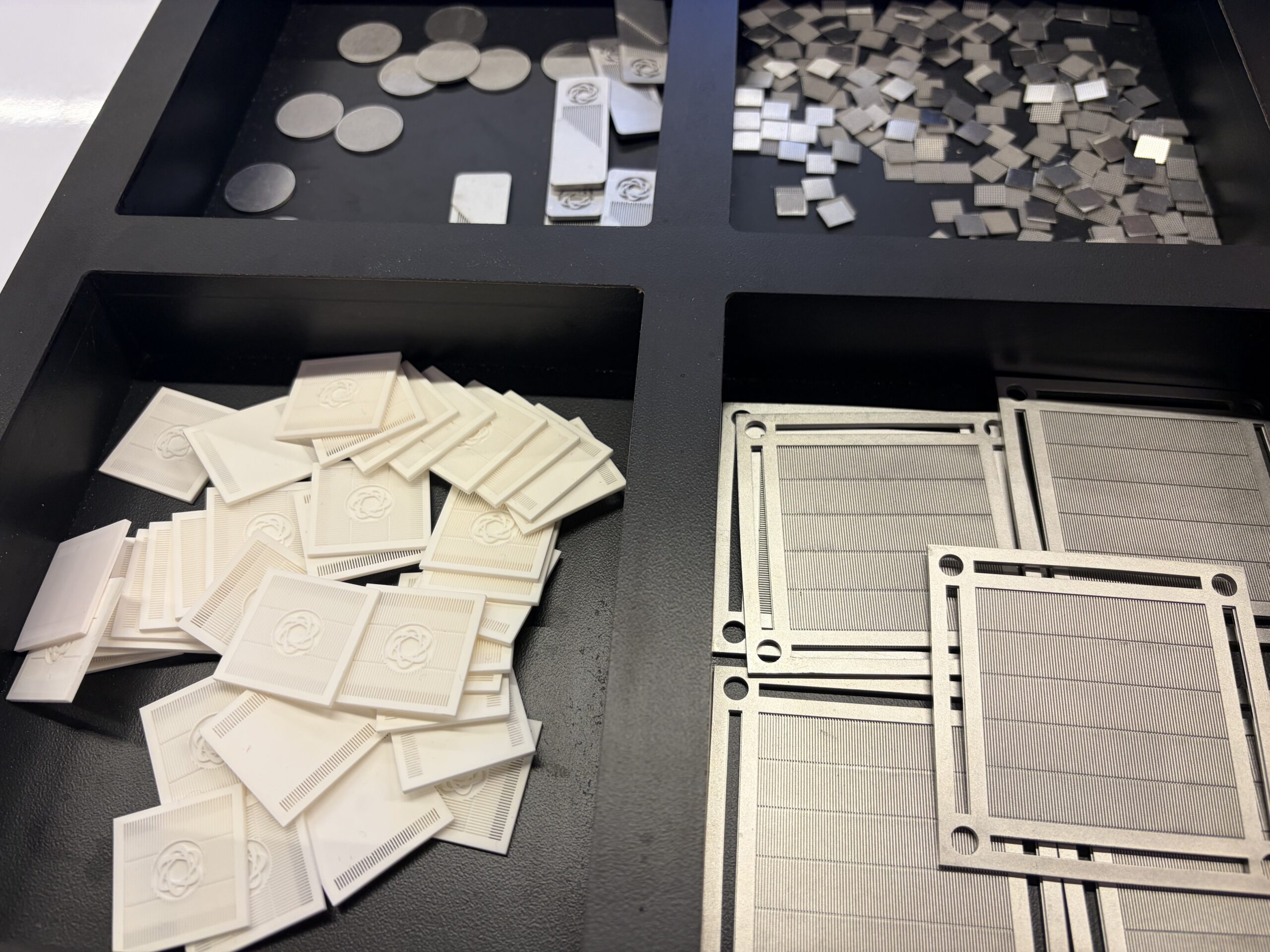
Exentis Group offers an industrial additive screen printing process with a very high build rate, low post-processing requirements, and lower costs. As CCO/CPO Srdan Vasic explained, the technology enables 3D printing of fine-structured ceramics for medtech, cooling structures, and semiconductors. He also said the company can process a variety of materials in the same system, including copper alloys, titanium, Inconel, and ceramics like alumina nitride, silicone carbide, and zirconia.
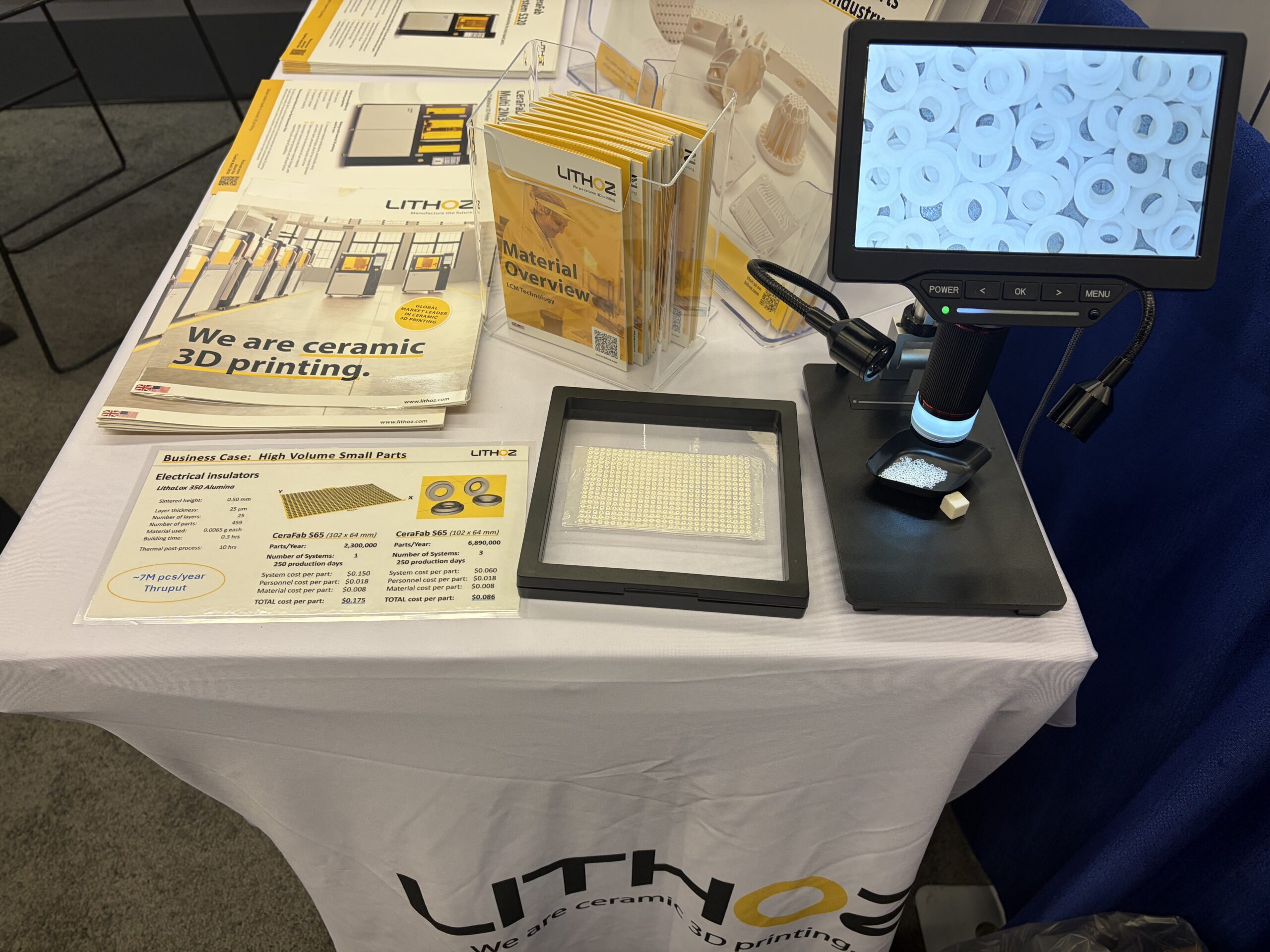
Shawn Allan, Vice President of Lithoz America, said their lithography-based printers are used for a range of applications, like aerospace and aviation, medical and dental, electronics and semiconductors, and R&D. He explained that people often turn to ceramics when other materials have failed, and that 3D printing can help you achieve “fast iteration cycles, efficient material use, and hopefully the final part you need.”
“It’s not a solution for everything, but you can use a lot of great design tools to support making useful geometries and accessing things we can’t do with traditional manufacturing,” Allan said.
When asked about the future of ceramics AM in five years, the panelists all agreed that costs need to come down.
“We’re working intensely towards bringing the cost down, both with process chain and raw materials,” Sauer said. “We’re limited in terms of what quantities make sense.”
Allan also said Lithoz has seen many more applications and use cases being commercialized over the past five years, and believes this will continue.
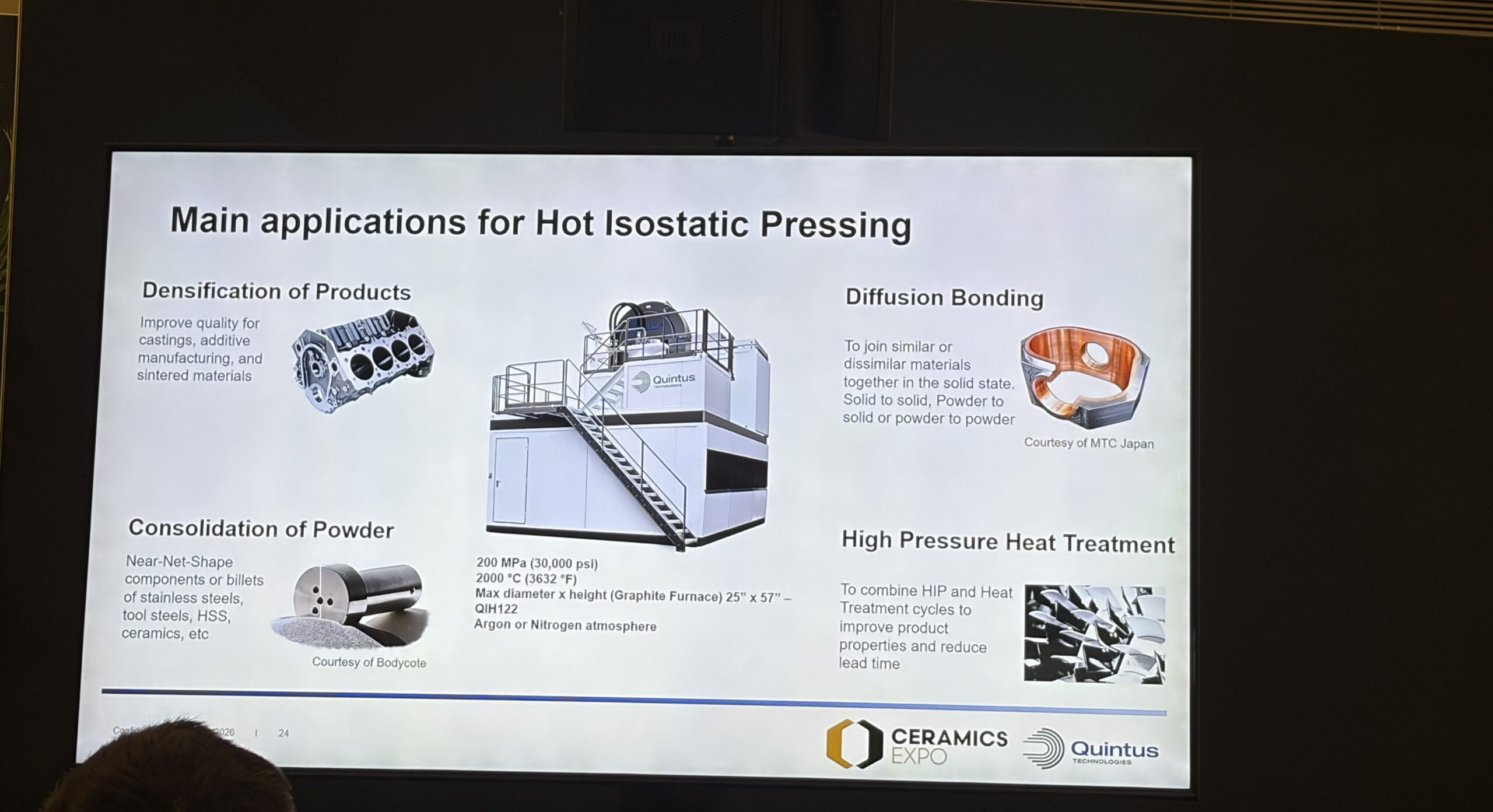
Chad Beamer’s presentation on hot isostatic pressing (HIP) at Quintus Technologies
There were many other panels and presentations as well. Alloy Enterprises presented about manufacturing 3D microchannel cold plates at scale for chips, Fabric8Labs and Fabrisonic each shared about their respective AM technologies, and Quintus Technologies discussed the latest capabilities in hot isostatic pressing (HIP). We heard a keynote presentation from America Makes, the opening panel on the second was about geopolitical forces reshaping the global supply chain, and the closing panel focused on addressing real world challenges in high-performance ceramic material. It was definitely a good mix of topics.
Booth Visits
Ceramics Expo was co-located with the Thermal Management Expo, and I visited a few booths on each side.
Walking down one of the aisles, I saw the classic silhouette of a desktop 3D printer, and like a moth to the flame, I was immediately drawn to an active Bambu Lab P1S.
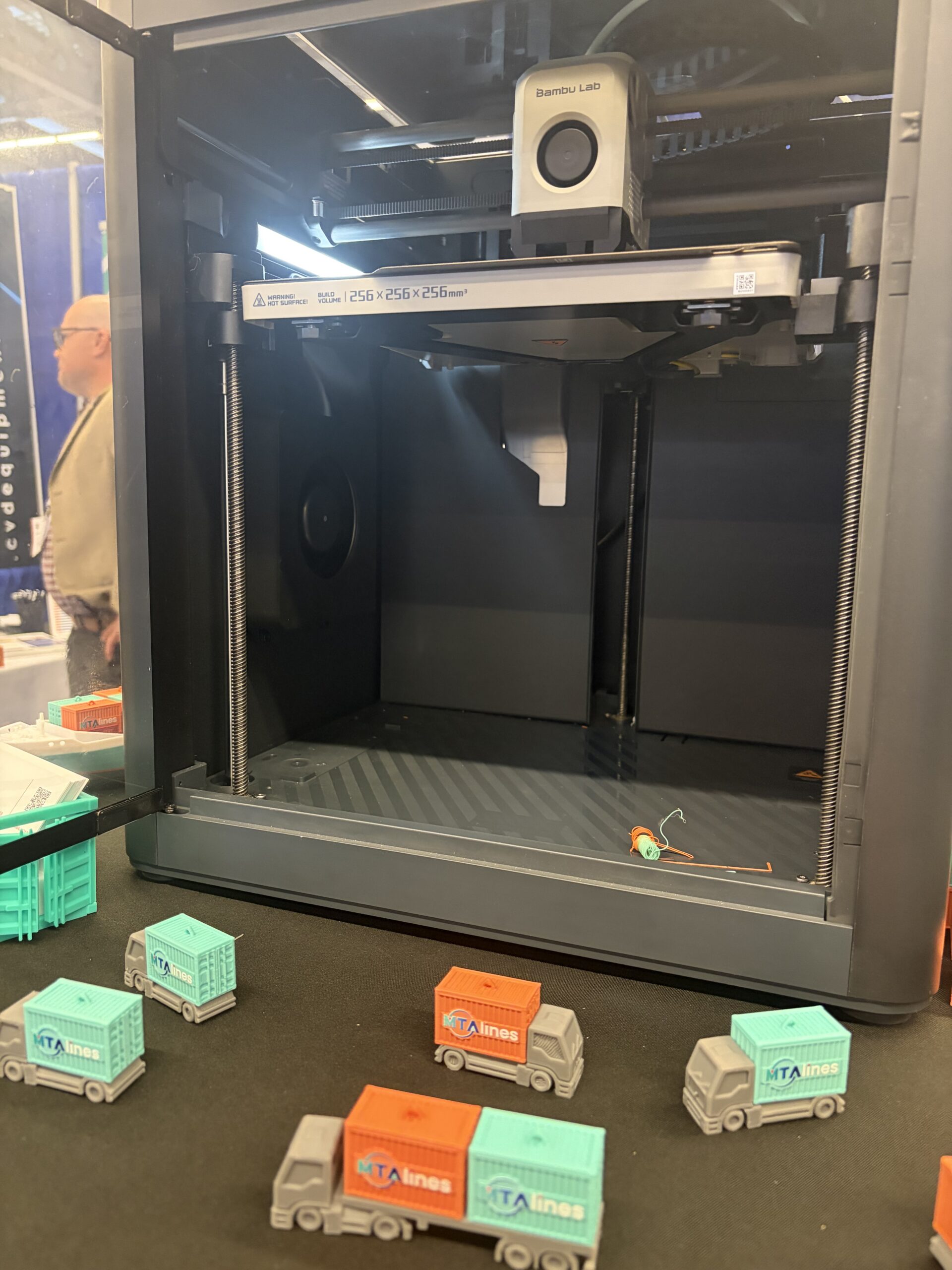
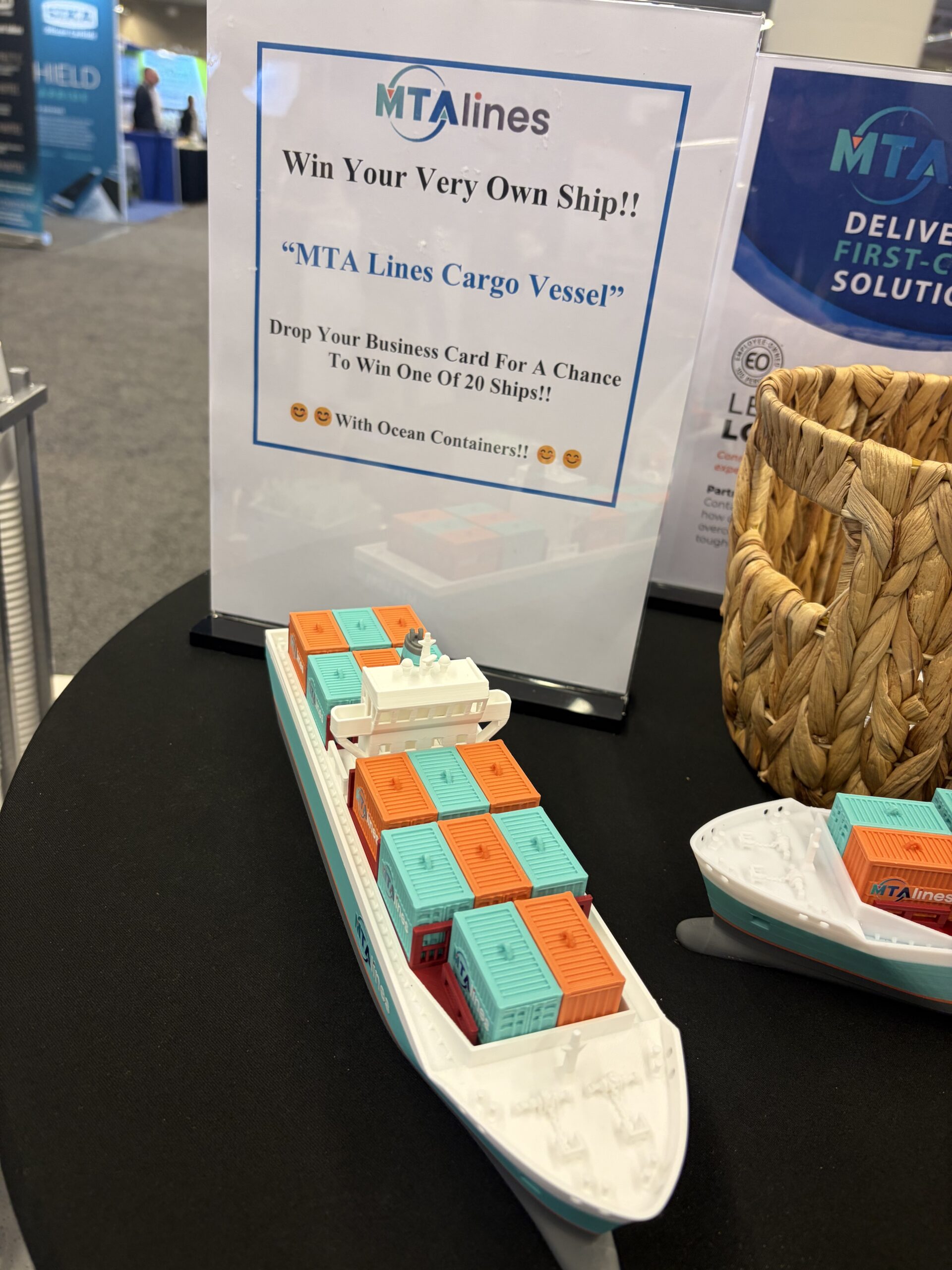
The booth was MTA Lines (Midwest Transatlantic Lines), an Ohio-based logistics and freight forwarding services firm, and not a 3D printing company. But an employee had wisely brought his printer to the event, and the Bambu P1S was busily cranking out freight trucks every time I walked past. In a stroke of very random good luck, I also won a cargo vessel, complete with two levels of ocean containers, that was printed on the P1S.
I did also visit several booths that were more involved with the 3D printing industry, starting with the Youngstown Business Incubator (YBI). Applications Engineer Dylan Negro told me about an interesting project they’re working on with XJet and Nivalon Medical: an AI-generated, metal-free spinal implant 3D printed out of Zirconia-toughened Alumina. Another thing that makes this ceramic implant unique, as Negro explained, is that it’s actually inserted through an incision in the front of the body and slides in to fit between the specific vertebrae. It’s still under development, but has the potential to be far less invasive than opening up a patient’s back.
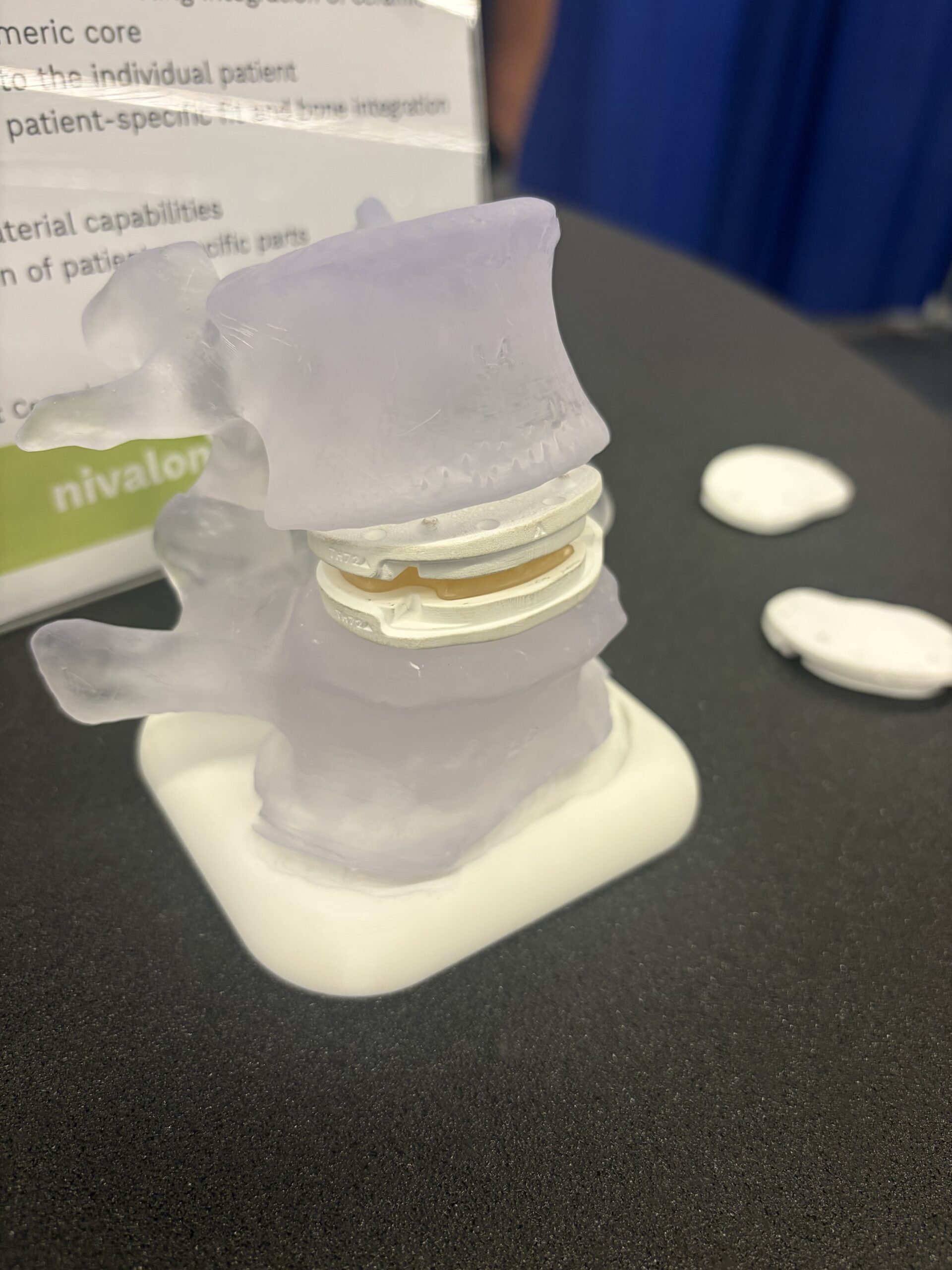
In addition to incubating Nivalon through its tech program and helping it find medical industry expertise to develop the product further, Negro said YBI is also responsible for 3D printing the end plates for the implant, using XJet’s technology; the flexible material between the plates is injection molded. 22 plates can be printed in one build on the XJet Carmel 1400 C.
“They’re still doing a significant amount of testing, but the founder of Nivalon is planning to be patient #1 for this implant,” Negro told me.
The implants will be patient-specific, using CT scans to perfectly match the top of the 3D printed implant to the person’s spine.
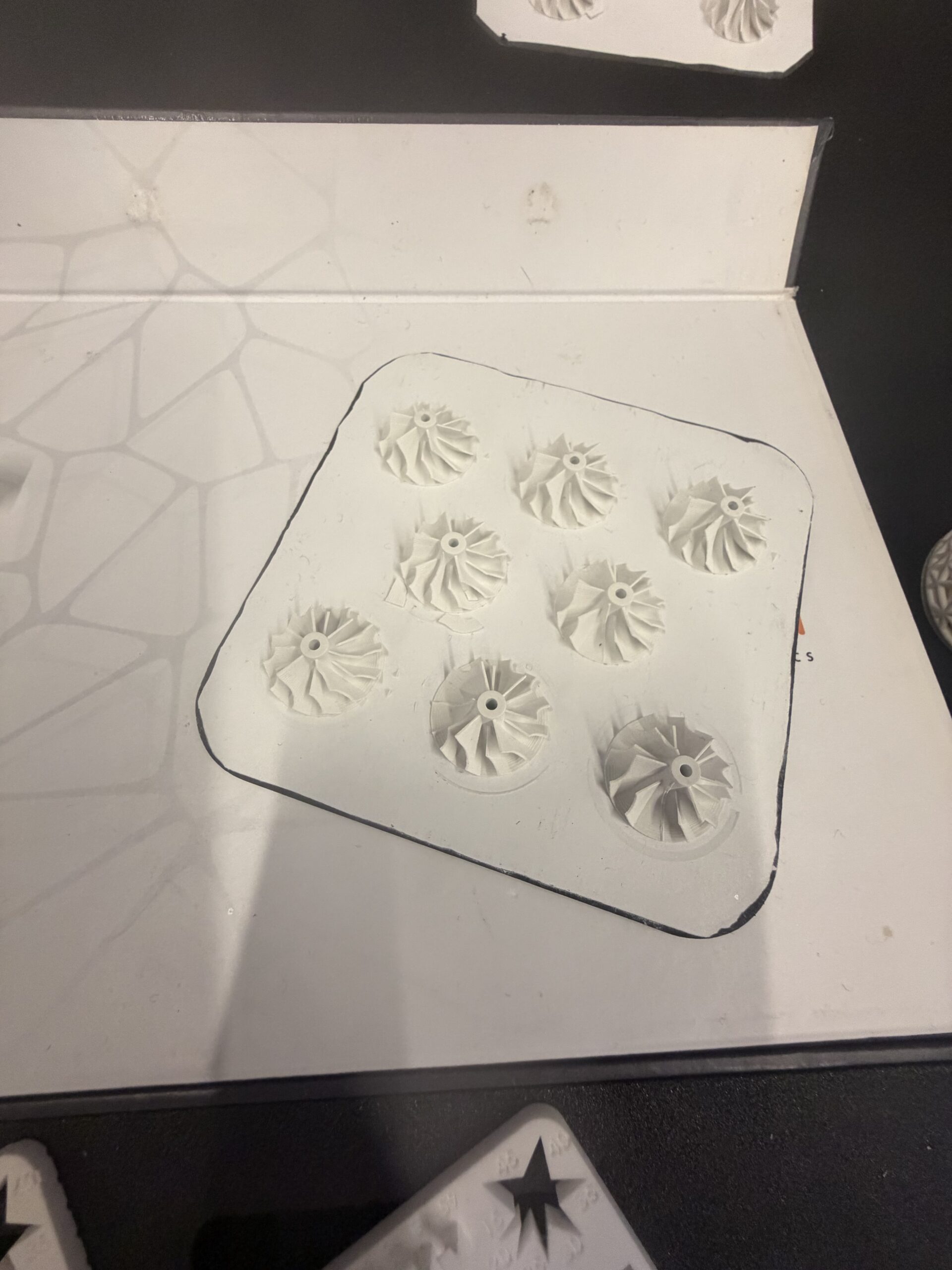
Green impellers at the Sinto Advanced Ceramics USA booth
The Sinto Advanced Ceramics USA booth had a variety of prints on display, like heat exchangers, a hip cup, washer retaining clips, and even some zirconia jewelry.
“A lot of people have skin allergies to materials like nickel, stainless steel, or silver, so going with zirconia, you guarantee they’re not going to have allergies,” Project and Applications Engineer Sean Bradley told me.
Bradley also showed me a Fraunhofer part for embedding wires.
“You’ve got electrical connectors built into the part,” he explained. “Alumina is pretty good for thermal conductivity, and really bad for electrical conductivity, so you can have your circuit printed directly onto the heat sink. That way you’re pulling out heat without having to have a thermal interface, and you’re at no risk of shorting out your electronics.”
-
- Cold plate printed on silicone
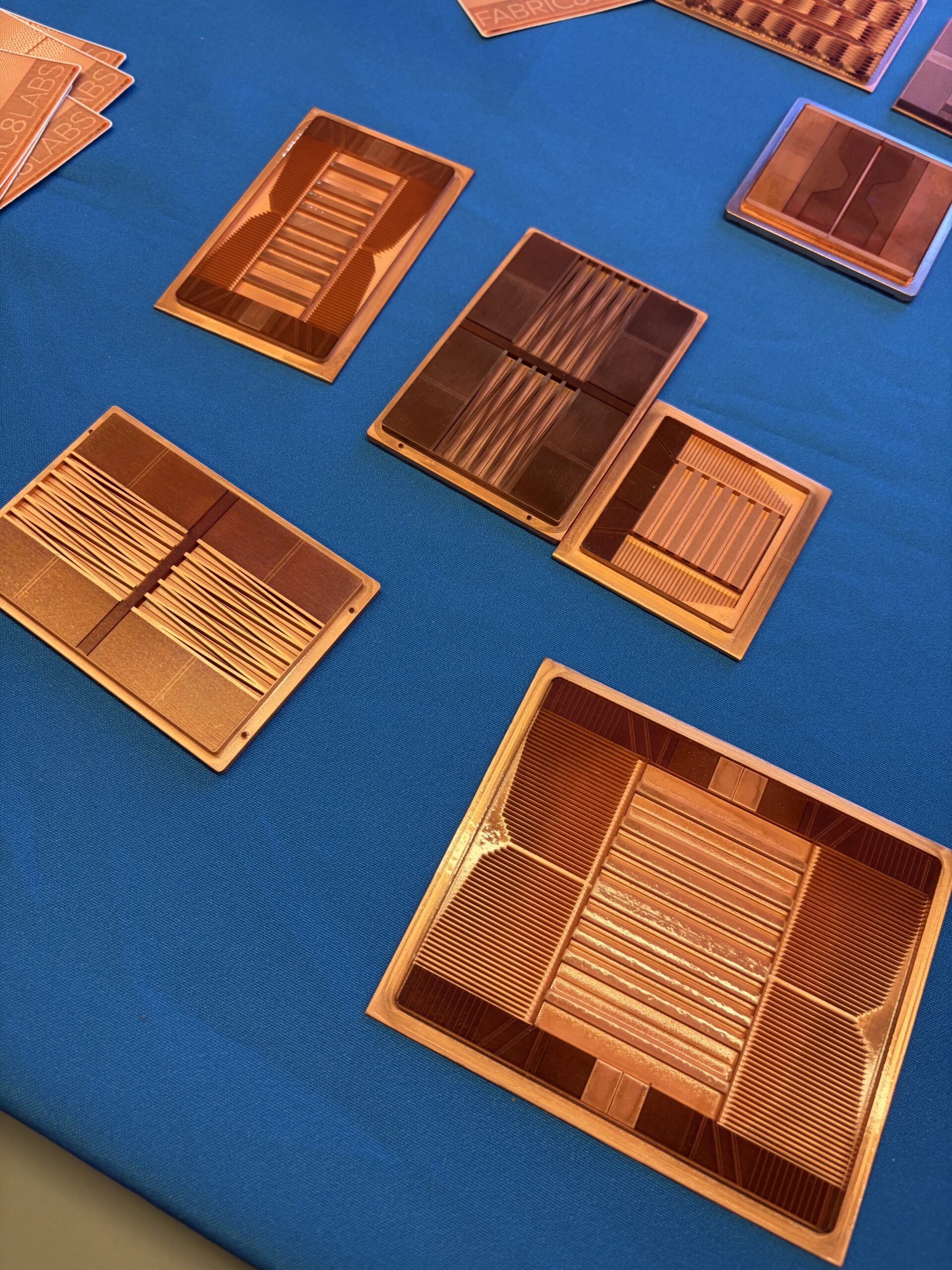
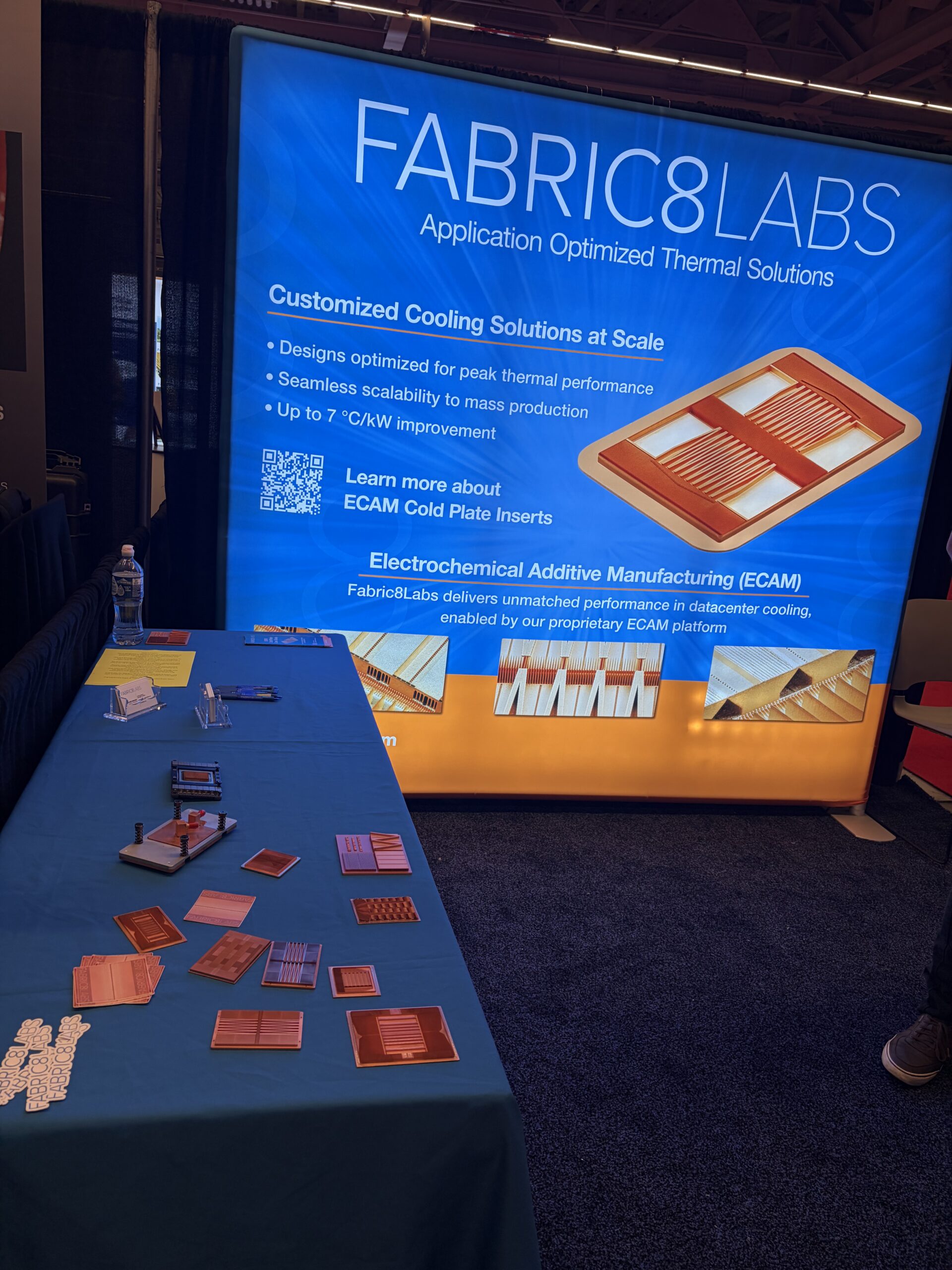
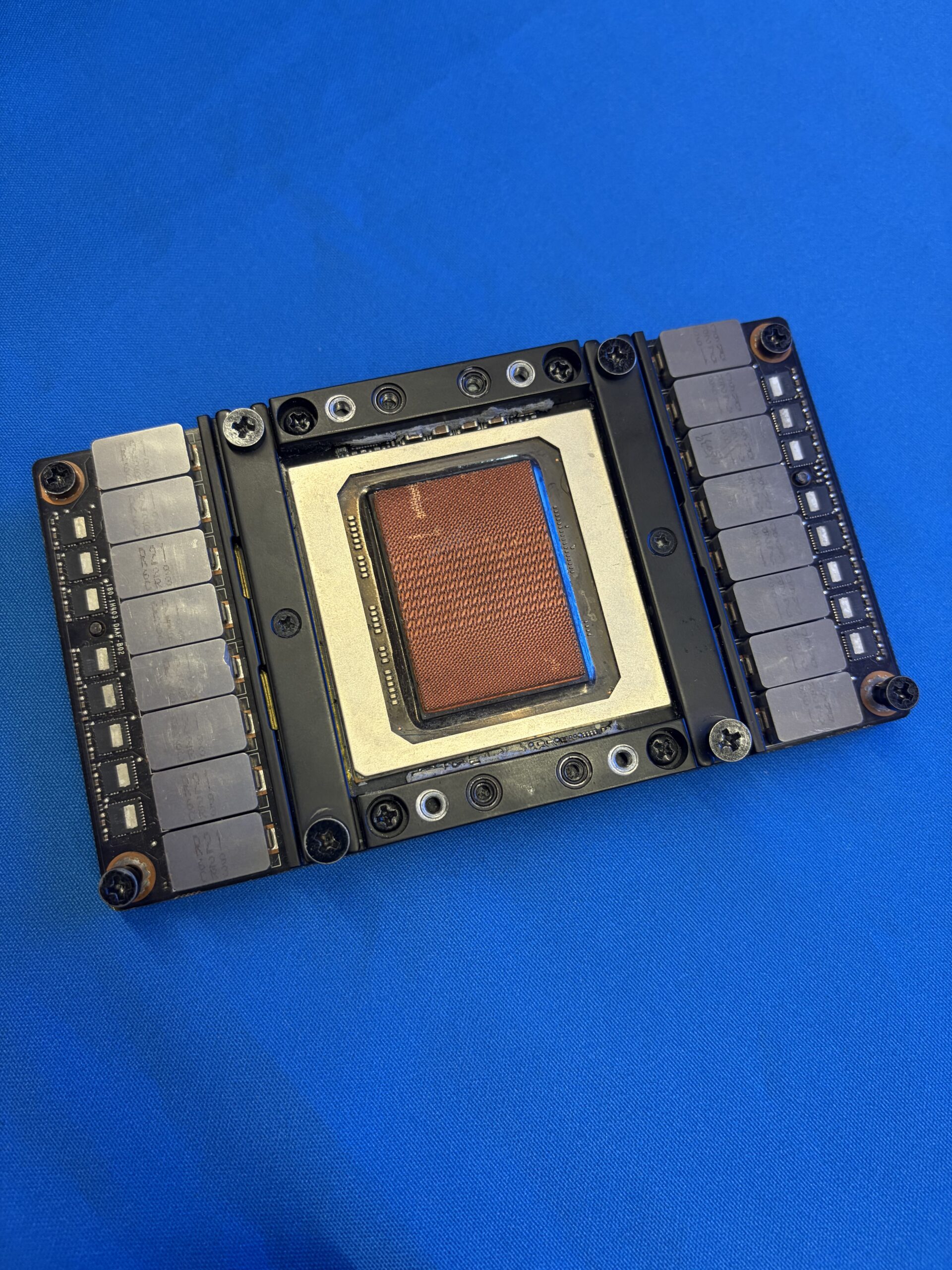
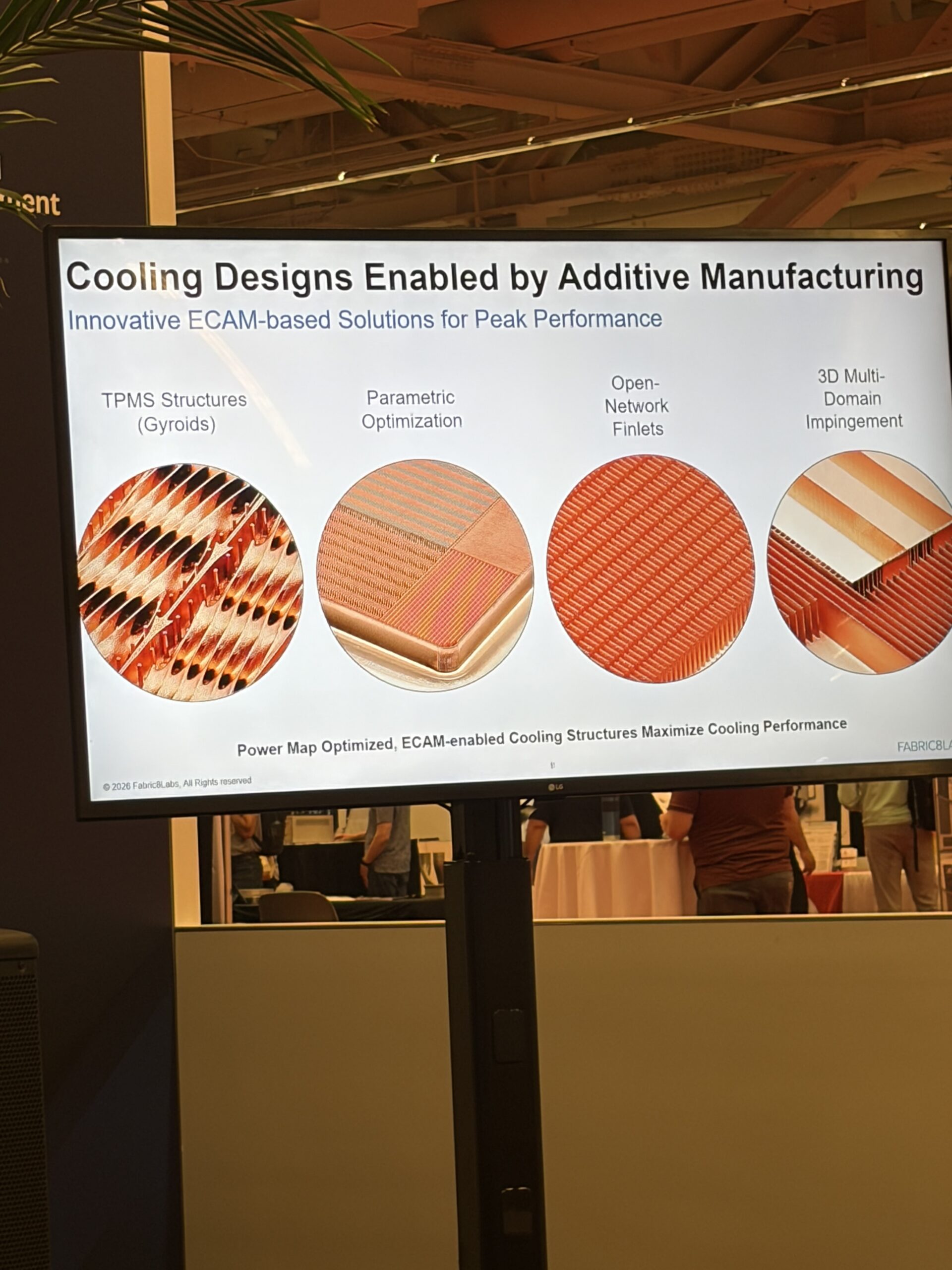
At the Fabric8Labs booth, Marketing Coordinator Tanner Immonen showed me a variety of copper cold plates, including single-phase and multi-domain (with parallel flow), made with the company’s electrochemical additive manufacturing (ECAM). ECAM uses liquid metals, similar to the electroplating chemistries you’d see in semiconductor and PCB manufacturing. The printhead is a micro-electrode array that builds at the atomic level, enabling micron-scale feature resolution and the complex internal features you need for these cold plates.
At the booth was one of these plates that had been printed directly on silicone, and Immonen told that this is the direction the company is moving towards.
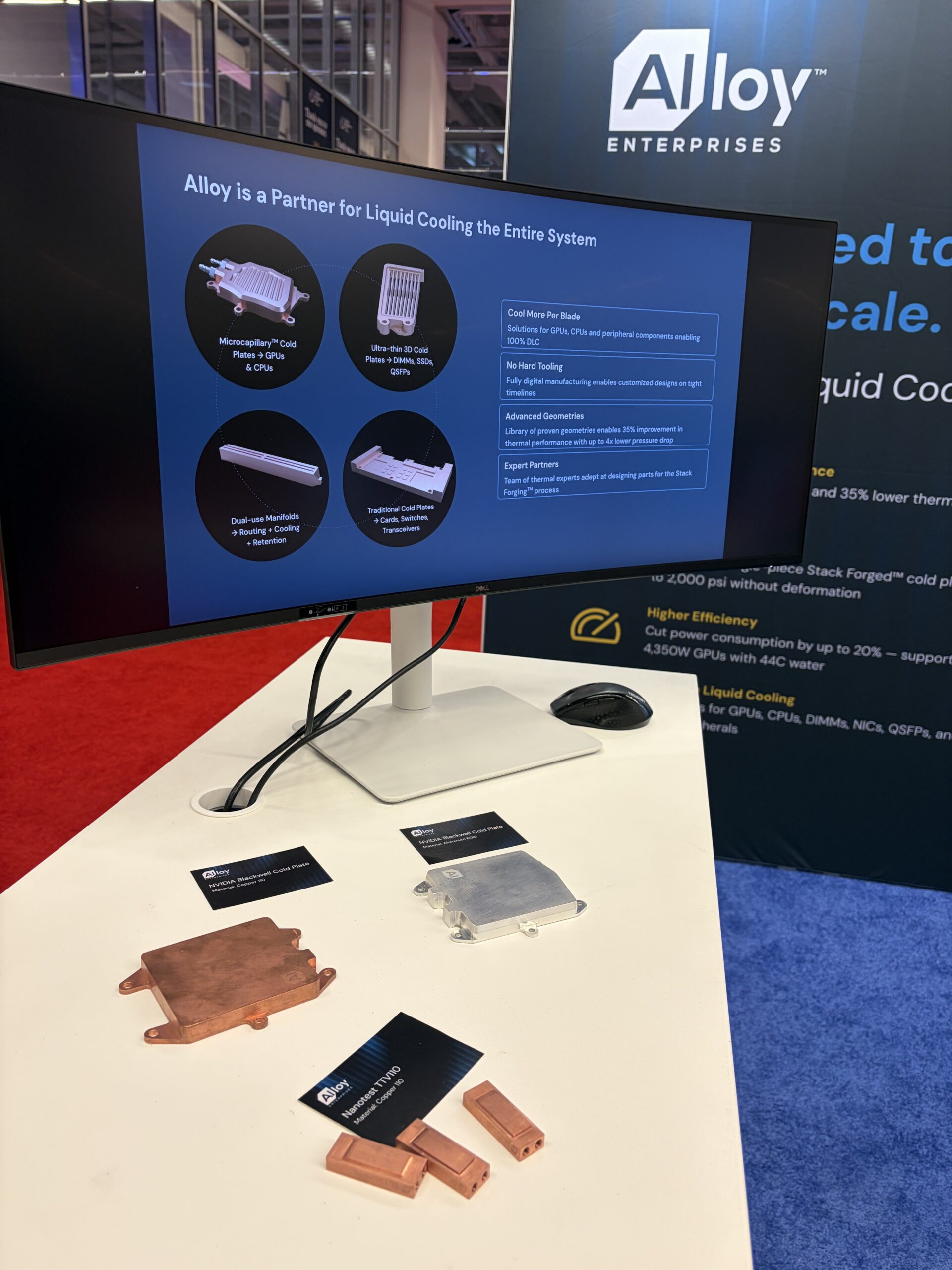
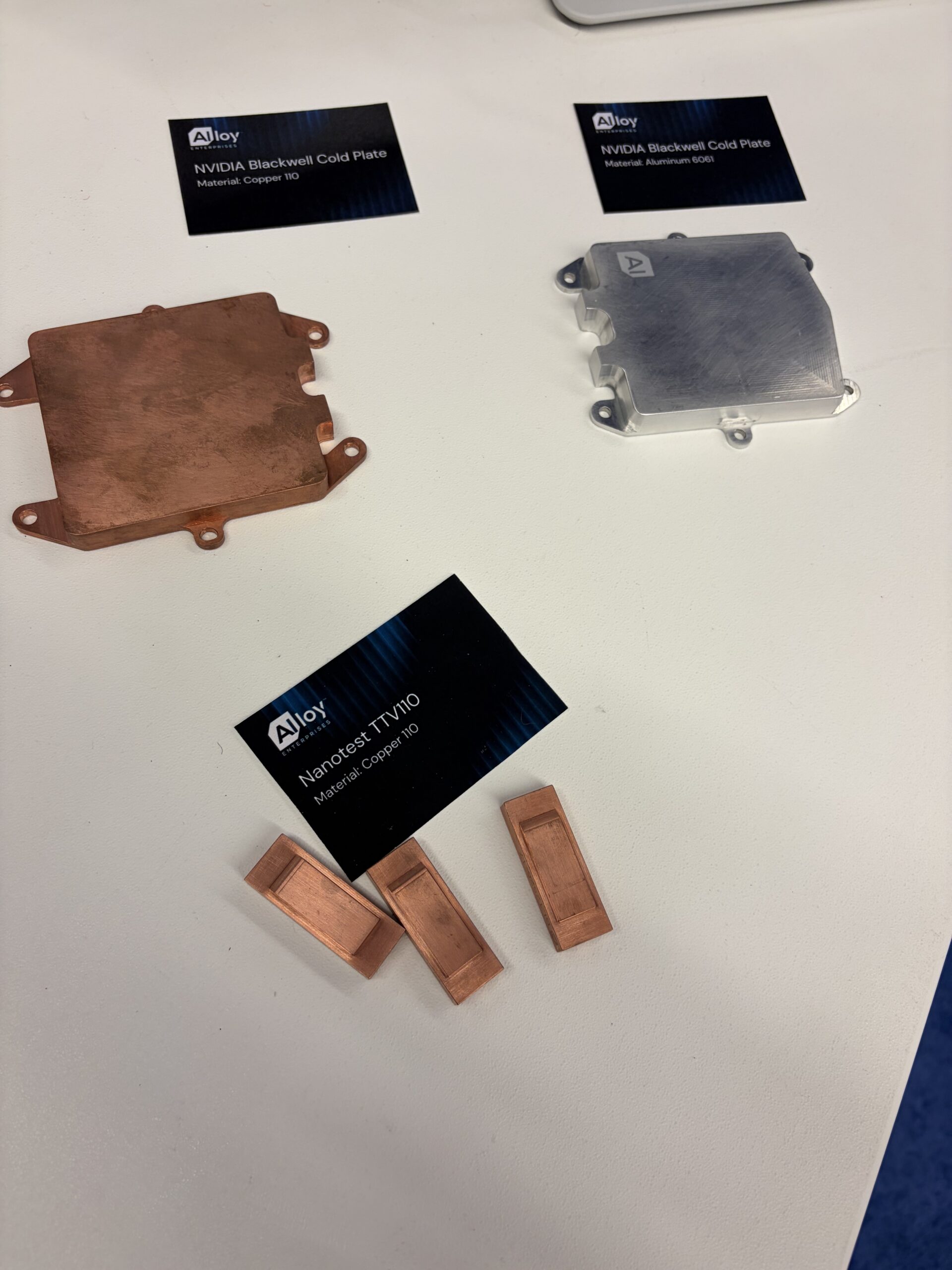
Barrett Gruner, Senior Thermal Solutions Engineer for Alloy Enterprises, and I discussed the importance of designing for specific applications, and not just building a printer to build one.
“A lot of additive companies are always targeting the same slice of the pie, because they’re always chasing the big, loudest application. There’s a lot of overlap, so it can be kind of difficult to break out,” he said.
Ryan O’Hara, previously the VP of Business Development at Alloy and now Technical Sales Executive for Johnson Controls, reminded me that Alloy is not an additive company per se, but a thermal management company enabled by advanced manufacturing, which includes AM.
“We definitely found that our Stack Forging is very pre-disposed for handling liquid solutions, specifically thermal management,” Gruner said. “This is inherently good at thermal solutions.”
This proprietary process combines, as Vanesa Listek put it, “traditional manufacturing, additive, and some clever engineering.” Stack forging entails thin sheets of metal that are laser cut into complex stencils, inhibited in specific areas, stacked together, and diffusion-bonded together. This results in a block packed with parts that are fully dense, and can achieve very thin channels.
“We don’t have to worry about powder evacuation, which makes production a lot easier,” Gruner said.
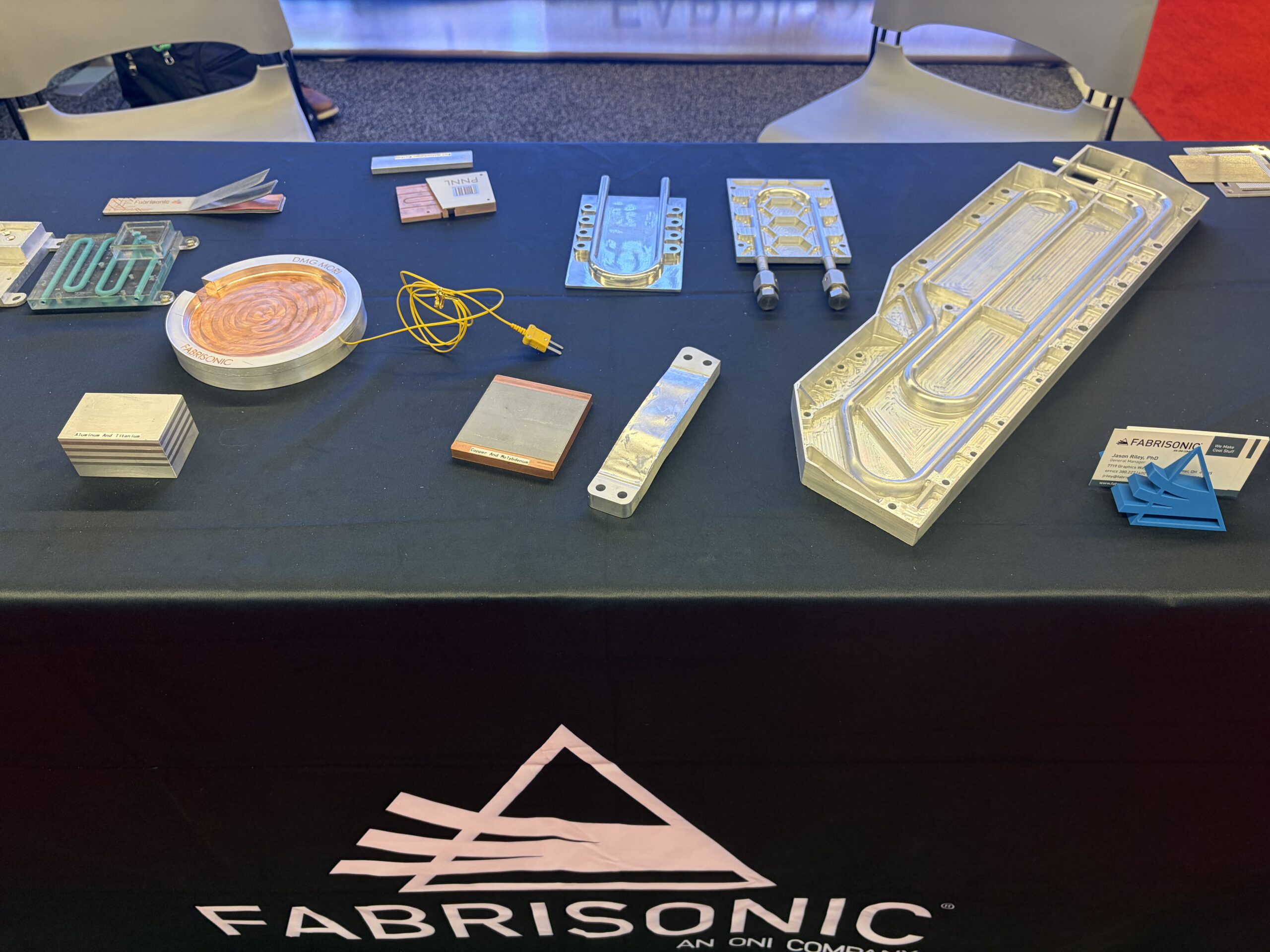
In 2025, Fabrisonic was purchased by metal services company United Performance Metals, an O’Neal Industries subsidiary. As Maureen Coffey, Inside Sales, told me at Ceramics Expo, this gave the company plenty of needed financial support for “some of the development things we’ve never really been able to do.” One example is contracting with a thermal engineer who helps evaluate things so the company can better collaborate with its customers.
“For example, how much copper do I need to add to improve thermal performance? What’s the throughput for the fluid?” Coffey said.
Fabrisonic also acquired a new inspection machine, so they can improve part accuracy and ensure everything meets customer specs.
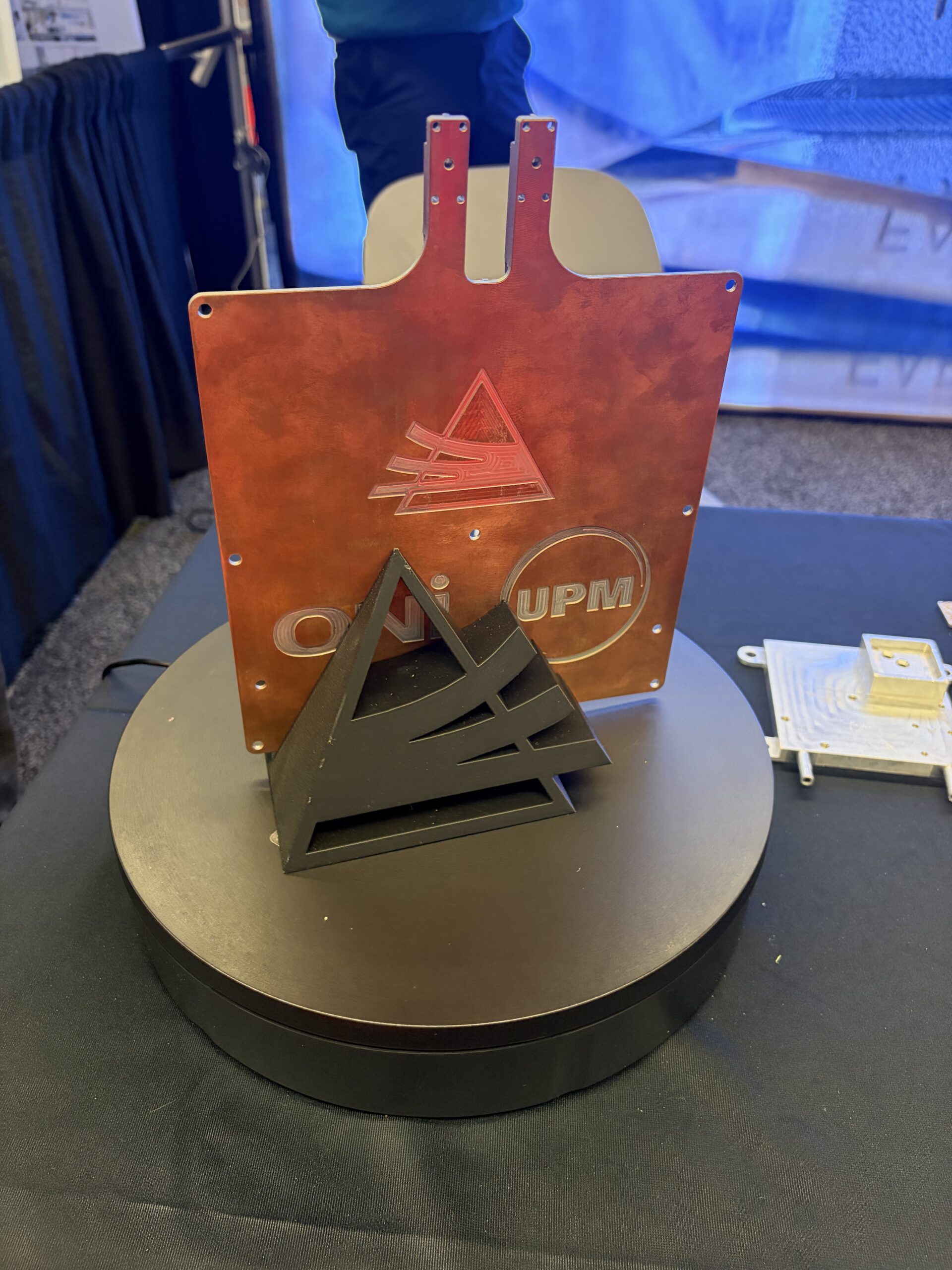
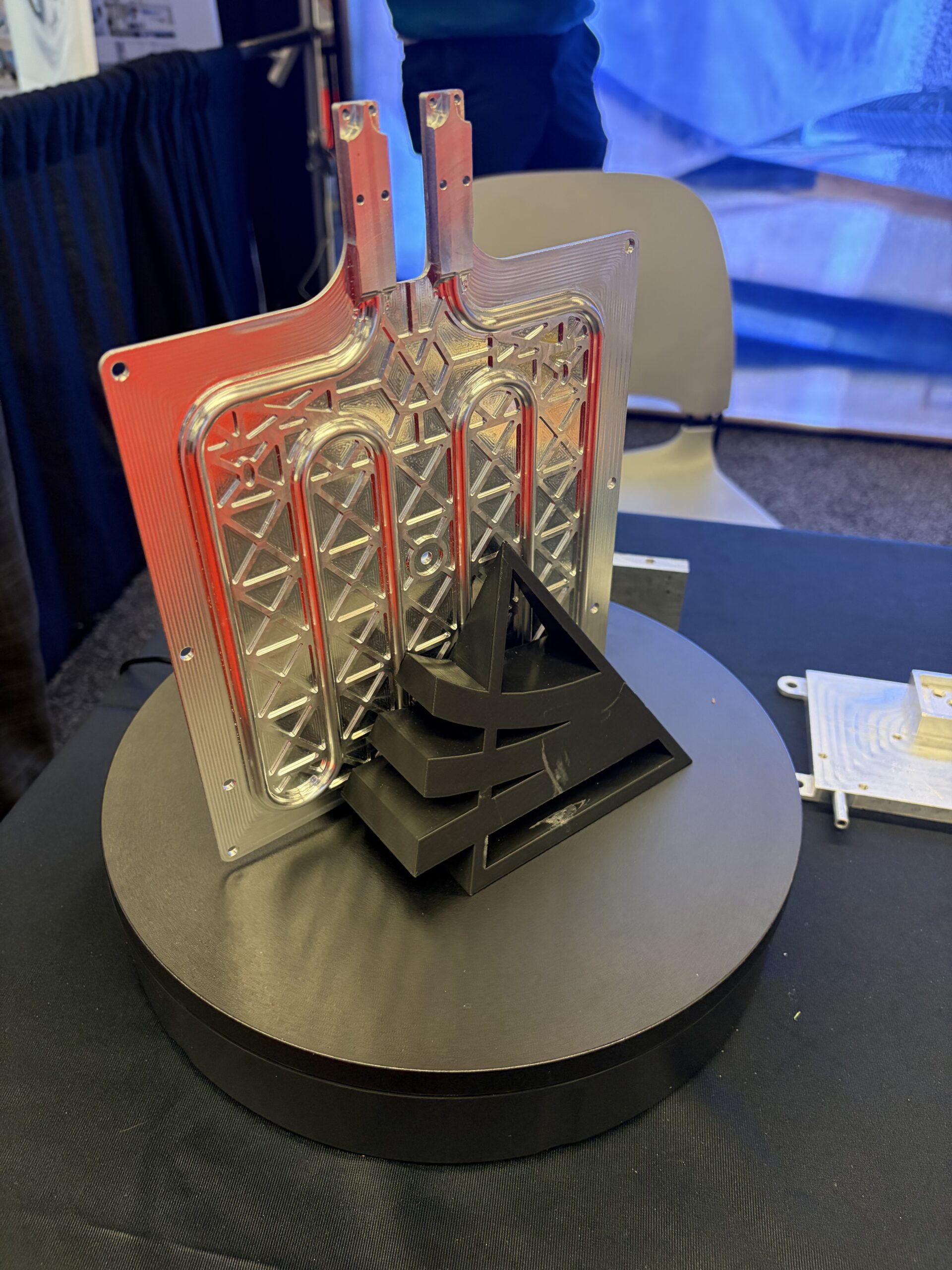
The Ohio-based company specializes in ultrasonic AM, which uses vibrations to weld layers of dissimilar metal foil together to build up a solid metal part. Because it occurs at lower temperatures, the process avoids extreme thermal conditions and offers distinct material properties.
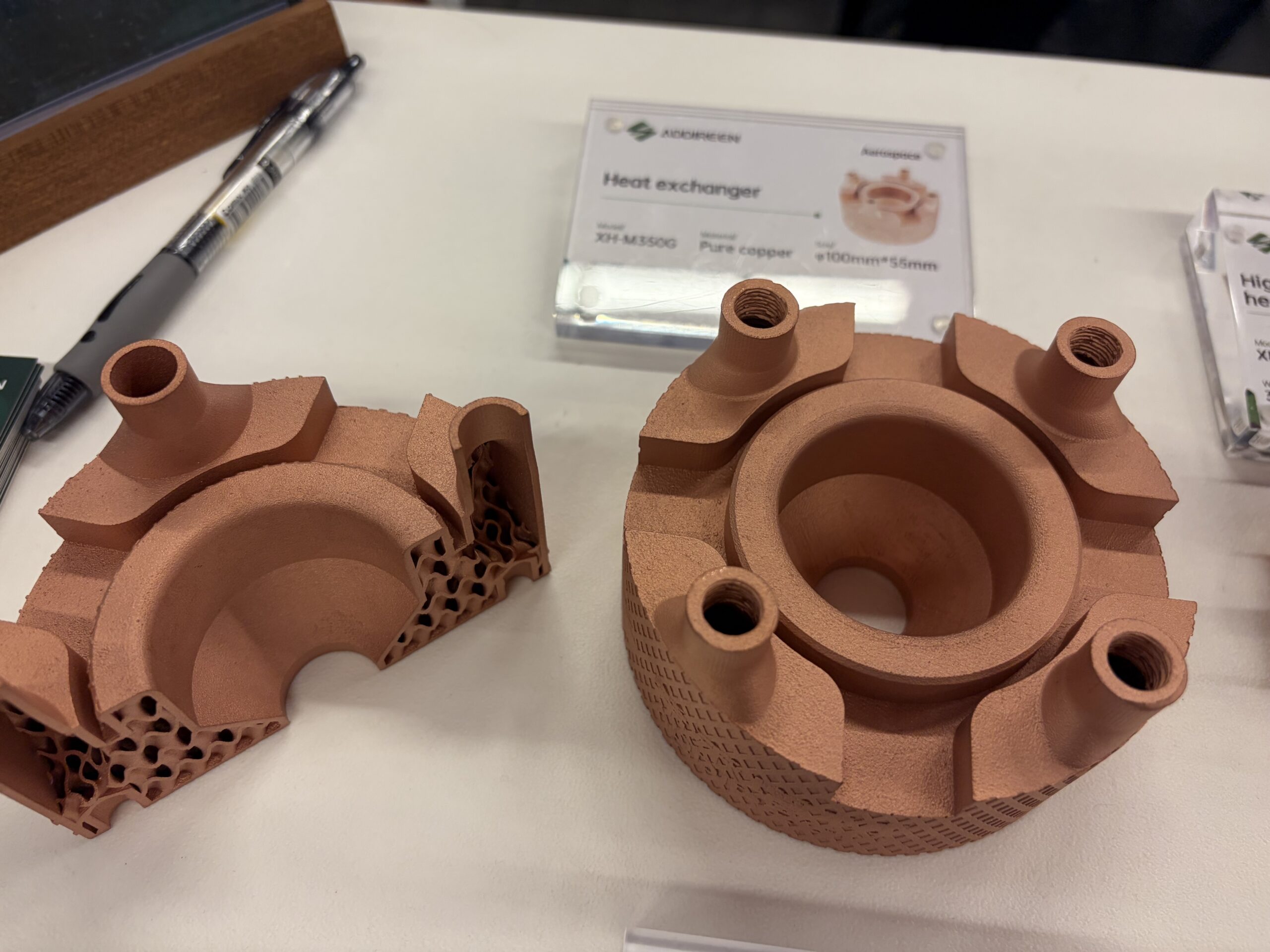
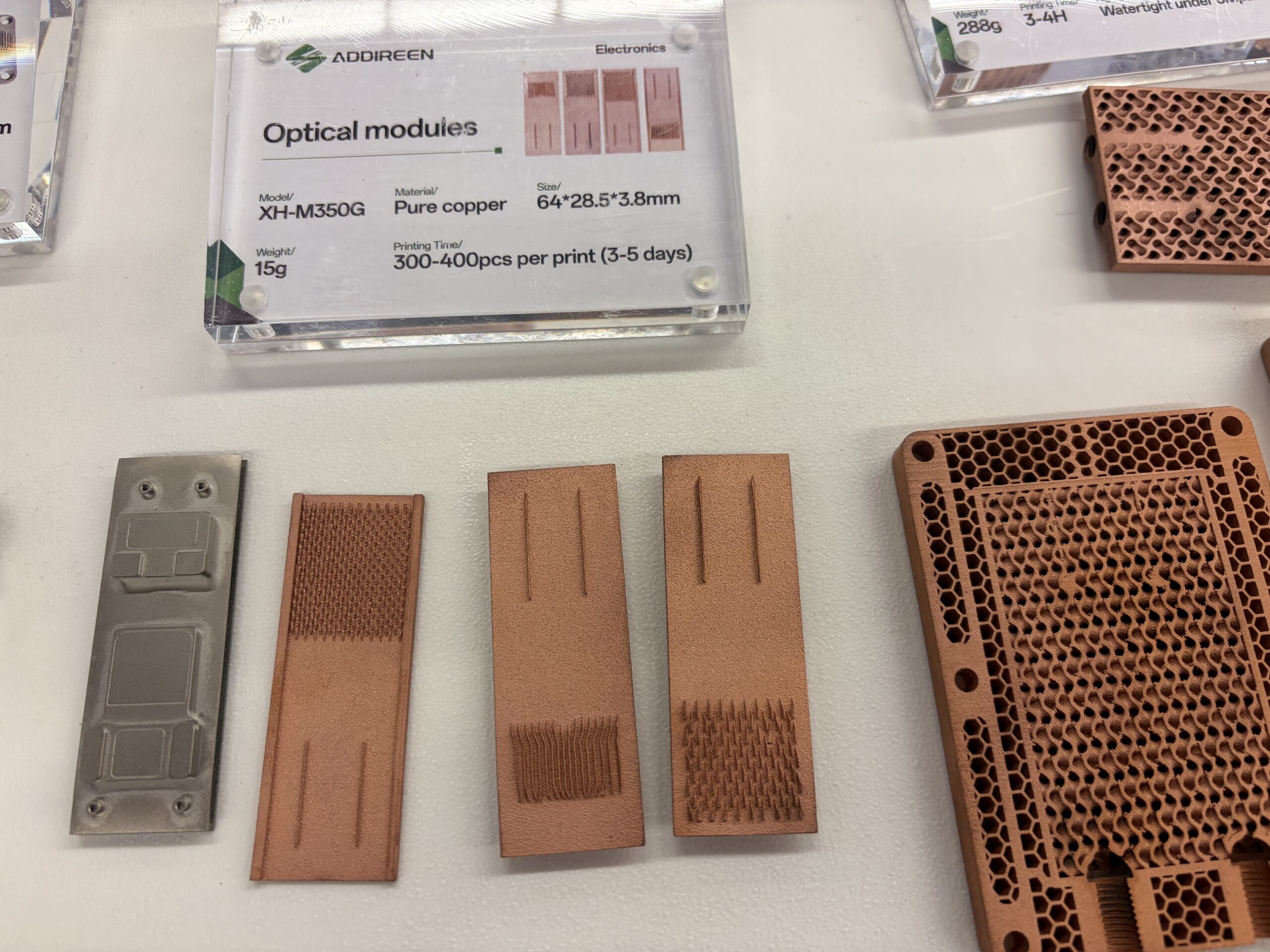
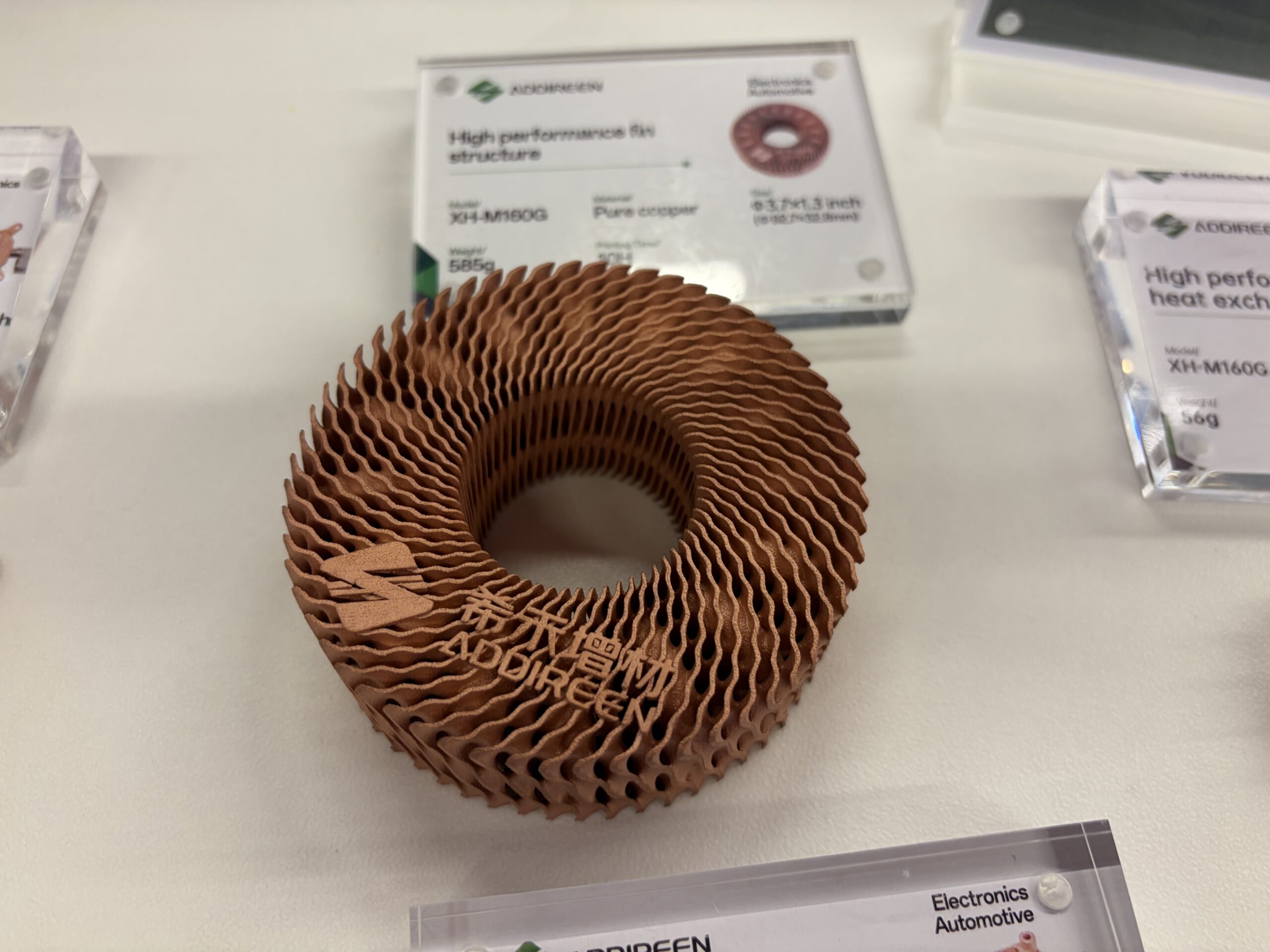
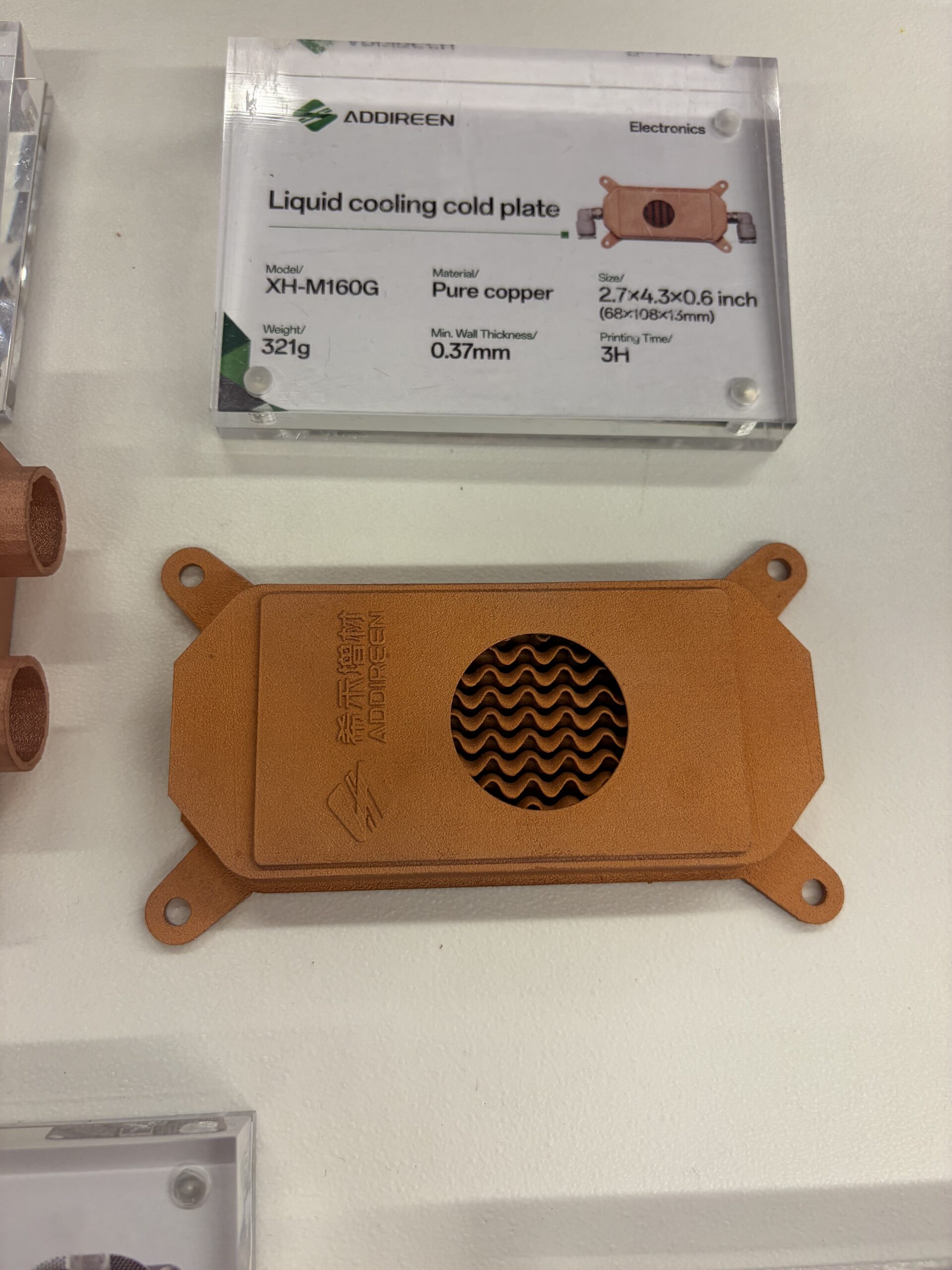
Chinese startup Shenzhen Addireen Technologies offers green-laser copper 3D printing. They’ve vertically integrated the green-laser PBF stack, developing the laser source, optical system, and 3D printer in-house, along with CNC machining. The startup has an in-house thermal engineering team, and showed off several applications at Ceramics Expo, like optical modules, heat exchangers, and nickel-plated liquid cooling cold plates.
Exentis Group’s Srdan Vasic, whom I’d seen on a panel earlier, told me that the company uses paste in its additive screen printing process “to build up green bodies which then get sintered.”
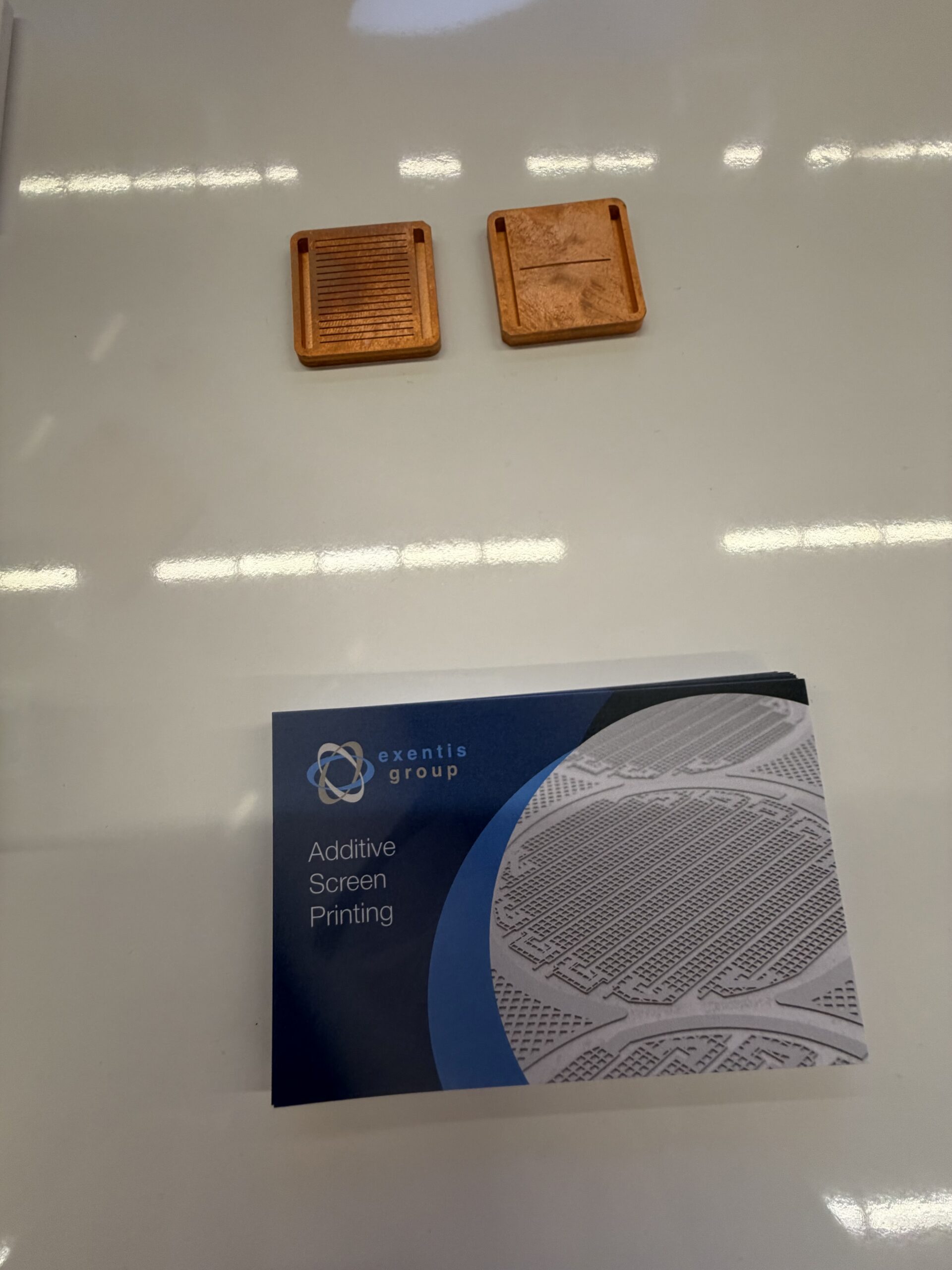
He also said the company’s parts don’t require supports while printing, or post-processing steps like polishing to get a good surface finish, and that they can achieve wall thickness of 75 microns.
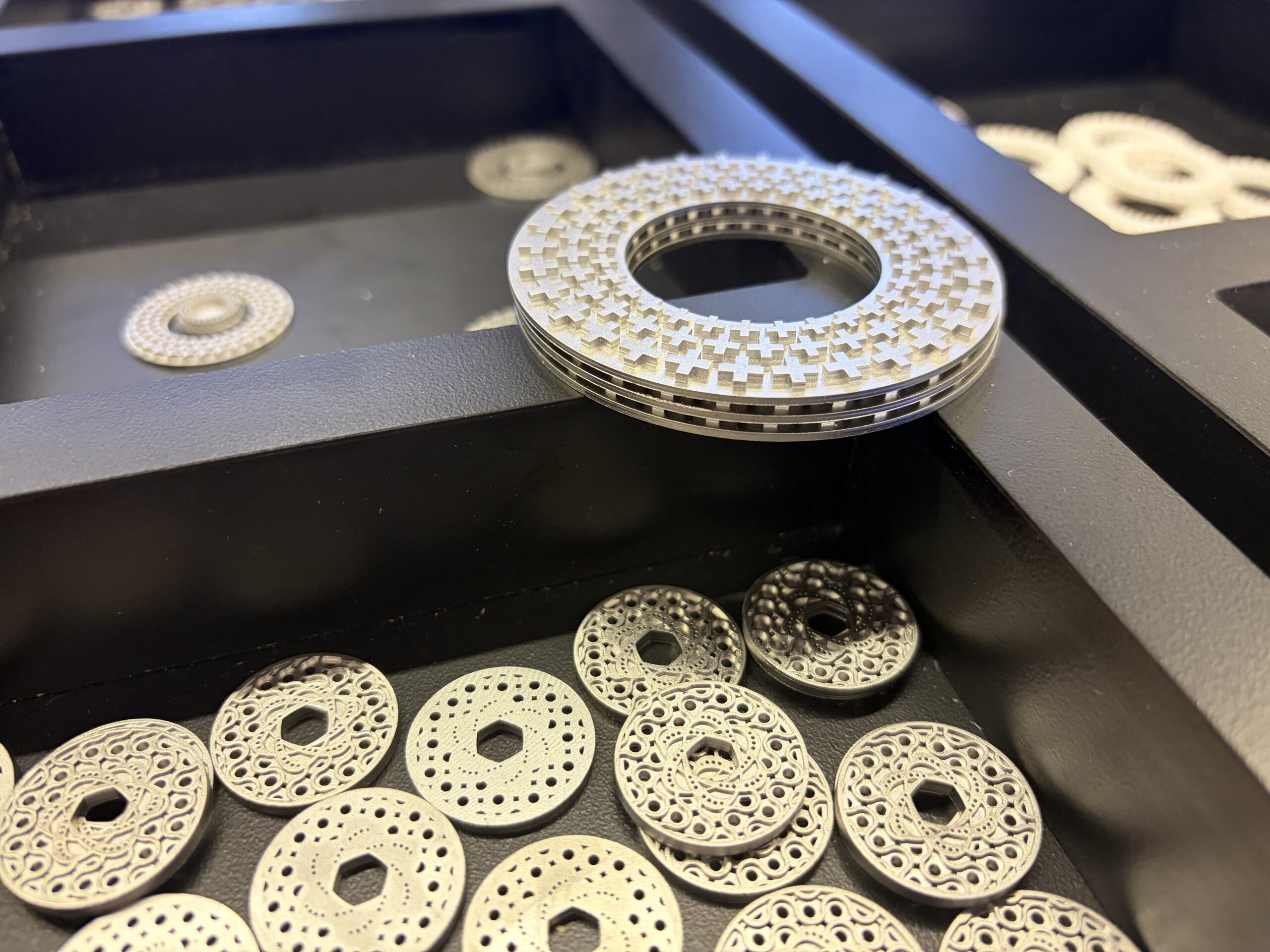
Some of the major applications for Exentis include filtering technologies, feedthroughs for wires in pacemakers, cooling structures, automotive, fuel cells, and even delicate consumer goods like watch dials and sound transducers for headphones.
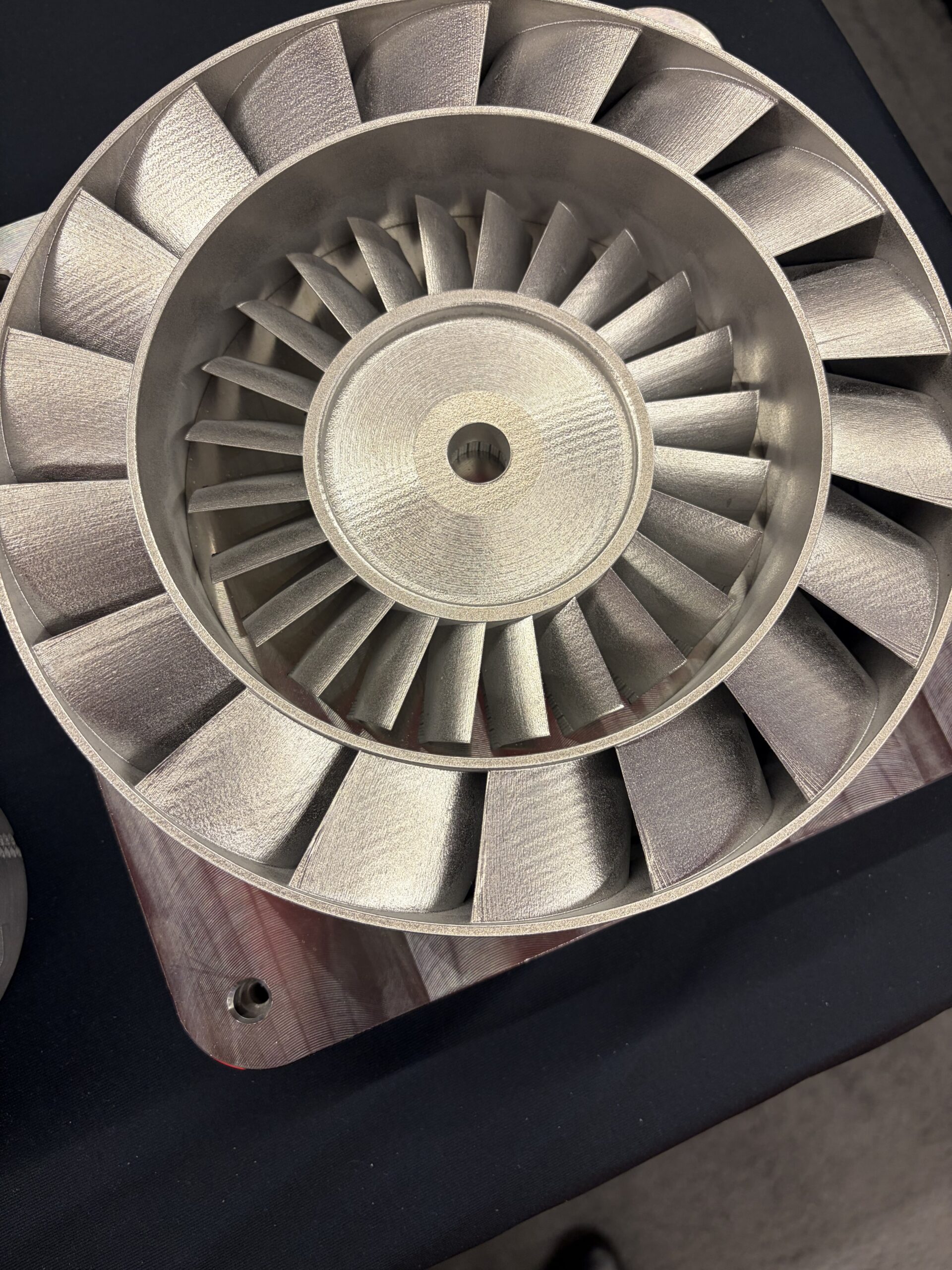
Renishaw part printed without supports
At the Renishaw booth on the Thermal Expo side, Keith Brady, National Sales Manager for the company’s Additive Manufacturing Group (AMG), took me quickly through the product line: single, dual, and quad-laser printers, “which is all a matter of throughput.” The company’s TEMPUS technology, built into Renishaw’s AM process, offers 25% improvement in print speeds.
He explained that the company has “always taken parameters and applied them uniformly per layer,” so they’re able to “execute on parts” like the one in the below image. Additionally, by using TEMPUS to achieve printing without supports, Renishaw customers can be more productive and waste less material.
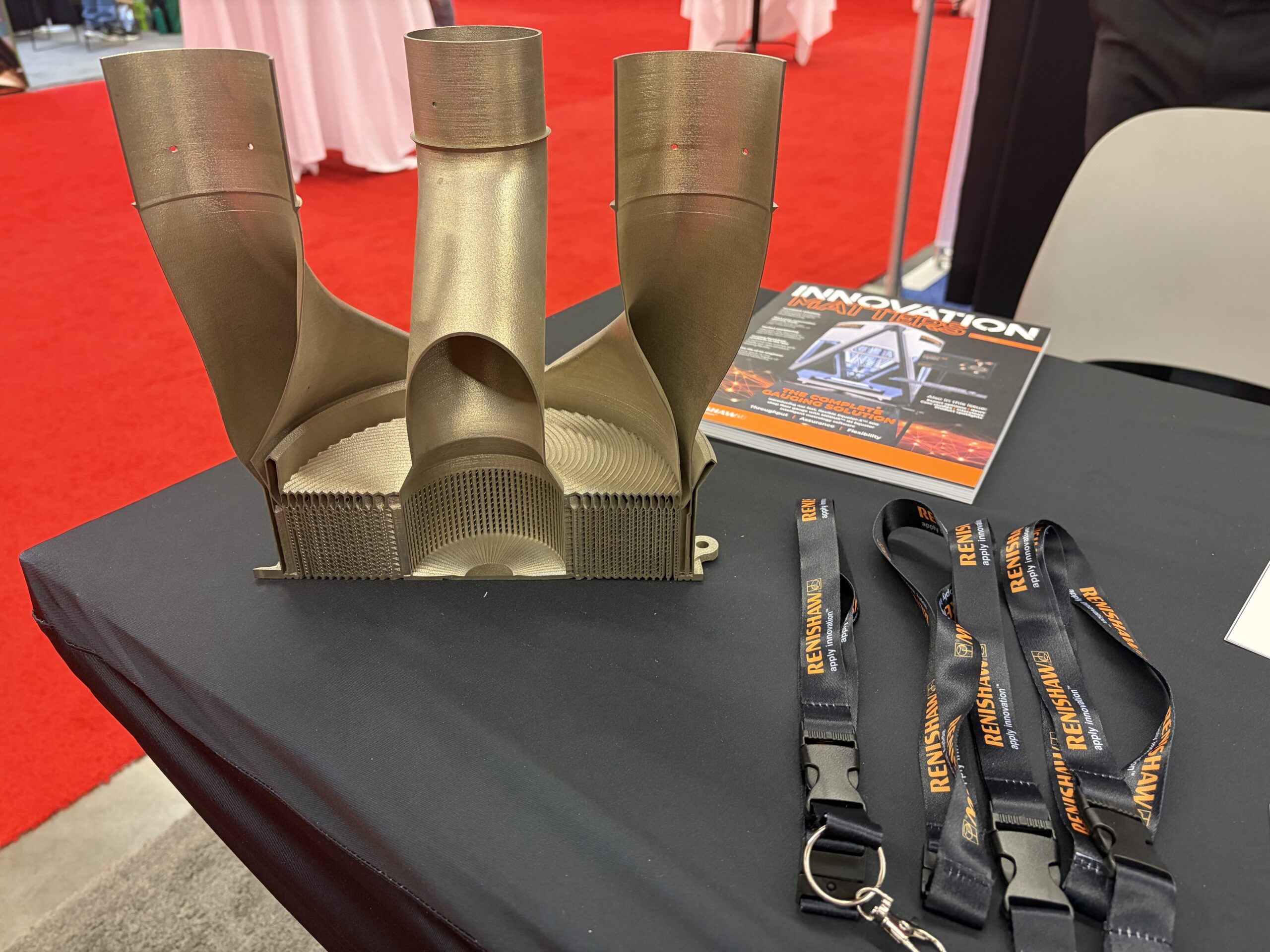
“We’re bringing this to market as part of the machine’s behavior, not something we’re trying to monetize on the software side for us,” Brady explained. “It’s faster, better, and cheaper.”
The other nice thing about TEMPUS is that it can be retrofitted onto older machines, so customers who purchased their Renishaw printer before the technology was released won’t miss out.
Conclusion
During a panel on emerging materials, someone asked if you could 3D print diamonds with sintering technology. One of the panelists said it might be possible, but that the hard material might destroy the nozzle. Someone else suggested a boron carbide nozzle. I shared this conversation with others, which sparked more debate—would binder jetting perhaps work better than sintering?
I certainly don’t know the answer, but I do think it’s questions like this that show how important it is to attend more shows that aren’t just AM-specific events, like the echo chambers of RAPID and Formnext. We already know what additive is capable of; we need to tell everyone else.
Here are some more of my pictures from Ceramics Expo USA:
-
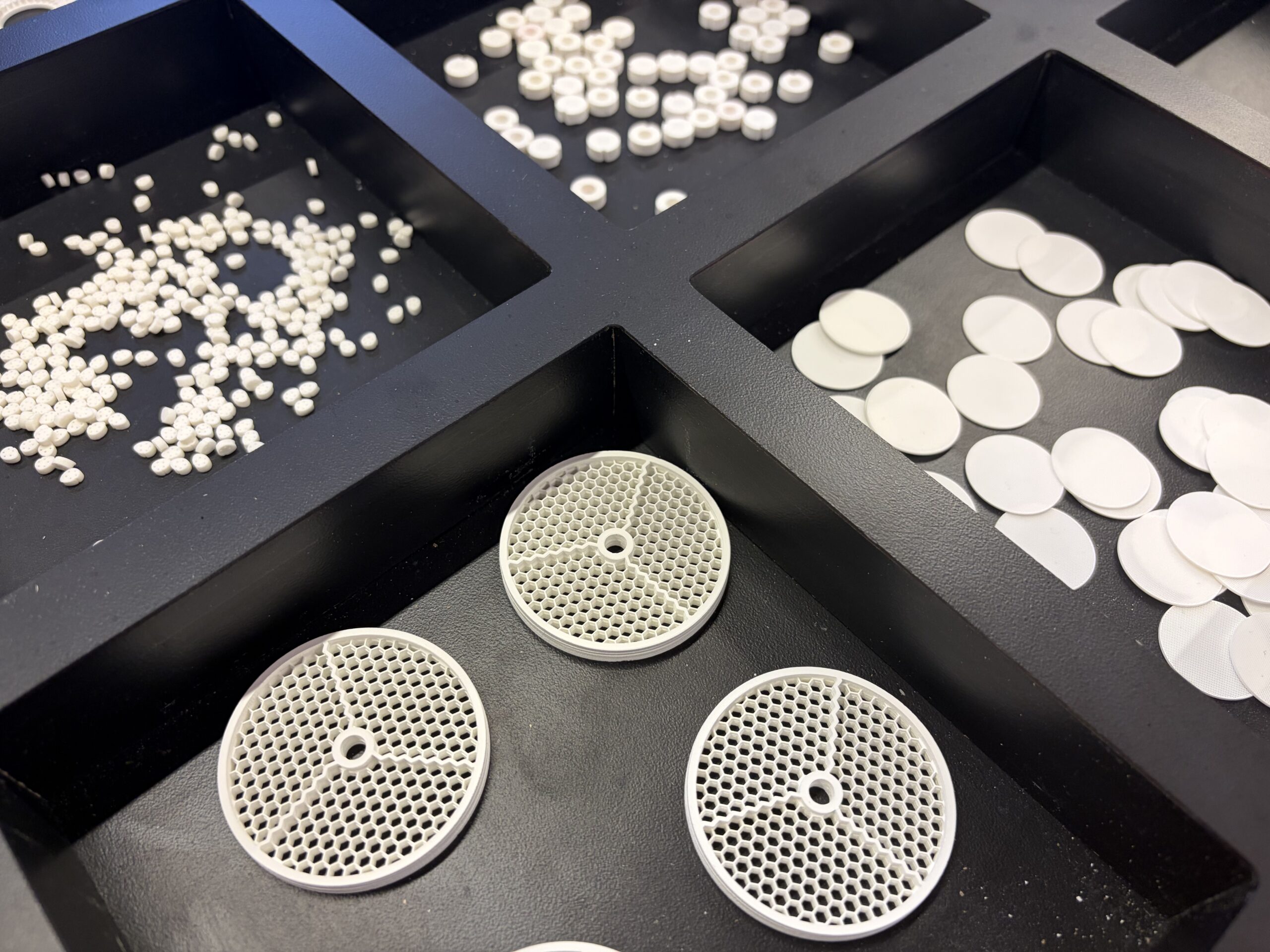
- Exentis Group booth
Lithoz booth
Fabric8Labs presentation
-
- Addireen booth
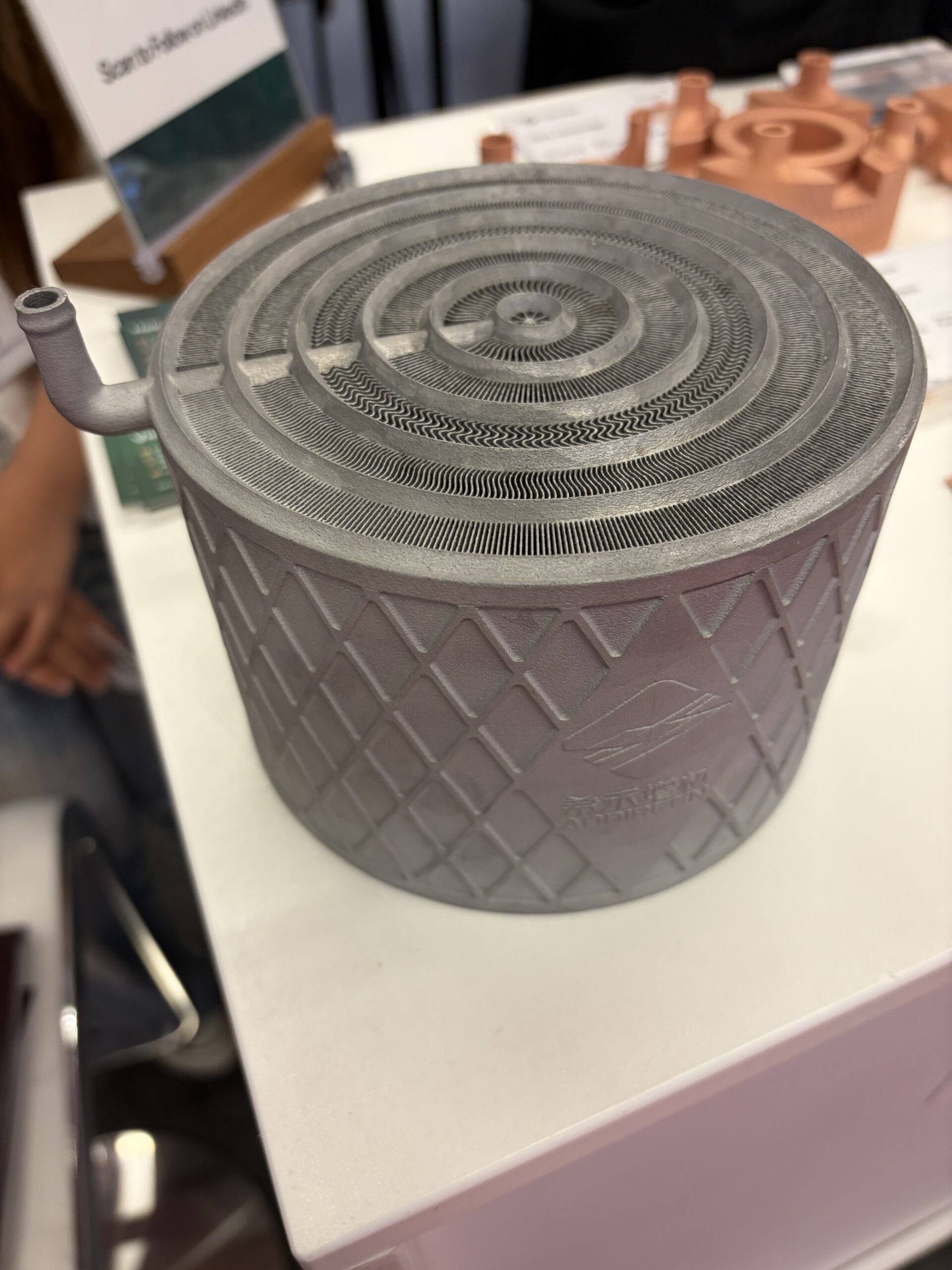
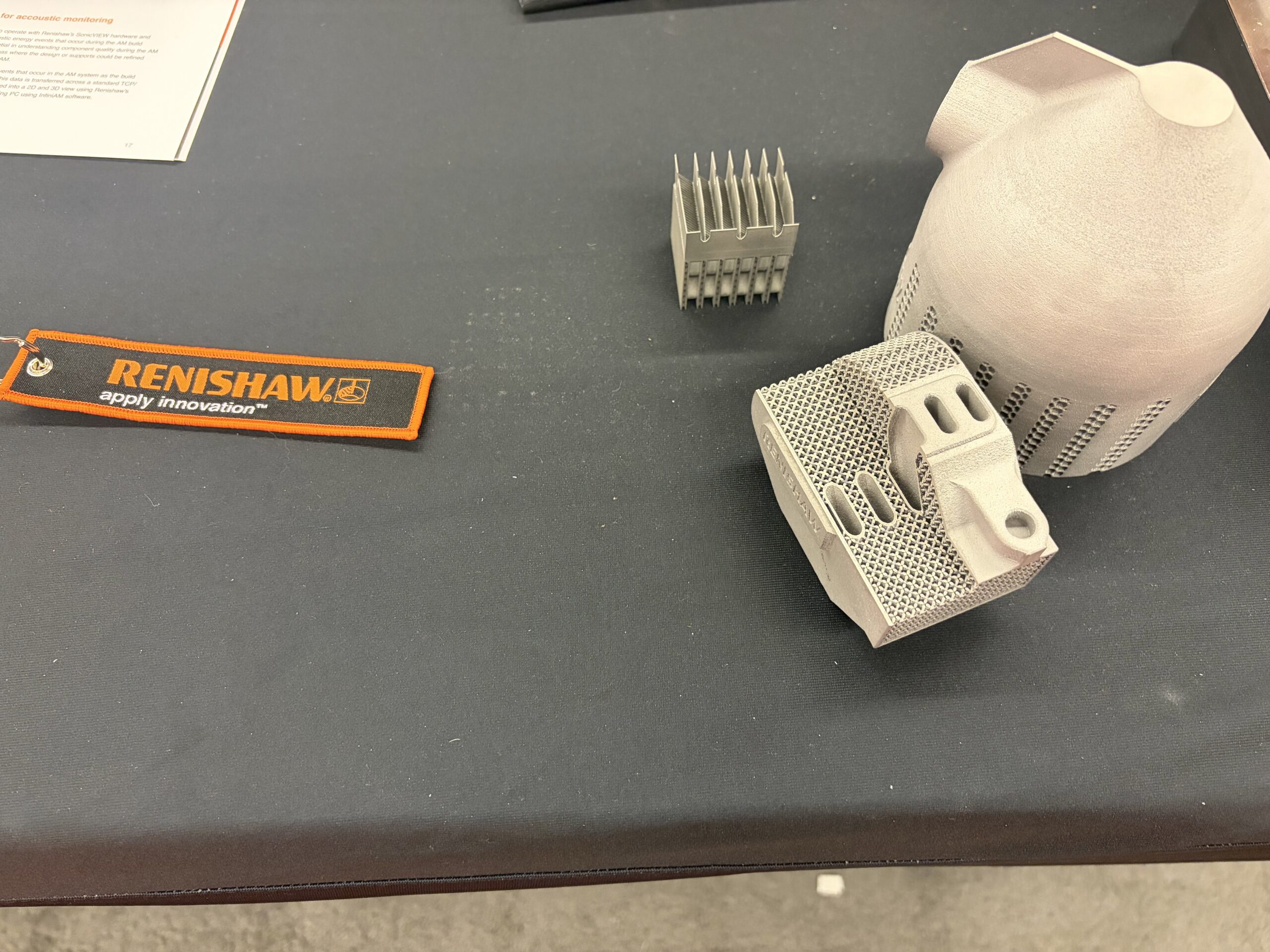
Renishaw booth
Subscribe to Our Email Newsletter
Stay up-to-date on all the latest news from the 3D printing industry and receive information and offers from third party vendors.
Upload your 3D Models and get them printed quickly and efficiently.