
Forget chalkboards and worksheets. At Harvard Medical School’s MEDscienceTECH Program, students learn medicine by building, coding, and experimenting – whether it’s navigating a LEGO robot through a 3D printed spine, coding an AI to spot tumors, or testing ideas on 3D printed lungs produced at Immersive Design Systems (IDS) at Boston Children’s Hospital. It’s part classroom, part lab, and entirely unlike anything most of us remember from summer school.
The MEDscienceTECH program is led by Harvard Medical School’s MEDscience initiative in collaboration with Santosh Iyer’s medical technology and education startup Moonshot. Together, they’ve built a hands-on program where middle- and high-school students use the same tools shaping modern healthcare, including robotics, AI, and coding. While the summer sessions are a marquee offering, MEDscienceTECH also runs spring break intensives and school partnerships during the academic year, bringing the same immersive model directly into classrooms. Last summer, they enhanced their programming through soliciting Boston Children’s Hospital (through IDS) to create 3D printed anatomy.
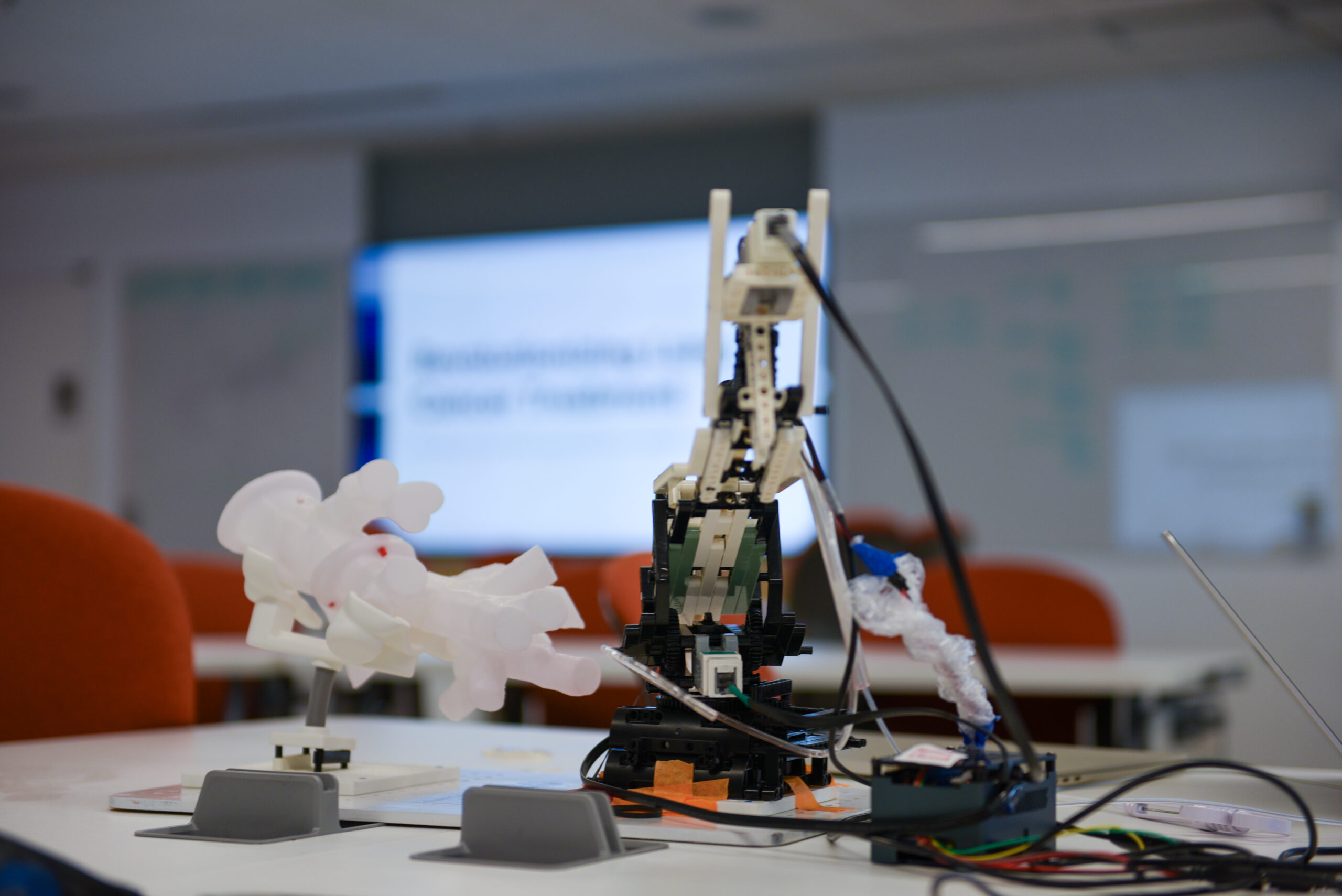
LEGO robot platform. Image courtesy of Harvard Medical School.
At Boston Children’s IDS, Development Engineer Jeremiah Egolf creates surgical simulation models for technical and procedural skills training as well as patient-specific models for presurgical planning. He has designed models for laparoscopic hernia repair, pectus excavatum, tonsillectomy hemorrhage, and brain surgery, and has developed customized jigs and fixtures used in clinical settings. For the program, Egolf created a LEGO-compatible model that attaches to a robot, giving students a way to experiment and problem-solve with real anatomy and simulated medical problems (bringing biomedical problem-solving into a format that feels playful yet rigorous).
Moonshot provides the LEGO robot platform, coding challenges, industry partnerships, and a med-tech/biomedical-engineering curriculum. MEDscience layers on the educational framework and facilitation — turning tools into student-led lessons that teachers can actually run. The result is a hybrid of classroom and clinic; it’s a way to teach not just science, but also how medicine and engineering come together in the real world.
As program director, Livia Rizzo explains, “Boston Children’s Hospital has helped us print so many incredible models. In the program, high school students perform simulated spinal procedures with surgical robots to repair herniated discs or apply AI to identify tumors before removal. Children’s also built a lung model with branching pathways, so students can send surgical robots inside to diagnose or remove tumors endoscopically. These models make the lessons feel real, and they’ve taken our program to a whole other level.”
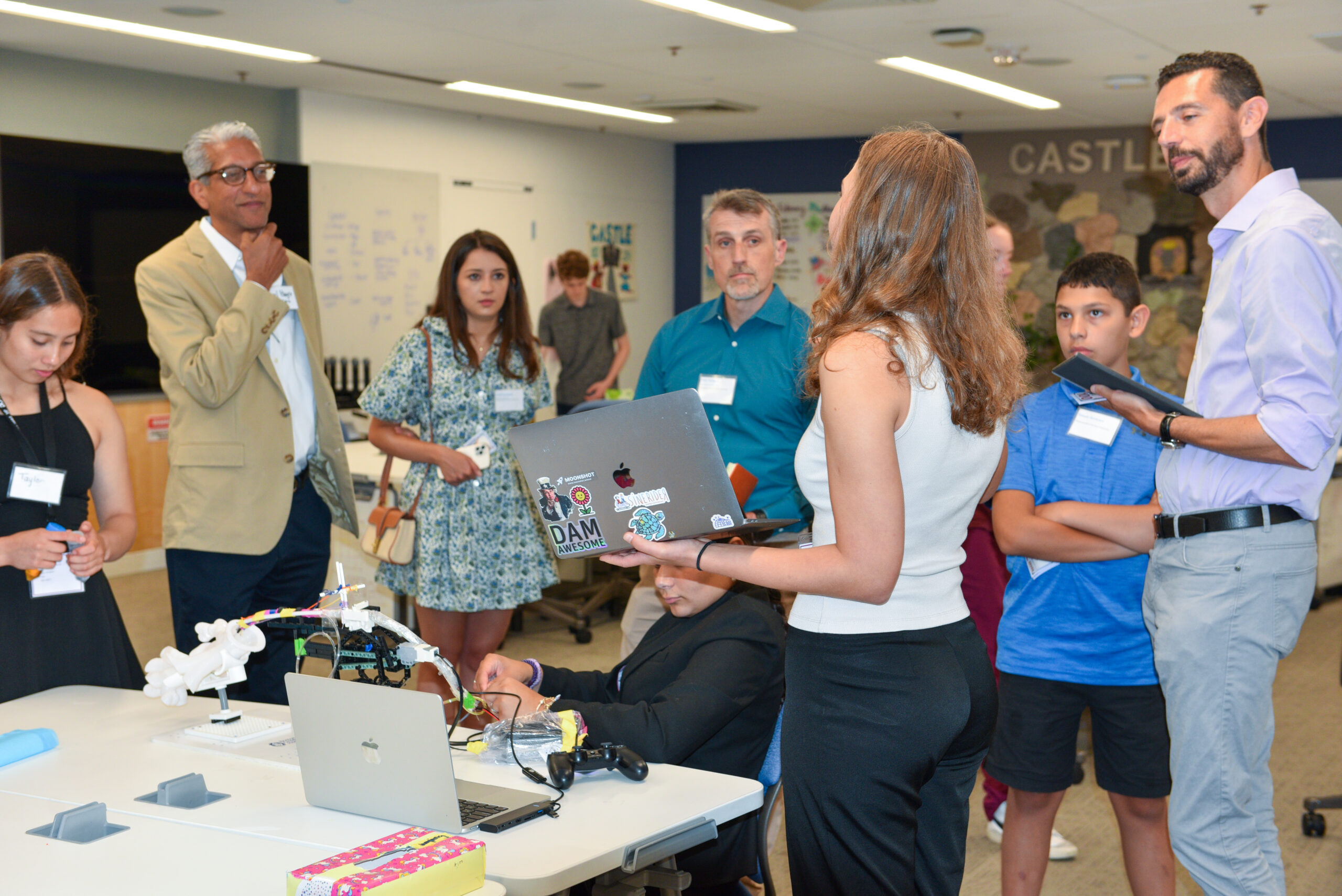
Image courtesy of Harvard Medical School.
From Hospital Labs to the Classroom
The models come straight from Boston Children’s, where engineers and clinicians design and print anatomical structures for MEDscience to use in class.
New designs keep coming. “We’ve recently printed models for fetoscopic surgery, tonsillectomy hemorrhage, pectus excavatum, and laparoscopic hernia repair,” noted Egolf. “We’re really good at creating the anatomy, and we’ve made the models modular. That means you can change the design, create new scenarios, and integrate more play and exploration into the learning process.”
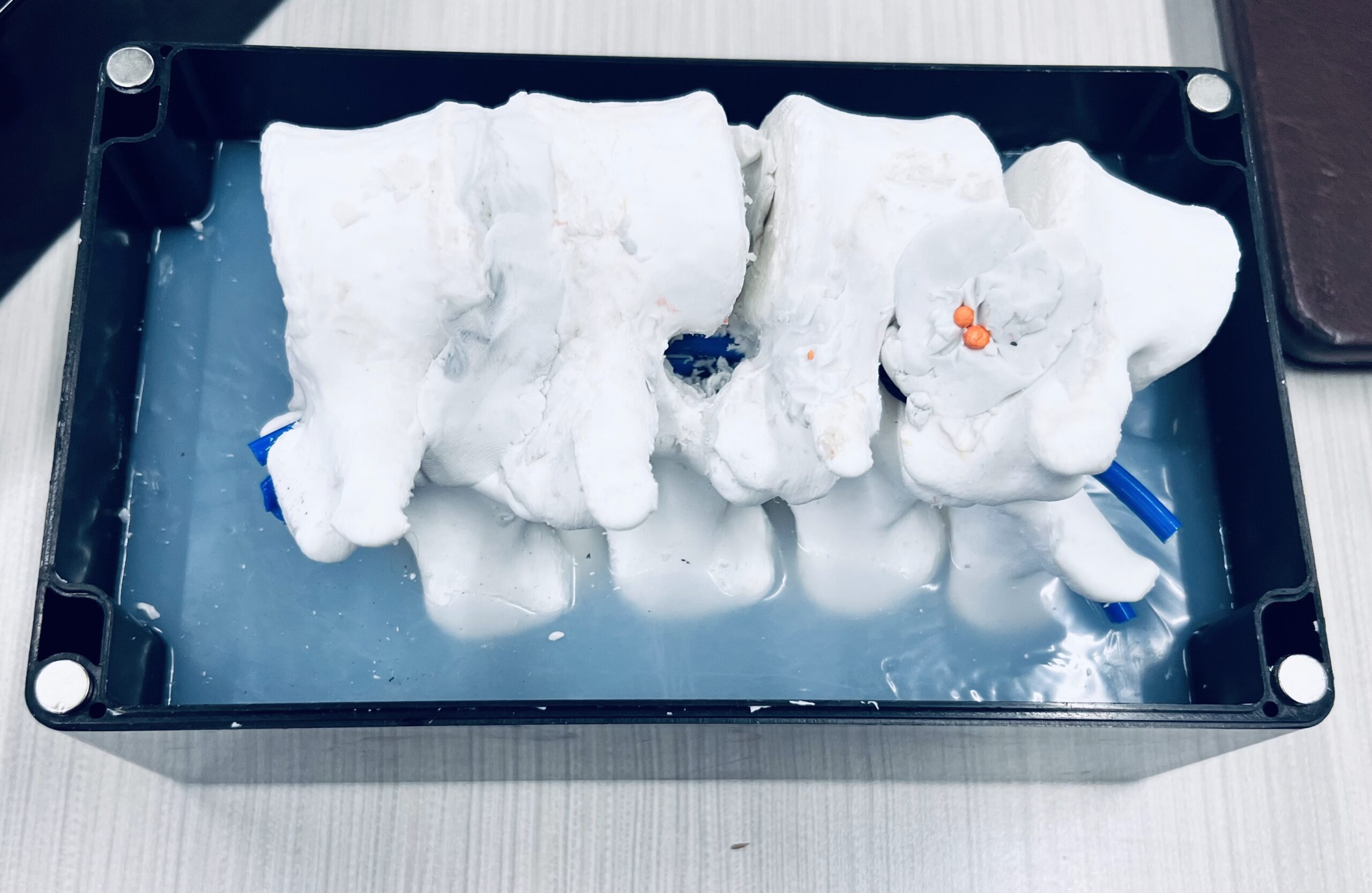
3D printed spine model created by Boston Children’s IDS lab. Image courtesy of 3DPrint.com/Vanesa Listek.
What makes the program stand out is that it’s not about training middle- and high-schoolers to perform surgery. Instead, it’s about exposure to teamwork, to biomedical engineering, to careers they might not have imagined.
“We’re not in the business of training kids to drill out bone spurs,” explained Rizzo. “It’s about group dynamics and collaboration. Many kids are drawn to engineering, but they often lack awareness of the diverse healthcare careers available beyond being a doctor or nurse. This shows them what else is out there.”
Accepted applicants get to participate in one-week, full-day school break programs at Harvard; most of them are high school students. The offerings include the MEDscienceLAB Forensics, where students play forensic scientists, gathering evidence, interviewing witnesses, and working in labs; MEDscienceClinical, where they simulate emergency room shifts, diagnosing lifelike patient simulators that respond like real people, suturing, and inserting IVs; and the MEDscienceTECH tracks, which expose students to patient diagnosis as well as surgery, robotics, AI, design thinking, and engineering.
That approach works. Surveys consistently show that nearly 100% of students leave with more confidence, stronger health literacy, and a sense that they belong in STEM. “I just ran into a student who did this program in high school — she’s now starting her first year at Harvard Medical School,” said Rizzo.
Iyer, who launched Moonshot during the pandemic as an organization focused on medtech learning, believes the secret is packaging tough subjects in ways that make them approachable: “Physics has been historically very scary for a lot of kids. But when you frame it through robotics and AI, they get hooked. They’re still learning the same concepts, just in a way that feels exciting.”
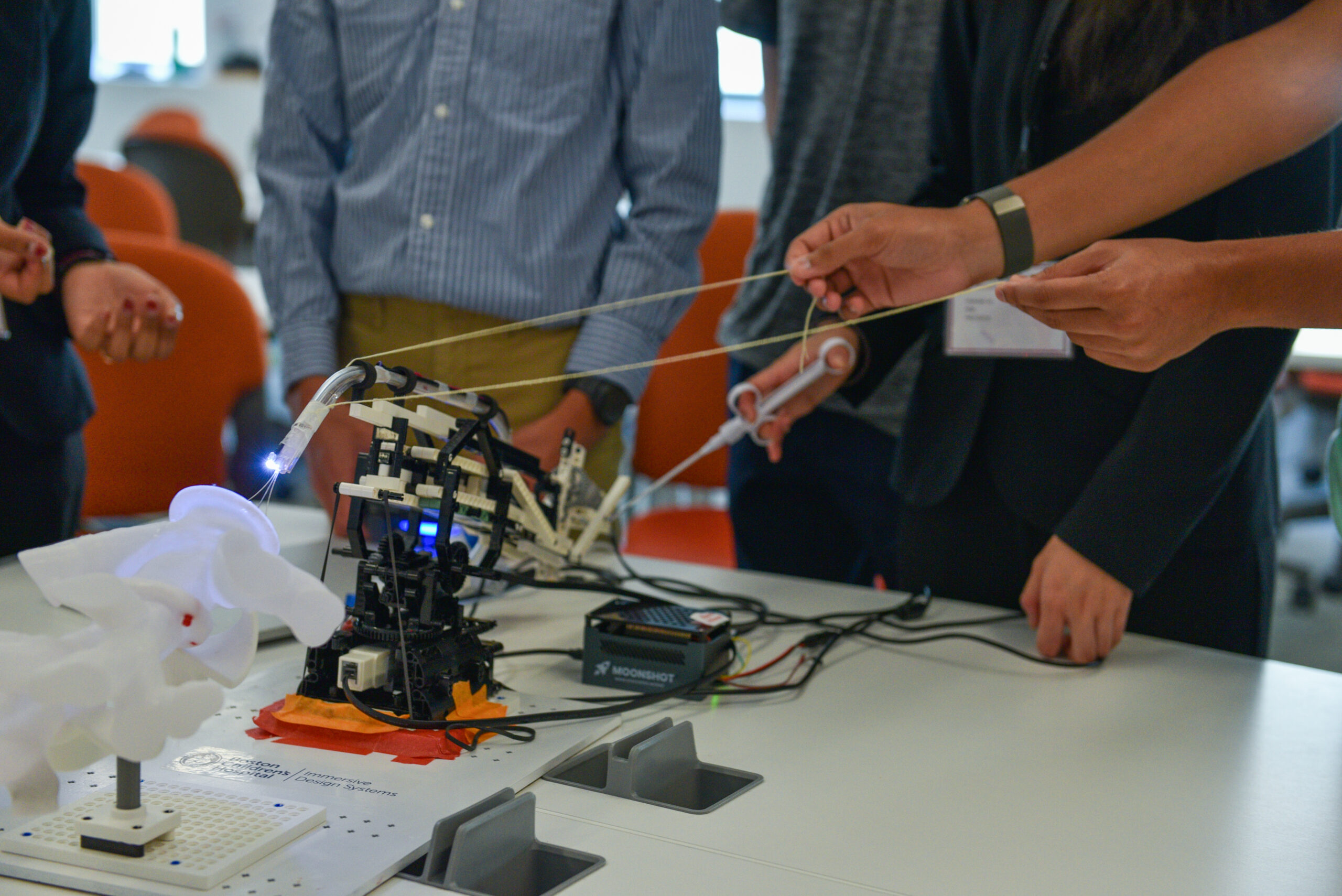
Image courtesy of Harvard Medical School.
The LEGO Connection
It’s no coincidence that LEGO keeps coming up in conversation. Boston is now home to the brand’s U.S. headquarters, and the design philosophy of modular, buildable systems runs through the MEDscienceTECH curriculum.
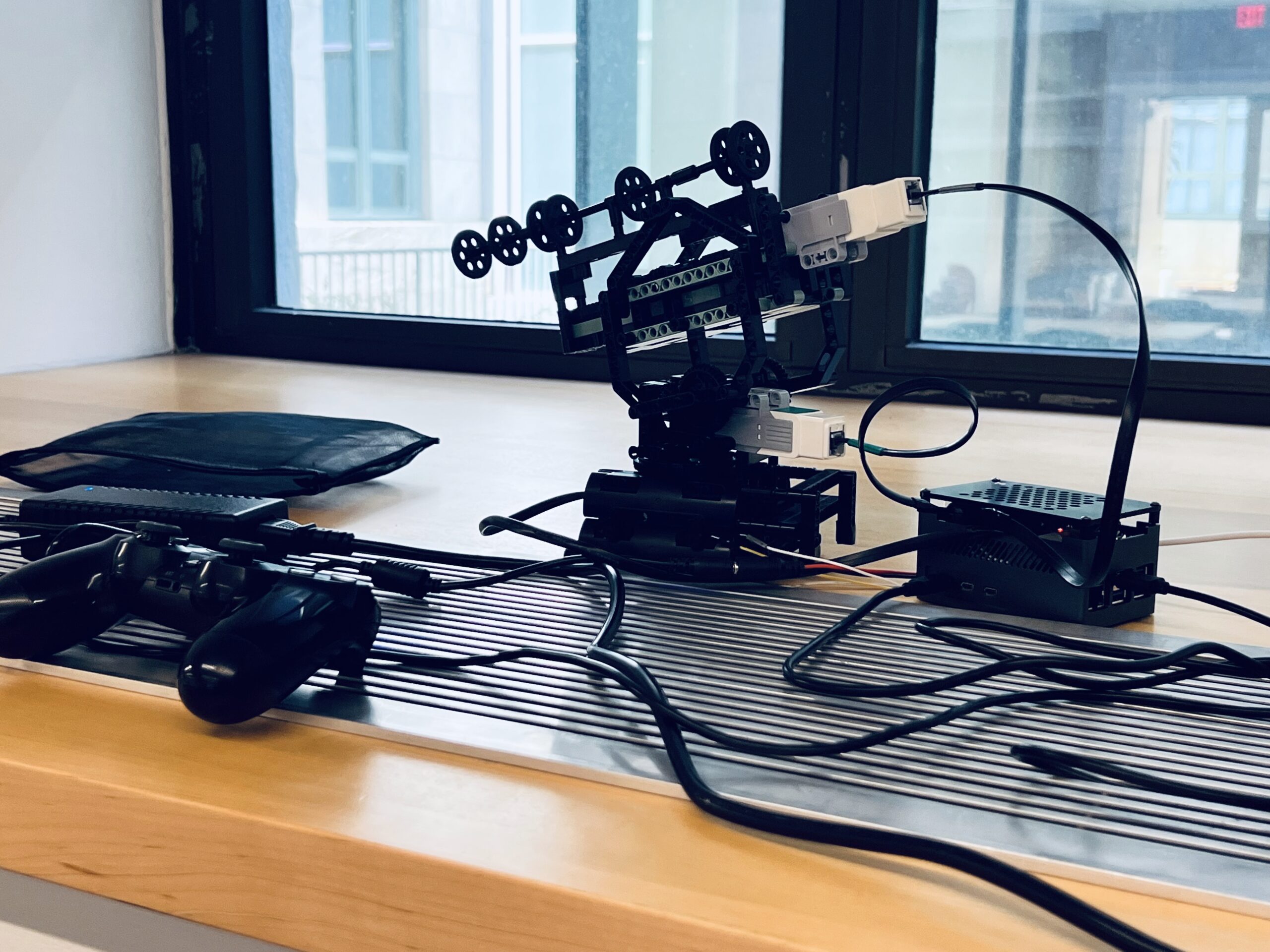
LEGO robot platform. Image courtesy of 3DPrint.com/Vanesa Listek.
At Boston Children’s IDS lab, Egolf created 3D printed spines and lungs with LEGO-compatible connectors, making the anatomy modular and interactive. Instead of static teaching models, these pieces could be snapped together and reconfigured, allowing endless variations of medical scenarios. In the MEDscienceTECH program, students took on challenges that required them to design and code LEGO robots capable of navigating the printed anatomy, including a bronchial tree custom-built at about three times real size, since commercial models didn’t exist at that scale. The oversized model was essential because LEGO surgical robots can only be built down to a certain size, roughly three times larger than a real bronchoscope, making 3D printing the only way to create realistic training scenarios, such as simulating the removal of a tumor deep inside the body.
“I got in trouble a lot as a kid and ended up spending time-out building with LEGOS,” laughed Egolf. “It’s one of the reasons I became an engineer. Now to see that same philosophy brought into medical education, it’s incredible.”
Iyer adds that “the potential goes beyond nostalgia. One of the gaps for LEGO has been entering healthcare — it’s too abstract. But when Jeremiah made the anatomy LEGO-compatible, it unlocked something new. Suddenly, you’ve got the playfulness of LEGO combined with real biomedical learning.”
A Growing Network
The long-term vision for MEDscience, according to Rizzo, is that as many careers as possible can be taught through MEDscience’s method — immersive, hands-on, student-centered, inquiry-based — with MEDtech as one of those arms. The health tech-focused MEDscience program, which began as an experiment during the pandemic, is now expanding. After an initial pilot in 2023, it has grown into a fixture of the summer, running seven weeks of hands-on sessions that now attract students from across the U.S. and around the world. During the school year, MEDscience continues its core mission of partnering directly with schools to change how science is taught, and with this Moonshot collaboration, that increasingly means biomedical engineering and AI (with physics concepts woven in) delivered through anatomy and robotics.
Partnerships are also growing with industry heavyweights like Johnson & Johnson, which recently let students test-drive one of its surgical robots. Separately, Moonshot is expanding college-level and industry training around AI and spine-model challenges (including events profiled at international MedTech conferences), in partnership with Advamed and Stryker.
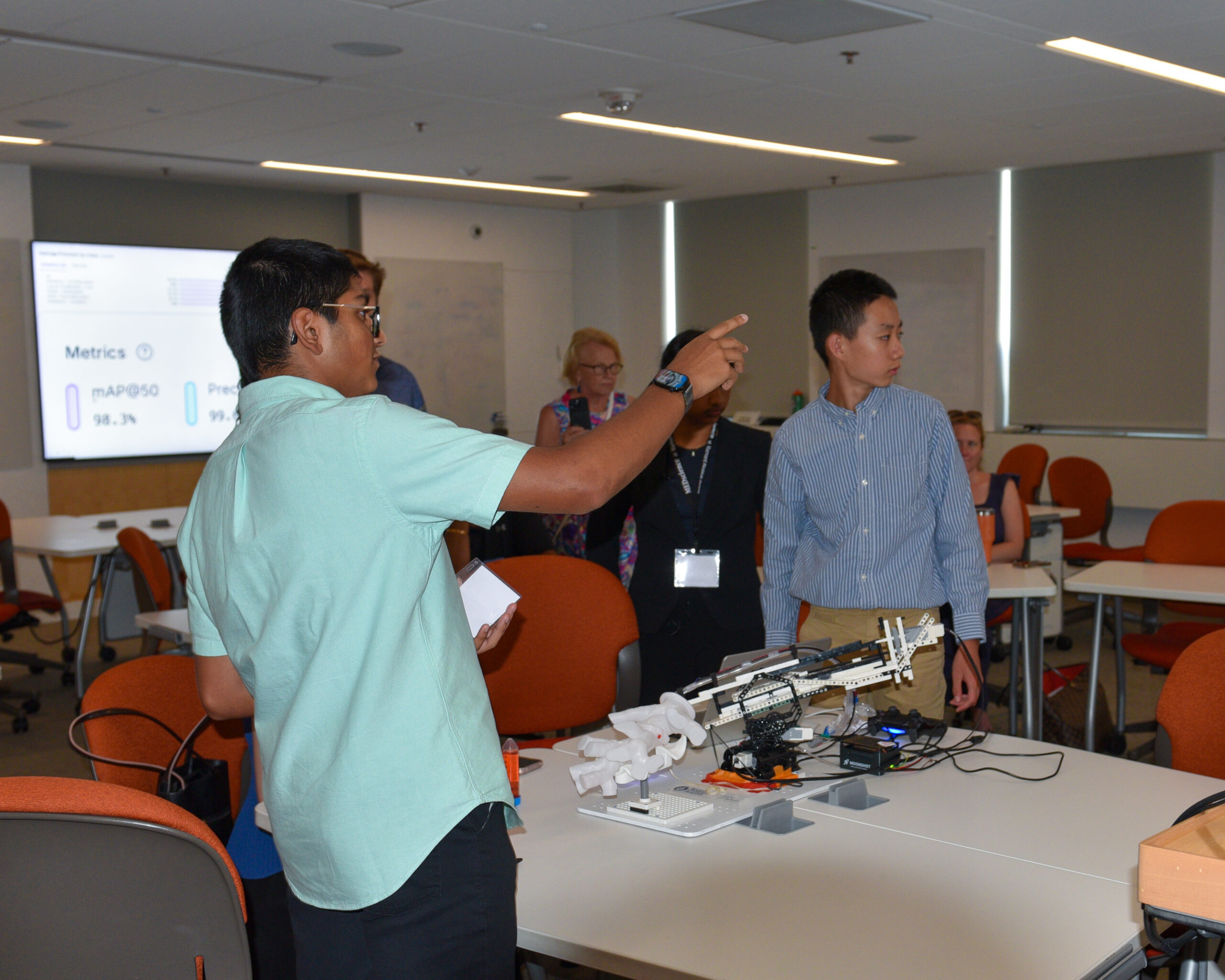
Image courtesy of Harvard Medical School.
I left Harvard struck by how different this felt from traditional science education. Instead of memorizing diagrams, students were inside the problem, navigating a 3D printed lung with a camera, coding robots to reach a tumor, or debating as a team how to solve a complex case.
And the results are already visible. As Rizzo put it: “What motivates us isn’t just getting kids into healthcare careers. It’s helping them return to their schools willing to ask questions, share their ideas, and have the confidence to try again when they’re wrong. That’s the real win.”
In a city like Boston, where the edges of medicine and engineering constantly intersect, this is exactly the kind of program that shows what’s possible when you bring 3D printing into the classroom. It’s not just a teaching tool but a gateway into the future of healthcare.
Subscribe to Our Email Newsletter
Stay up-to-date on all the latest news from the 3D printing industry and receive information and offers from third party vendors.
Upload your 3D Models and get them printed quickly and efficiently.