Authentise, a Philadelphia-based software provider specializing in workflow management solutions for digital manufacturing technologies, has launched Project DDNA, a defense-oriented platform built off of its Threads and Flows software, which supports collaborative engineering for additive manufacturing (AM). The initiative is a partnership with Kform, a Virginia-based contract manufacturer focused on developing products for the defense sector.
According to Authentise and Kform, Project DDNA is a manifestation of a concept the partners refer to as ‘CHOPS,’ or Continuous Hardware Ops. By aiming for as comprehensive traceability as possible in the design and engineering processes, Authentise and Kform are building a platform that stands up to the defense sector’s ever-growing demand for manufacturing technologies that respond to battlefield conditions in real-time.
The two companies claim that by capturing every moment of the engineering process from start to finish, Project DDNA creates context that can maximize product performance and drastically reduce development schedules. The product has already been used by multiple U.S. Department of Defense (DoD) contractors, including one user who re-engineered “field-ready wearables” in less than two months.

A part you can trace back to every decision—with just one touch, thanks to CHOPS.
In a press release about Project DDNA’s launch, Authentise CEO, Andre Wegner, said, “Our first prime contracts in reverse engineering made it brutally obvious. Every project starts from zero because none of the prior decisions — why that material, that geometry, that process — are ever captured. DDNA changes that. It builds context into the process, so we stop relearning what we already knew.”
Callye Keene, the CEO of Kform, added, “We’re not pitching a new product. This is a new category. It connects engineering, manufacturing, and quality assurance in real time. It’s what lets small teams move fast, scaled up for the biggest problems in defense.”

Graphic for DDNA.
One case study that Authentise and Kform have already leveraged Project DDNA for, detailed in a white paper on the new platform, involves a prime contractor that was designing blades for the “world’s largest wind tunnel,” located at the National Full-Scale Aerodynamics Complex (NFSAC), part of NASA’s Ames Research Center in California. According to the report, Project DDNA captured over 100 conversations and almost 150 documents. Through its utilization of large language models (LLMs), the platform provided the dozens of enterprises working on the project with insights gleaned from the data.
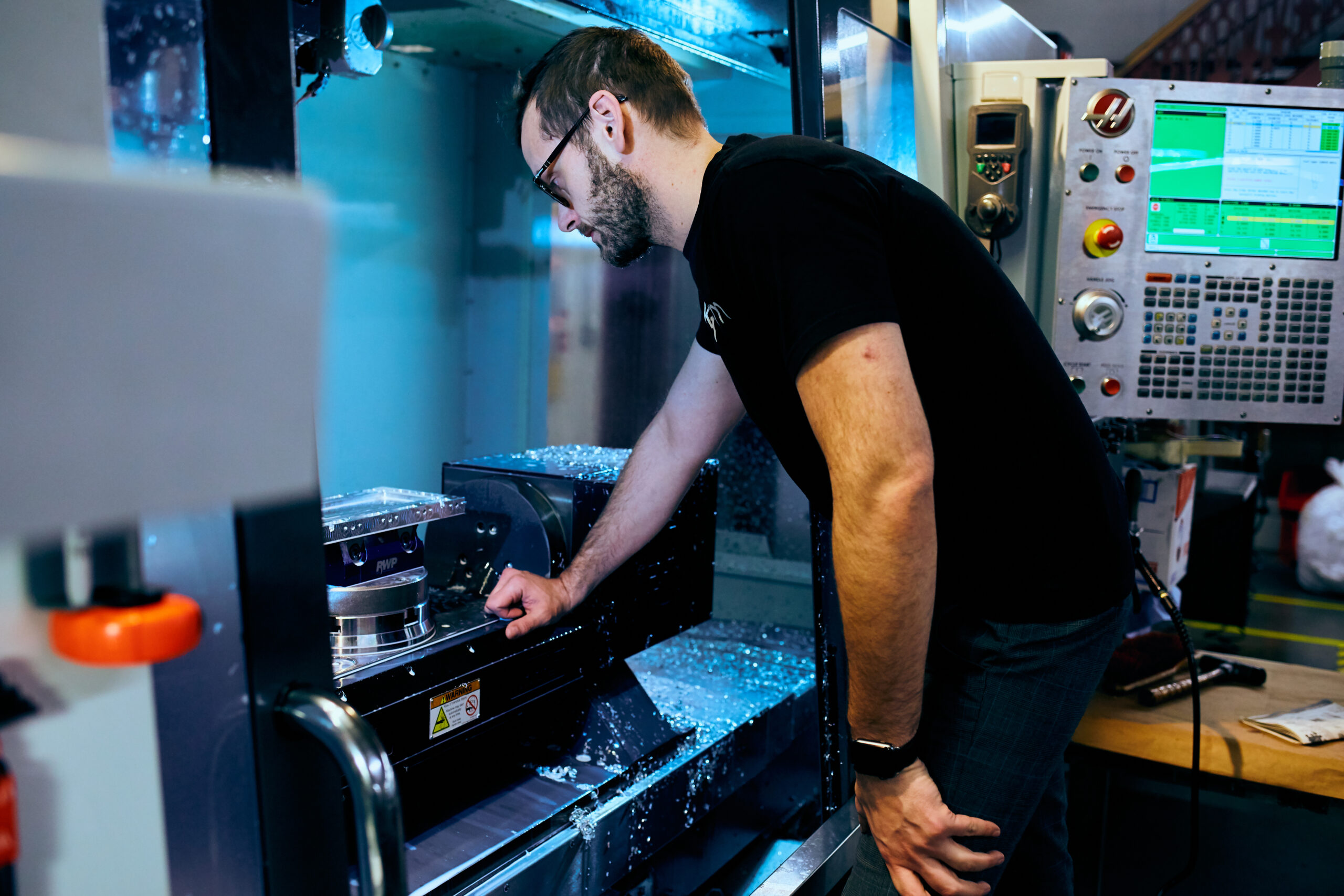
With CHOPS, the operator sees more than the part; they know the mission.
Project DDNA’s risk-assessment capability broke the project down into six areas of risk, including three areas that hadn’t previously been identified. Since so many DoD projects that are centered around emerging technologies involve collaboration between such a large number of organizations — the Air Force’s Enterprise-Wide Agile Acquisition Contract (EWAAC) jumps to mind — a platform like Project DDNA could become indispensable to the U.S. military’s uptake of new manufacturing processes over the next decade.
Indeed, the concept of CHOPS, coined by Authentise and Kform, succinctly summarizes the most significant themes that have driven the DoD’s shifting approach to procurement over the last few years. Moreover, because of how influential the defense sector is on the rest of the manufacturing landscape, it’s going to be increasingly important for enterprises manufacturing for non-defense applications to adopt the same sort of principles that are encapsulated by CHOPS. Ultimately, spreading that kind of know-how will require dedicated software platforms that embody the core philosophy of innovation, suggesting that, soon enough, there should be a rather large market for what Authentise and Kform have come up with.
Images courtesy of Authentise
Subscribe to Our Email Newsletter
Stay up-to-date on all the latest news from the 3D printing industry and receive information and offers from third party vendors.
Upload your 3D Models and get them printed quickly and efficiently.