
Which parts of the 3D printing industry are growing, who’s buying, and where’s the money going? At the AM Investment Strategies webinar on November 5, executives discussed how customer orders are changing, what it costs to make metal and plastic parts at scale, and where AI is starting to help.
Moderated by Troy Jensen of Cantor Fitzgerald, the panel brought together executives from Carbon, Incodema3D, Nikon SLM Solutions and Stratasys. Their accounts showed what companies are spending on as customers move into production, from machining and automation to the work of qualifying parts and standardizing processes across factories.
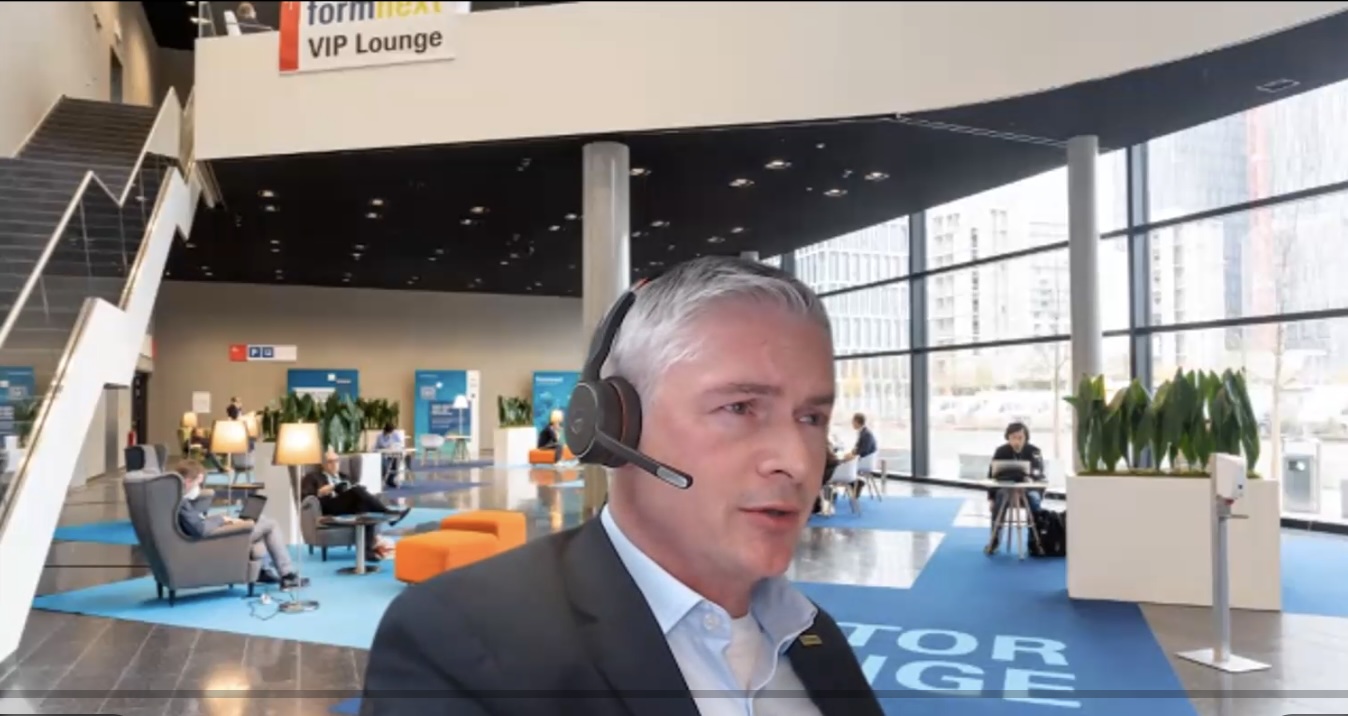
Formnext Vice President Sascha F. Wenzler.
Formnext Vice President Sascha F. Wenzler opened the webinar with a look at where demand for 3D printing is growing, and what to expect at the upcoming show in Frankfurt.
“So we are no longer asking whether AM will become a manufacturing technology. The question right now is much more focused. It’s where adoption is accelerating in industrial manufacturing environments and how quickly applications are moving into production and how they create real value,” Wenzler said.
Wenzler said aerospace, defense, and energy are driving demand for metal additive manufacturing in North America and Europe, while Chinese companies are becoming more competitive in both desktop and industrial 3D printing. He also previewed two features of the upcoming Formnext show in Frankfurt, including a post-processing showcase and the event’s first Defence Summit.
Jensen then asked whether customers were signing long-term contracts. Incodema3D CEO Sean Whittaker said his company was negotiating several. Knowing what customers will need down the road, he said, makes it easier to invest in new equipment.
“We’re actively negotiating multiple LTAs [long-term agreements],” Whittaker said. He said those contracts are common in some of Incodema3D’s other manufacturing businesses and are now making their way into additive. “That just gives us the confidence to invest, buy more equipment, gear up for the future.”

Scott Dunham of Additive Manufacturing Research.
Scott Dunham of Additive Manufacturing Research (AM Research) shared the numbers behind the growth. By Q2 2026, the global AM market had grown for six quarters in a row. Hardware sales had faced challenges in 2023 and 2024 before improving in 2025.
“Now we’re really rolling. We had the highest first-half revenues of any year on record,” Dunham said of AM hardware sales in the first half of 2026.
Print services brought in about $2.5 billion of the market’s $4.48 billion total in Q2, as 3DPrint.com previously reported.
“You can see substantial growth in both of the services segments,” Dunham said, referring to metal and polymer printing. “But the print services market definitely is leading the way in terms of growth.”
In North America, he pointed to one metal printing process in particular. Companies offering metal powder bed fusion services were closing the revenue gap with businesses offering all types of polymer printing combined. He said that gap was closing rapidly.
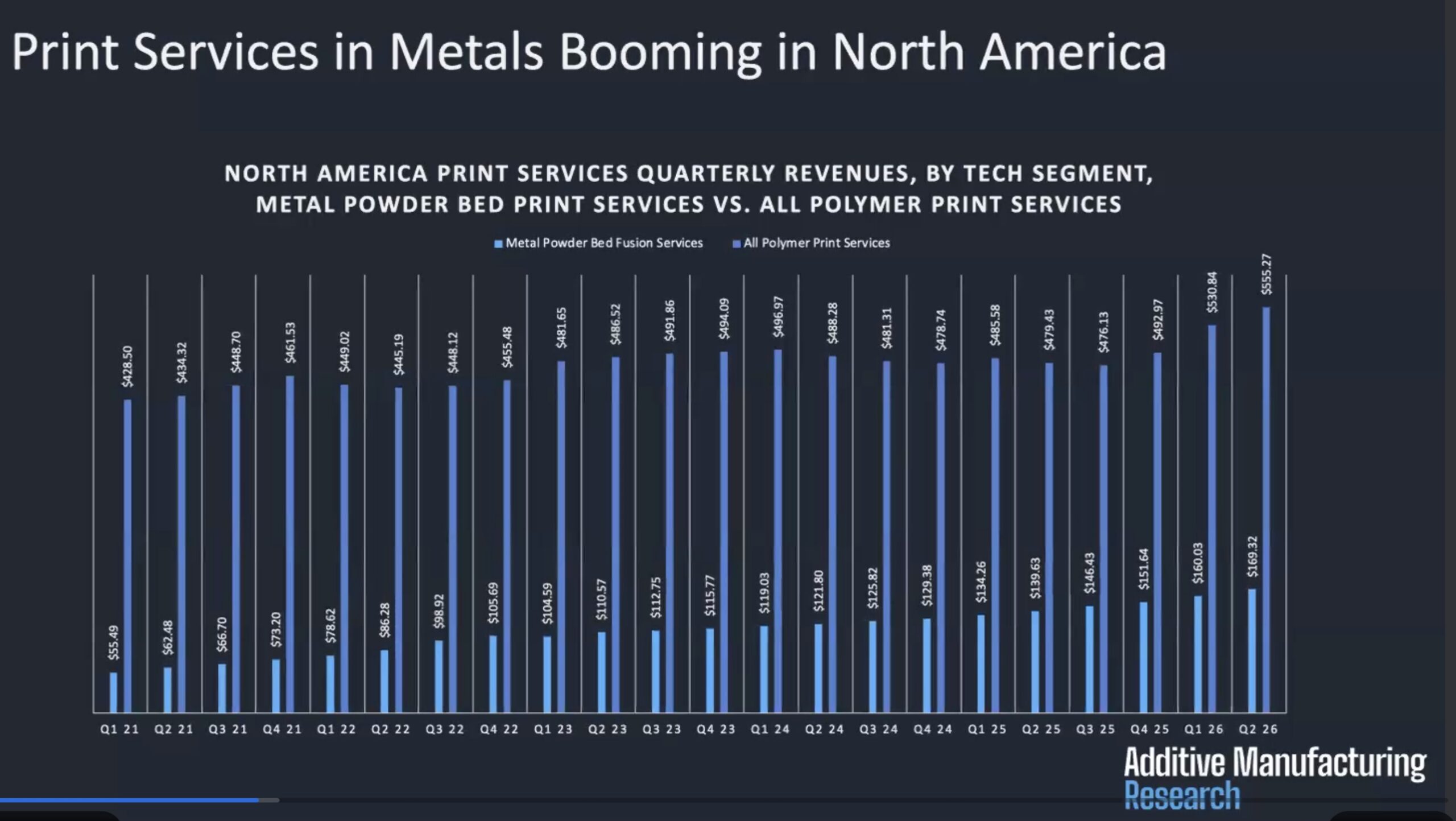
Print services in metals booming in North America. Image courtesy of 3DPrint.com.
At Incodema3D, keeping up with demand means adding both printers and machining equipment. Whittaker said the company added 16 multi-laser printers and eight large-format CNC machines in 2026. It now operates more than 50 multi-laser printers.
“Our five-year outlook is great. We’re basically doubling the business every two years, you know, supporting that with CapEx,” Whittaker said.
The company is also preparing to open a second facility in the Southeast U.S., which Whittaker expects to be fully operational by the fourth quarter of 2027.
But adding printers brings other demands. Whittaker noted that CNC machines can take longer to buy and install than printers, and the company has to keep enough machining capacity available to finish the parts it prints. Getting parts qualified for production also takes too long, he said.

Incodema3D CEO Sean Whittaker.
Sam O’Leary, CEO of Nikon SLM Solutions at the time of the webinar, described the same growth from the equipment supplier’s side. Five years ago, he said, a quarter might involve a handful of deals for individual large-format printers. Now, customers are ordering several machines at a time for production programs.
“What we see now is large multi-unit orders just being the order of the day,” O’Leary stated. “That of course is why we developed large format equipment for volume manufacturing and we’re seeing that being readily employed across multiple industries and it’s something that I am sure will continue for the foreseeable future.”
O’Leary is stepping down as CEO and moving to Nikon SLM Solutions’ supervisory board, as 3DPrint.com reported on November 6. Jan-Niklas Thielmann and Simone Castellani will lead the company as co-presidents.
-
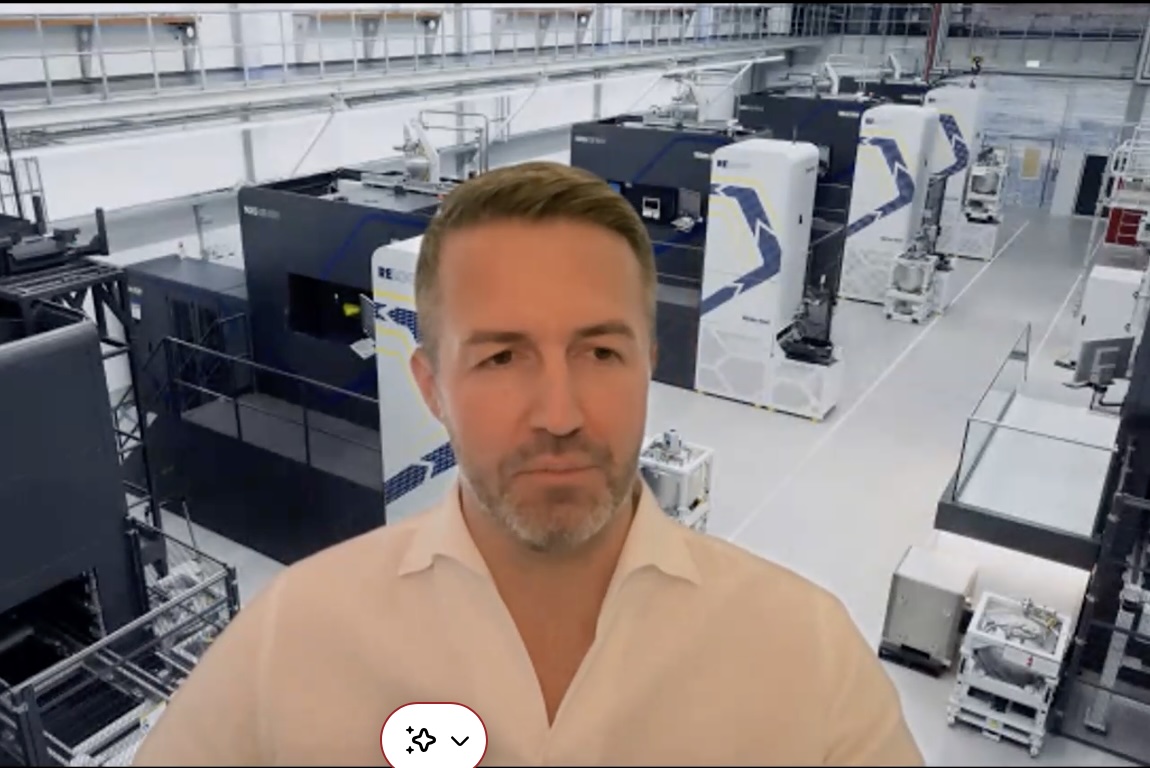
- Sam O’Leary, CEO of Nikon SLM Solutions.
-

- Stratasys CEO Yoav Zeif.
Meanwhile, Stratasys CEO Yoav Zeif said larger orders are changing his company’s business, too. Some deals take longer to close, but customers are buying several machines, along with software, post-processing equipment, and automation. He pointed to the company’s tooling work with General Motors as an example of how long it can take to get a process adopted across a large manufacturer.
“But again, it takes years till it becomes the standard of the entire company,” Zeif said. “So we have to have the patience to invest in improving the OEE [overall equipment effectiveness] and making sure that we have the standardization in place, because otherwise no one is adopting it for real manufacturing.”
Carbon offered another example of what these orders can include.
CEO Phil DeSimone explained, “We just signed a deal this morning for 28 printers with 28 automation units on the back of it and 30 metric tons of resin associated with it.” He didn’t name the customer or the application, though.
The cost of making a part also came up, and the answers were very different for metal and plastic. Whittaker said material accounted for less than 10% of the part price in the metal work he described. DeSimone put that figure at 60% to 70% for the large-scale polymer applications he was discussing.
For those applications, DeSimone said even doubling a printer’s speed would make relatively little difference to the final part price. Higher resin volumes and less post-processing could do more to bring costs down.
He used Carbon’s work with football equipment maker Riddell to explain how companies can make larger production runs affordable. Resin suppliers, equipment makers, and contract manufacturers all had to work out prices and margins that made the program viable. Carbon’s technology is used to print the helmet’s lattice liner. DeSimone said production had passed 150,000 helmets so far in 2026 and projected more than 200,000 in 2027.
Jensen also asked how companies were using AI to lower costs and make their work easier. O’Leary described using data from installed machines to help service technicians. DeSimone said Carbon is using CT scans and off-the-shelf AI agents to adjust the design files for individual parts on a build plate.
He also said that task had gone from more than a week of work down to a day. During the Q&A, he said Carbon was working out how to build it into an easier workflow for users.
-

- Troy Jensen of Cantor Fitzgerald.

-

- Carbon CEO Phil DeSimone.

Dunham said he expected AM Research’s third-quarter data around Formnext, with its new print services market model likely in the first quarter of 2027. The new model takes a closer look at how service providers are moving into production. By tracking the machines they use and the work those machines can handle, AM Research hopes to give companies a clearer picture of where the opportunities are. That includes everything from large defense contracts to businesses running farms of desktop printers.
As Dunham explained in his recent articles, growth is coming from two directions. New customers are turning to service providers to get started with AM, while established users are outsourcing larger production runs. The upcoming report will bring together market data, forecasts, and analysis to help businesses plan around those changes.
Images courtesy of 3DPrint.com
Subscribe to Our Email Newsletter
Stay up-to-date on all the latest news from the 3D printing industry and receive information and offers from third party vendors.
Upload your 3D Models and get them printed quickly and efficiently.