Axtra3D has made a number of strides forward of late, introducing new software workflow tools, a new FR material together with Arkema, and new washing and curing stations. The company has released new Volume Professional 1.3 and Volume Industrial 1.3 build prep software. Eventually, these tools will be a part of an integrated Axtra Workflow solution. Nesting, build prep, and optimization can be done with the new software. It comes with new slicing, new support tree generation, and the firm maintains that it brings about more reliability. The Volume Professional 1.3 comes with the Lumia X1 printer. What’s more, the software accounts for “dimensional stability, part positioning, collision detection, model repair, and build optimization.”
If you want more capabilities, Volume Industrial 1.3 is meant for manufacturing firms. There are new wireframe supports designed for large parts and full builds. You can also texture your model, or parts of it, using your own bitmapped textures or 100 presets. There is more in the way of printability checking, and there is also an advanced nesting capability. The company has also added collision detection. You can now also see how far parts are immediately as you position them. Import and other operations are now simpler.
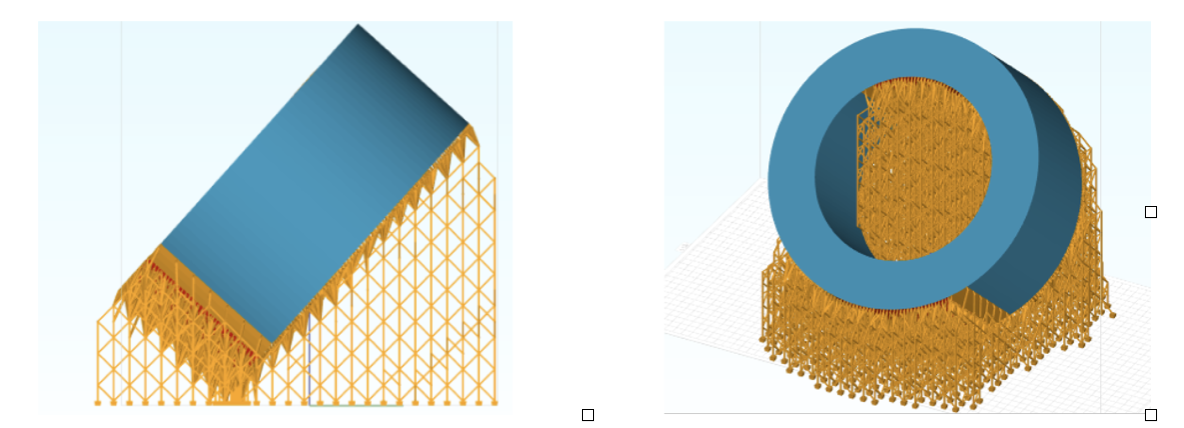
Axtra3D Introduces Volume Professional 1.3 and Volume Industrial 1.3. Image courtesy of Axtra3D.
Axtra3D’s Chief Strategy Officer Rajeev Kulkarni stated,
“Build preparation has a direct impact on production economics. It influences material consumption, printer utilization, dimensional accuracy and the reliability of the finished part. With Volume Professional 1.3 and Industrial 1.3, we are giving customers more control over this critical stage. They can prepare complex builds faster, identify potential problems before printing, and make better use of their available build area. For production users, these capabilities help reduce avoidable iterations and improve the consistency of their manufacturing process.”
New UV Curing and Wash Station
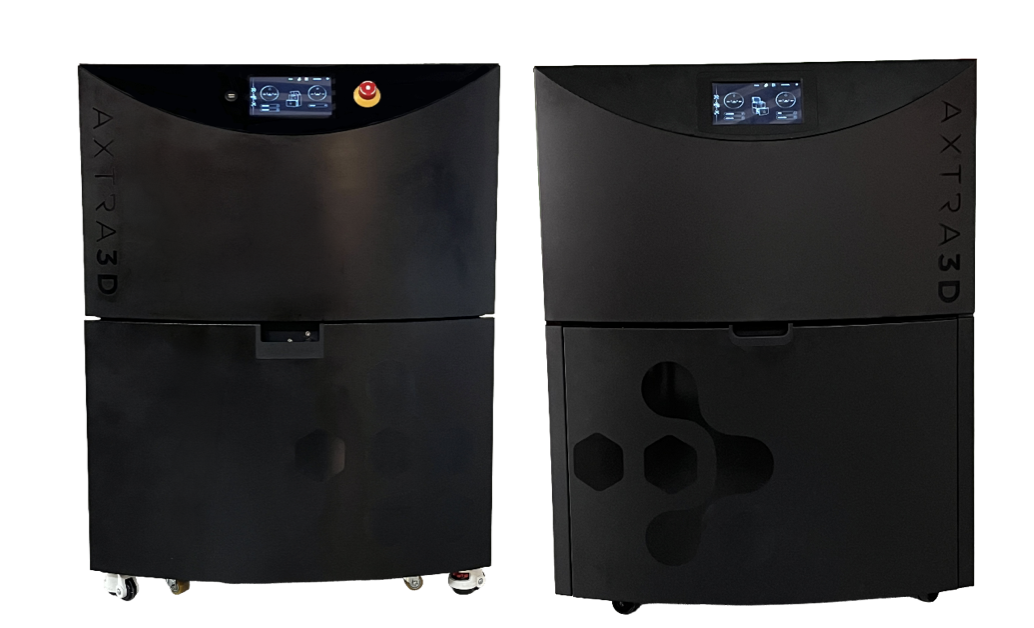
Axtra3D launches enhanced Axtra Wash and Axtra Cure series 1. Image courtesy of Axtra3D.
The firm has also released the Axtra Wash Series 1 and Axtra Cure Series 1. These two will be part of their Axtra Workflow system, with the idea that settings and output will be tied together to improve reliability and repeatability.
Rajeev stated that,
“Customers do not measure the success of additive manufacturing only by how quickly a printer produces a part. They measure it by how reliably they can deliver a finished, usable component. By enhancing and integrating the washing, drying, and curing into Axtra Workflow, we are helping customers build a more connected production process with fewer disconnected steps, greater consistency and a clearer path from design to finished part.”
The Wash is automated for both washing and drying cycles. The system uses preset agitation modes, as well as something called “Venturi” and nanobubble eductor technologies. This sounds like it should be in a moisturizer or something, but I’m sure it’s good. They also have a compressed-air knife for drying. Part handling is automated, and the system has two 50-liter tanks. Loading detergent and unloading are automated. There’s also an exhaust cycle. The firm thinks that it will require less labor and improve repeatability.
The Cure has both UV and thermal post-cure in one unit. The system has two parts: one for UV and one for the thermal unit. It works at 365, 385, and 405 nm, and the oven can be heated to 250°C. You can also select or make thermal programs of your own choice. This setup offers more flexibility and can improve repeatability.
UL Blue Card
Arkema’s N3xtDimension Flame-Retardant N3D-FR512 has obtained a UL Blue Card Certification. This means FR components can now be made with more confidence, since an independent body has validated their performance. The material also has no added halogens, a tensile modulus of 5,100 MPa, tensile strength of 42 MPa, elongation at break of 4.2%, and a heat deflection temperature of 170°C at 0.455 MPa.
This is strong performance for a Vat Polymerization part and points to real use in enclosures, electronics, and maybe some specialty automotive parts. Rajeev also thinks applications could include “electrical connectors, circuit protection components, electronic enclosures, cable management systems, automotive electrical components, and industrial control housings.”
This is also a positive for Axtra in that it has Arkema as a powerful partner. And this powerful partner believes enough in Axtra´s technology to really invest time and money in it. That points to Axtra moving into more real-world applications and parts. Axtra has done a great job building production systems that produce crisp edges. Early success in molds has now opened up new paths to more parts in new applications.
You can visit Axtra3D at Formnext Booth B36, Hall 12.1.
Subscribe to Our Email Newsletter
Stay up-to-date on all the latest news from the 3D printing industry and receive information and offers from third party vendors.
Upload your 3D Models and get them printed quickly and efficiently.