
In 2024, IperionX partnered with fastener firm Vegas Fasteners to jointly make fasteners for the US Army Ground Vehicle Systems Center (GVSC). That DEVCOM component has been hit by funding reductions as attention shifts to drones and missiles. But still, they’re trying to fund robotic vehicles and GM’s new lightweight Infantry Squad Vehicle. These kinds of craft are super important.
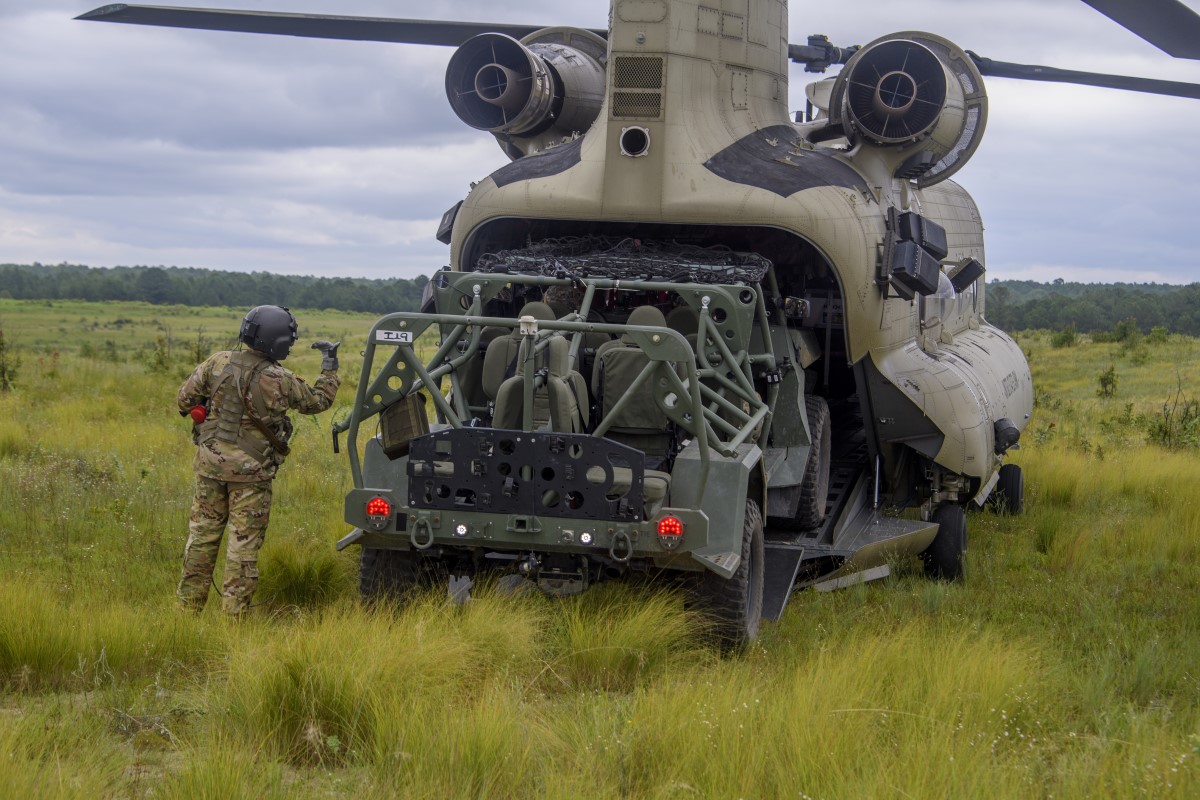
The Infantry Squad Vehicle being inserted into a helicopter. Image courtesy of the US Military.
Based on a lot of commercially available parts and prioritizing speed and visibility over armor, this is a new, counterintuitively safer, way to get around the battlefield. If I can see and respond to a threat by avoiding or engaging it, and can outrun and outmaneuver it, I’ll be nimble and quick and not so much of a lumbering vehicle confined to the big (ambushable, mineable) main roads.
Jordanian forces and British SAS have used converted Toyota Land Cruisers to great effect in Syria and beyond, now with the Jankel Fox. The Fox was in service with the French, Belgians, Oman, Jordan, the US, Romania, Botswana, South Korea, Italy, Spain, Brunei, New Zealand, and more nations, with over 500 ordered. This is not a completely new vehicle. It’s built on top of the excellent, widely supported, inexpensive Toyota Land Cruiser, converted by Jankel and its Jordanian partner, JLVM. We’re not making some ground-up, billion-dollar wild animal named “useless thing”. We’re adopting an aftermarket-made iteration using commercial off-the-shelf components, augmented by specific innovations such as Jankel’s own blast-resistant seats.
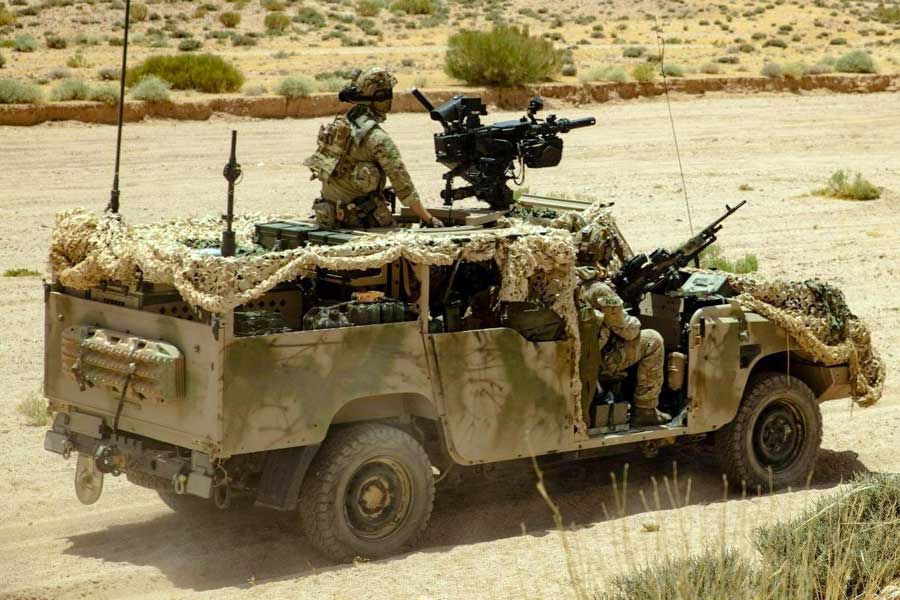
Jankel Fox tactical vehicle. Image courtesy of Jankel.
A very different vehicle, the Supacat has found favor with nine countries. This has been made by another relatively small British firm. Initially, if you look at a Supacat, you wouldn’t really want to be on it in Afghanistan. Soldiers seem to be draped all over the vehicle rather than ensconced within. Initially, there was a lot of resistance to Supacat’s LMV and other platforms. The cars look like they’re built like those cute little French beach cars of the 1960’s or more like dune buggies than proper military vehicles. They look more like a Citroën Méhari that you’d throw some beach towels in on your way to a cool calanque on a summer’s day than something you can take cover in.
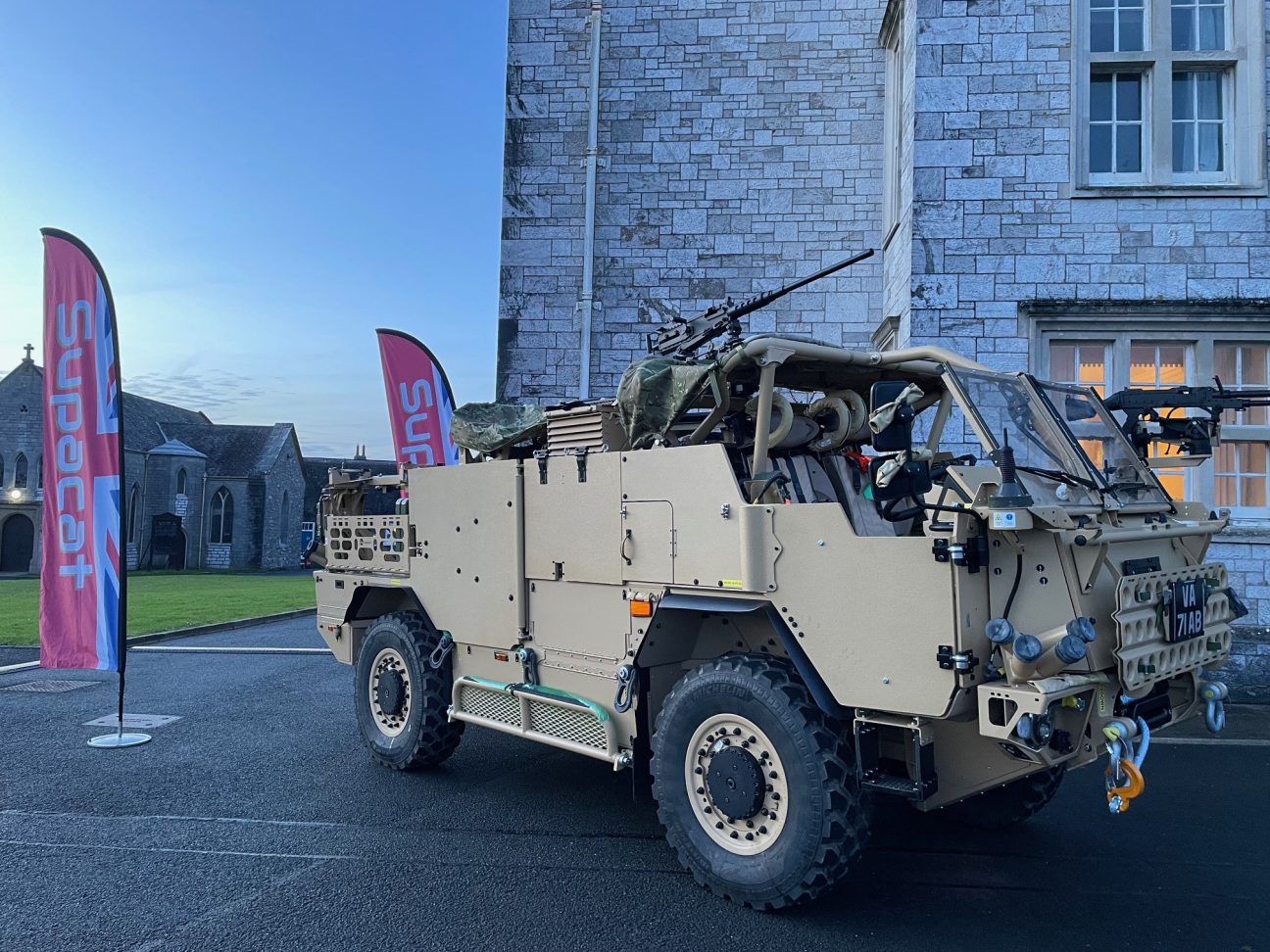
Supacat Jackal tactical vehicle. Image courtesy of Supacat.
Some US special forces and Marines now use lightweight Polaris buggies, with a similar design philosophy. The Polaris MRZR Alpha may have a very macho name, but looking at it, it seems like something more suited to a midlife crisis than to a long-range insertion mission. Jesus, imagine being 1,000 miles from any of your forces in something that doesn’t even have doors or a windshield.
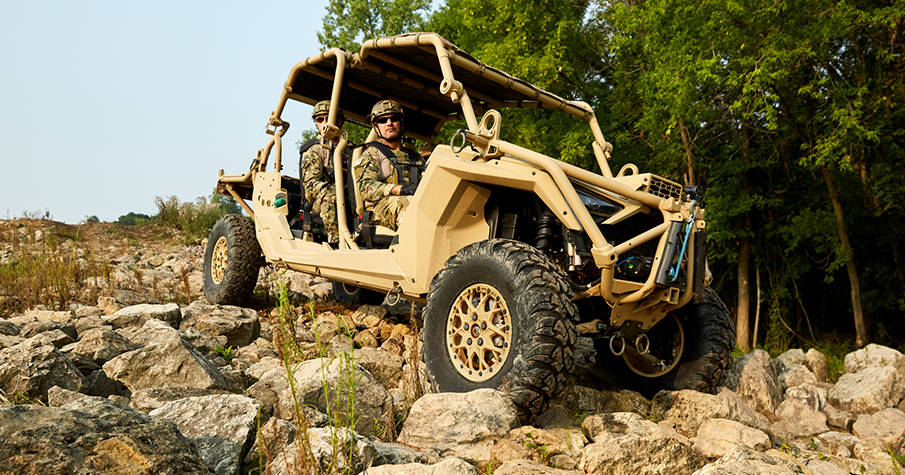
Polaris MRZR Alpha lightweight tactical vehicle. Image courtesy of Polaris Government & Defense.
Whereas the main thrust of learning in the US military has focused on super-heavy MRAP vehicles, the GVSC is one of the few parts of the Army where alternatives can be developed. MRAPs may be safe, but they are lumbering, confined to main roads, obvious targets, and will be very vulnerable to drones. By letting the Army experiment with autonomous, lighter vehicles and commercial off-the-shelf components, versatile alternatives can be brought to bear. And only by having the national capacity to quickly and cost-effectively implement these technologies in the US can the US be versatile. It took the Marine Corps 14 months to come up with an up-armored Humvee. Much quicker than the Army, in response to IEDs, which were some of the most serious threats to US servicemen and women. Also the Marines coming up with a force protection measure ahead of everyone else is probably a bad sign.
So, being versatile and creating more options are lifesavers. We can see that in Ukraine. And there, highly armored, lumbering MaxxPros and similar vehicles were very useful on the front; they were later assigned to CASEVAC roles, which they’re often unable to complete due to poor mobility in the mud. Their armor also can not survive repeated heavier drone strikes, so right now in the Dead Zone it’s small robotic vehicles that bring in supplies, troops, and evacuate the wounded. At the moment, it’s Unmanned Ground Vehicles (UGVs) and adapted autonomous Land Cruisers that do the main supply mission to the front in Ukraine. So not only is the versatility of GVSC important, but with their autonomy, lightweight design, and COTS components, they seem to be in exactly the right place at the right time. And small titanium components are what will be needed to integrate it all. So, starting with the mighty yet small fastener, we can quickly make vehicles that fit the military’s needs.
In the Afghanistan war, there was a lot of unrest around the Supacat Jackal vehicles that were implemented. Procurement was rushed, and the British press and family members looked at the exposed open vehicles and worried. It looked like a mess in the making. And there were deaths of service members from IEDs. Upgraded versions ameliorated the issue, but insecurities remained. In secret, however, the SAS had been using the Supacat for years to great effect. This was not disclosed by the UK MOD for fear of divulging tactics. An open lightweight vehicle is easier to load onto a plane, more fuel-efficient, and can be faster. This means it can perform missions the other craft cannot and reach places where heavier vehicles cannot. With more maneuverability and off-road ability, you can avoid some situations and meet others head-on. You can see better from the vehicle, avoid ambushes, and be miles away before they figure out where you are, while you can choose many more roads to get there. If engaged, better visibility means ambushes will be less successful and your actions more successful.
Meanwhile, using multiple engines and other components from standard vehicles improves serviceability and lowers costs. Heck, in many places the US military is likely to go, there should be a deep supply of Land Cruiser parts, for example. Vehicles are cheaper. And the integrators that build them are far more responsive than larger firms. So adaptations to the battlefield are far quicker to make. What’s missing from these vehicle programs is the widespread adoption of 3D printing, which would enable even faster adaptations. We’re seeing some people work on it, but it’s not going fast enough.
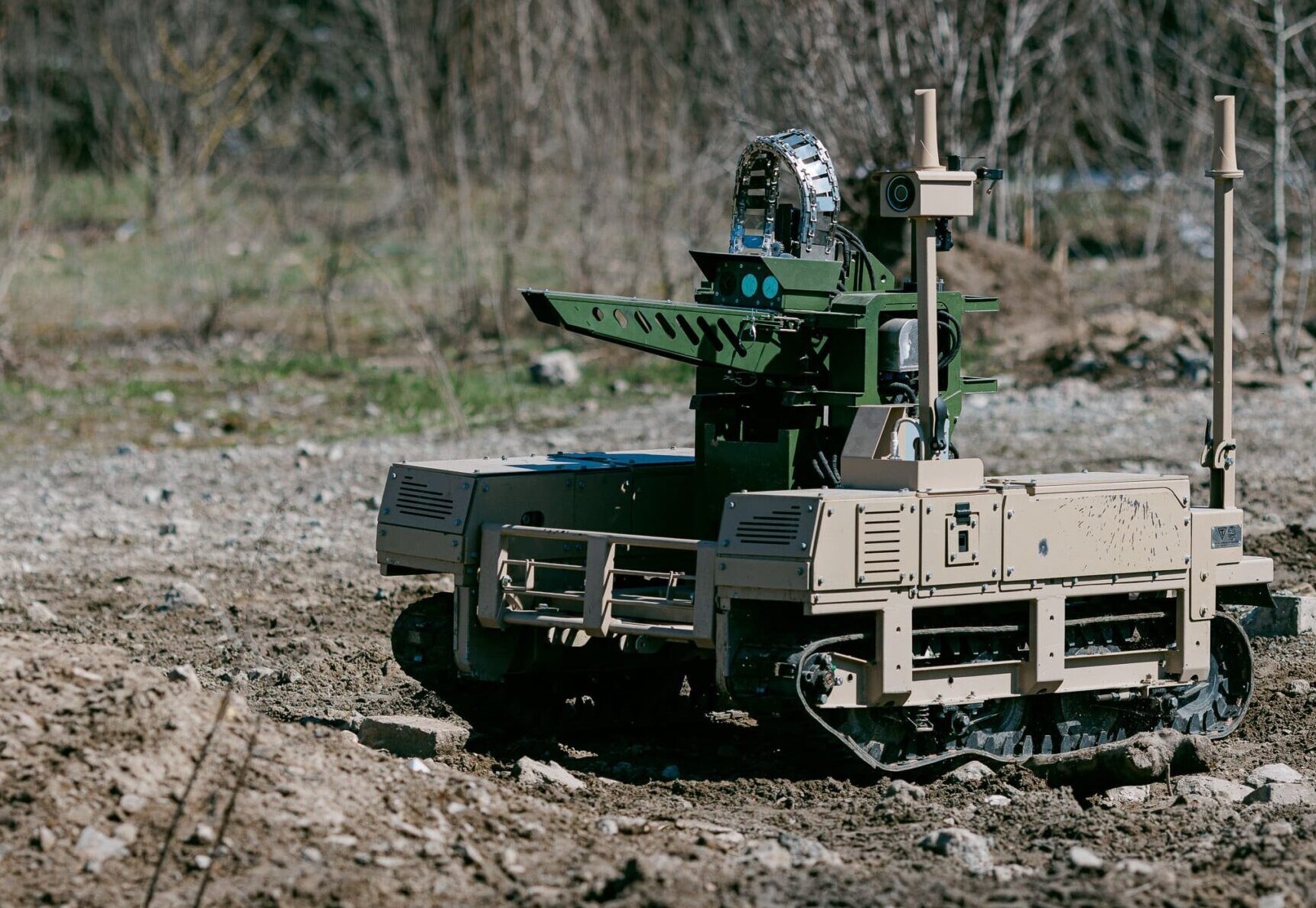
Unmanned ground vehicle (UGV) designed for battlefield operations. Image courtesy of the US Military.
Three Types
Meanwhile, in Ukraine, we’re seeing the widespread adoption of Unmanned Ground Vehicles (UGVs) as the only frontline resupply option for now. UGV’s have often been vanity projects. There is also a wide range of them, from RC car-sized observation thingies to slow, tracked bomb-disposal robots to full-sized armored cars. The three types are local, transport, and long-distance. On the lower end of this is a low-cost entrant, the TerMIT. This is available for around $15,000 but can only go 10 kilometers per hour and is steered via direct link. This can handle many short-range tasks but would be slow over long distances. But Ukraine is an interspersed battlefield where the frontline is a dead zone where troops hide amongst hard points, and drones are everywhere. Infiltration and being overrun are constant problems.
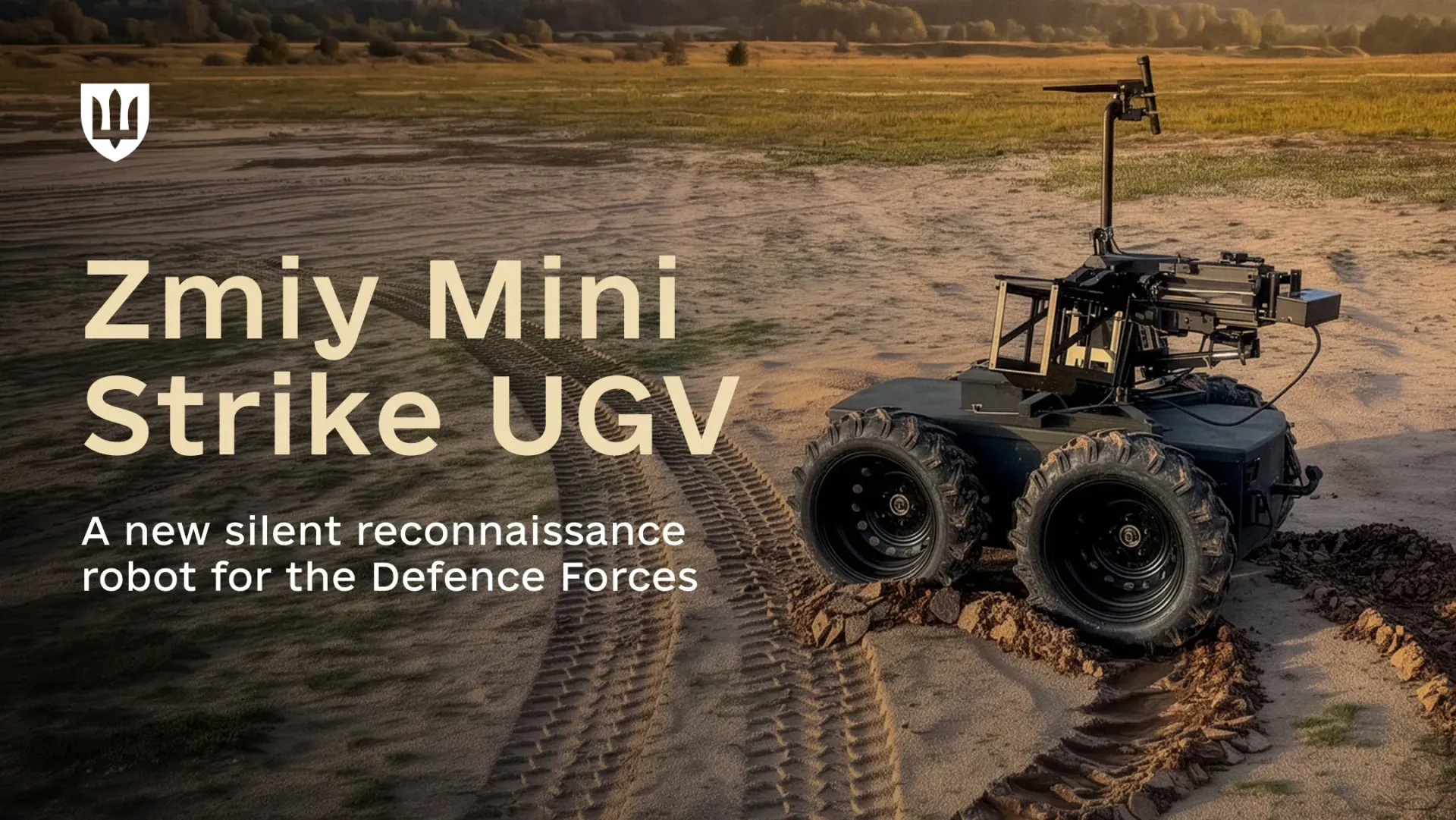
So interlocking fields of fire are not possible; there are actually few people on the front line, and they are far apart in small groups. Now imagine trying to break out and then sacrificing the TerMIT here to do so. Or imagine outflanking someone or giving yourself fire support with this thing. It could also do the last mile of ground support and supply evacuation. Tiny UGVs have been used as platforms for RPGs and machine guns for over a year. Ukraine currently fields over 25,000 UGVs and has recently introduced a grenade launcher variant, the Zmii Mini Strike. The country has over 200 companies developing UGVs and says they do over 7000 combat missions per month, along with a host of other supply missions. But if we want to carry people or things much farther, we have to look at something faster.
So, for the next class, let’s think about transport vehicles. One is a very off-road-capable, low vehicle that can carry two tonnes for 400 kilometers. These kinds of transport models can be slow and electric, or faster and multi-fuel. They’re air-transportable by helicopters, planes, and heavy drones. Whereas the small one is primarily a mobile weapons station, this is a long-range transport capable of carrying power, water, CASEVAC, supplies, and fire support. The closest thing to this now is the Hunter Wolf UGV, but the US Army used to have a Mule, which is very close to the functionality of this as a lightweight transport. In 2022, the MULE robot platform was precisely what the US needed, but it was canceled. This needs to be adaptable, cheerful, and cheap. It should be possible to easily mount a recoilless rifle on this to develop a new way to engage people in mountain valleys with a big, useful gun and a low-profile vehicle.
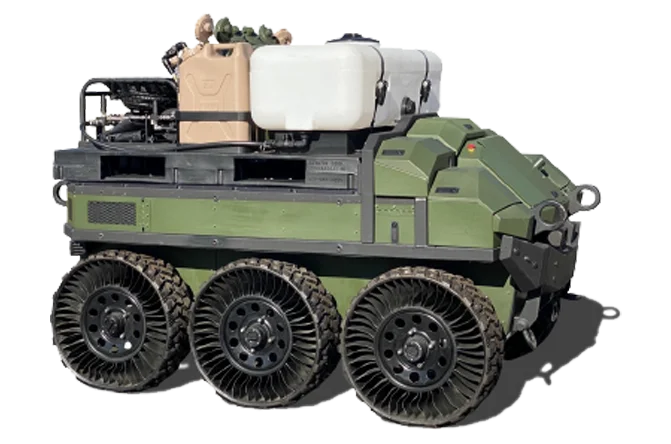
It would really suck to get killed by such adorable vehicles. For the last category, a gun truck: a kind of automated technical vehicle like an autonomous version of the General Dynamics Flyer or Infantry Squad Vehicle. The light, off-road-capable craft could deliver supplies quickly and also be used for raids or evacuations, or simply as an unautomated vehicle.
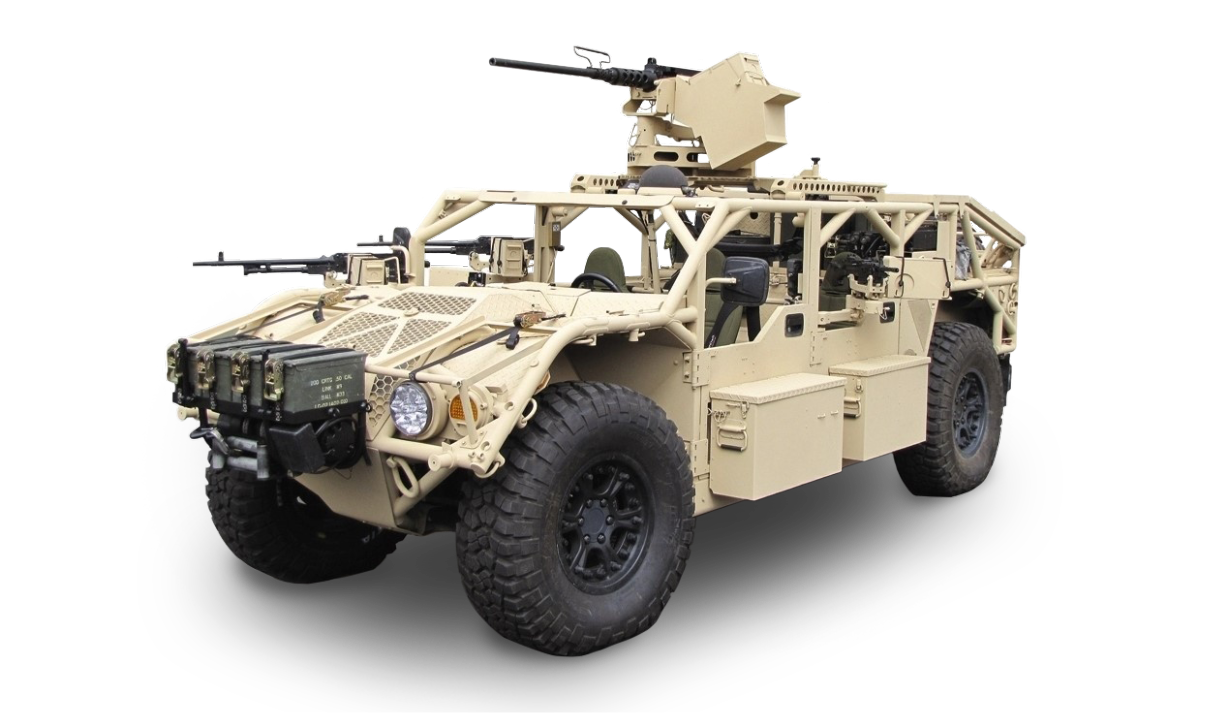
Now you could, of course, festoon it with M2’s or make it super expensive with sensors and the like. But, to me, a super low-cost adaptation is what is really needed. Something rugged, quickly iterated, responsive, fast, and easy to maintain. 3D printing excels in low-volume manufacturing. Quick iterations, improvements, and lightweight parts are our forte. So just as 3D printing is playing an outside role in drone warfare, I’d expect a similar role in converting and continually operating unmanned ground vehicles.
Subscribe to Our Email Newsletter
Stay up-to-date on all the latest news from the 3D printing industry and receive information and offers from third party vendors.
Upload your 3D Models and get them printed quickly and efficiently.