
The Philippines offers an interesting case study in how 3D printing can develop in Southeast Asia, and Manila-based 3D2GO helps illustrate it.
3D printing in Southeast Asia doesn’t have to start with “selling equipment,” nor does it have to begin with large-scale industrial manufacturing. Instead, it can start with services closer to consumers—such as design, scanning, modeling, customization, cultural and creative products, and rapid prototyping. This is the model 3D2GO has built in the Philippines. What I find most interesting about the company is not how many 3D printers it has, but how it has turned 3D printing into a broader service-based business.
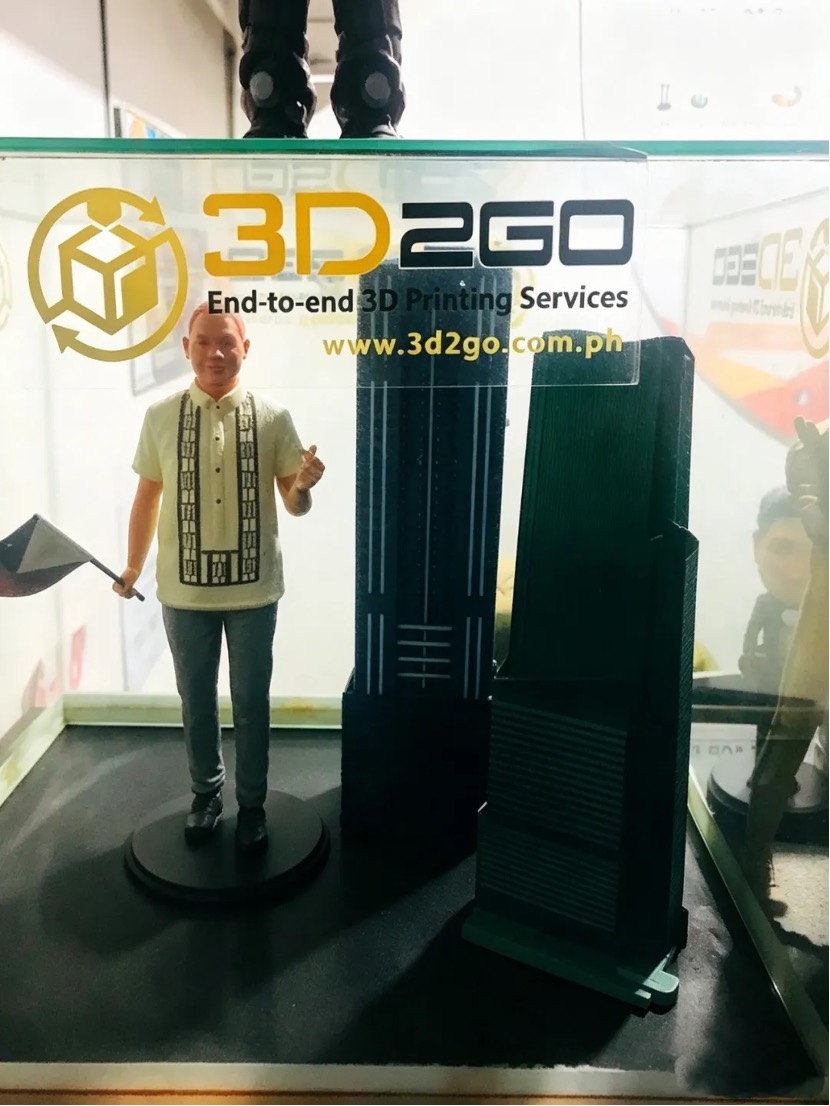
More Than a 3D Printing Service
3D2GO doesn’t operate as a print shop where customers provide an STL file and receive a printed part. It breaks the entire process down into: scan, design, and print. Starting from 3D scanning, moving to 3D modeling, reverse engineering, and product design, then to 3D printing, post-processing, and even including character models, architectural models, corporate gifts, toys, prototypes, and more.
3D2GO was established in 2013 and began operations in 2014. Since then, it has developed into an end-to-end 3D services business serving consumers and companies. Today, its services include 3D scanning, modeling, printing, LiDAR, rapid prototyping, and CNC machining.
Building a Business Around 3D Printing Services
3D2GO has produced character models, architectural models, toys, car models, and various customized products. A collection of architectural models, including the Leaning Tower of Pisa, Statue of Liberty, Eiffel Tower, and Empire State Building, shows the range of relatively simple products this model can produce.
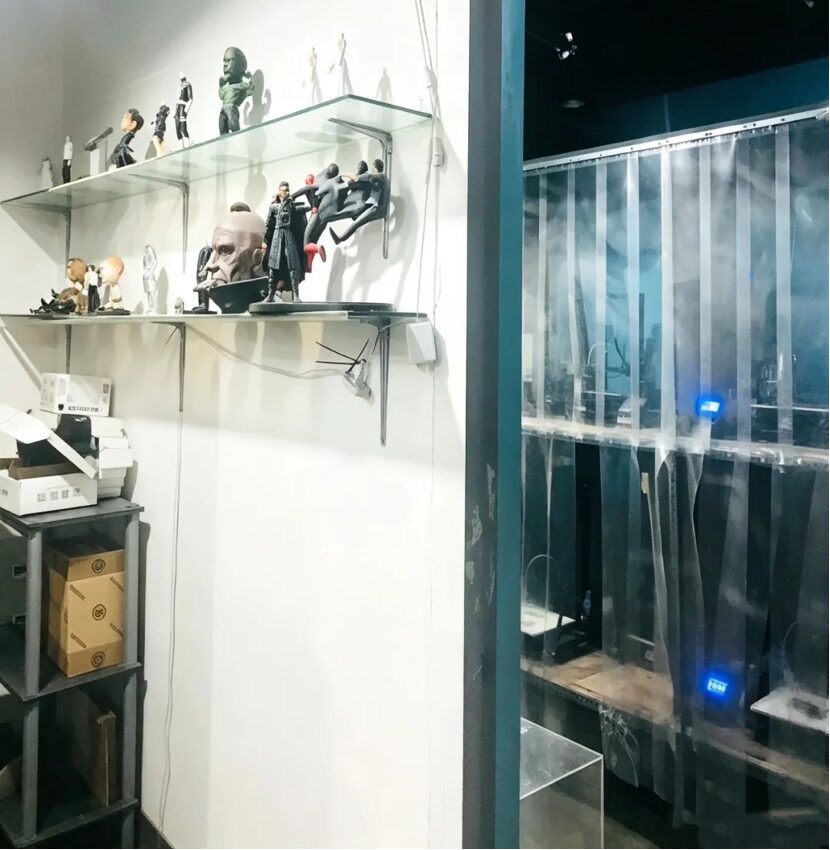
Inside 3D2GO’s Manila facility.
From an industrial manufacturing perspective, these might not represent much in terms of technical sophistication, but from a commercial standpoint, they’re very clever; they help illustrate a different use for the technology.
They address a simple question: What kind of 3D printed products do ordinary Filipino consumers and businesses actually need? And the answer isn’t necessarily complex industrial parts. It could be a corporate souvenir, a character figurine, an architectural diorama, a product prototype, a part that’s no longer in production and hard to find, or even a scan of a real person turned into a miniature version of themselves.
The business case rests on three familiar advantages of 3D printing: personalization, small batches, and fast delivery. Traditional manufacturing can become expensive at very low volumes because of tooling, setup, inventory, and other costs, while additive manufacturing can make one-off and small-batch production more practical.
For me, this remains one of the most important commercial opportunities for 3D printing: not necessarily changing how 10,000 identical units are produced, but expanding what’s possible when a customer needs only one or a few.
From 3D Printing to Digital Manufacturing
Looking further at 3D2GO, its business has already expanded beyond just 3D printing. For example, its CNC service supports metals, plastics, composites, and some ceramics. 3D printing service providers can evolve from “printing companies” into broader digital manufacturing service companies.
A customer may arrive not with a printable file, but simply with a problem or an idea: “I have something—can you help me digitize it, design it, validate it, and then manufacture it?”
In that model, scanning can be the entry point, design becomes a core part of the process, and printing is one of several manufacturing options. CNC machining, post-processing, and other services can deepen the relationship. 3D2GO’s expansion into these areas shows how a company that began around 3D printing can grow into a broader digital manufacturing business.
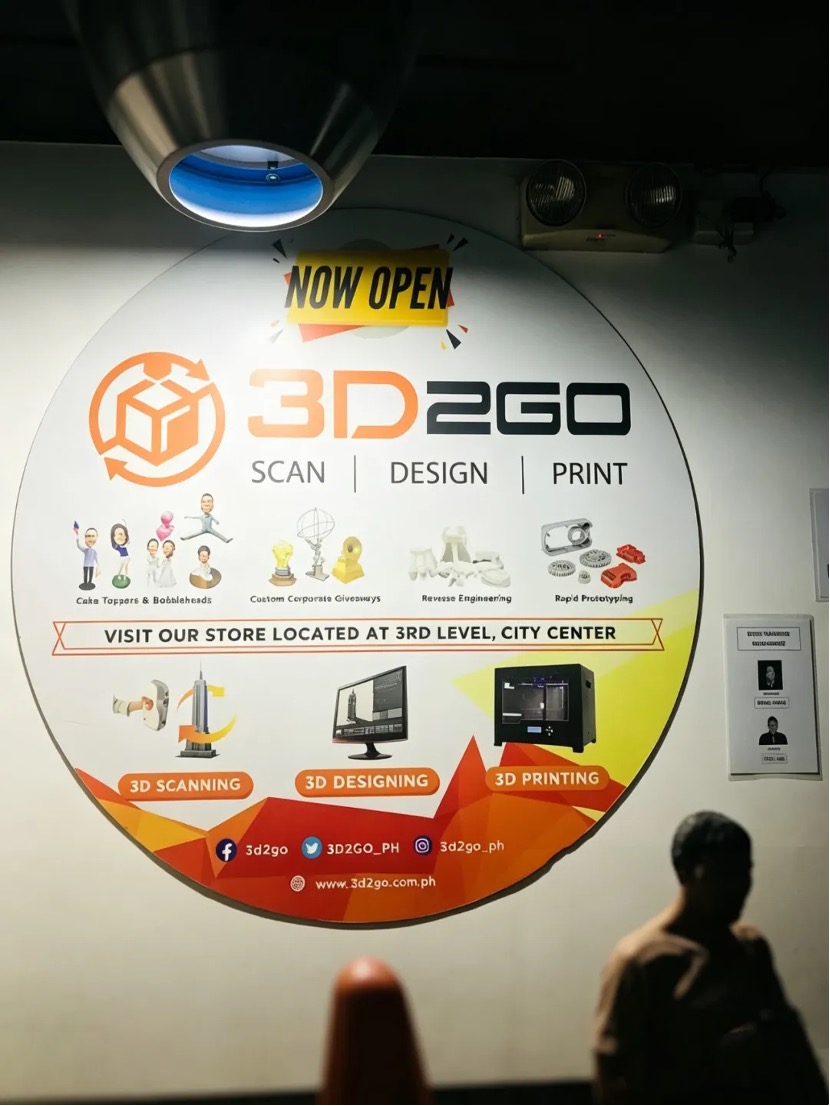
3D2GO promotes its scan, design, and print services.
Why the Philippines Is an Interesting AM Market
If we broaden our view from 3D2GO to the Philippines as a whole, the country’s industrial structure offers some useful context. The country combines a large services economy with an established manufacturing base, particularly in electronics.
Electronics remain particularly important. According to the Philippine Statistics Authority, electronic products generated $45.89 billion in exports in 2025, accounting for 54.3% of the country’s total exports. Manufactured goods as a whole represented 80% of exports.
That manufacturing base matters for additive manufacturing. The technology can connect design, prototyping, engineering validation, small-batch manufacturing, and customized production. The Philippine government has also been expanding public infrastructure for additive manufacturing.
Building AM Infrastructure Across the Philippines
The Philippine Department of Science and Technology (DOST) established the Advanced Manufacturing Center (AMCen) to support additive manufacturing, product prototyping, materials development, training, consulting, and other 3D printing services.
That effort has expanded beyond the original national facility. In 2025, DOST’s Metals Industry Research and Development Center reported launching 11 AMCen satellite laboratories in the regions. In September 2025, DOST also opened an Advanced Manufacturing Center in Laguna, describing it as part of an effort to make AM technologies more accessible to researchers and innovators nationwide.
The expansion continued in 2026, including an AMCen satellite facility in the Bicol region focused on 3D printing and rapid prototyping. Taken together, these investments show that additive manufacturing in the Philippines is no longer limited to desktop printers, makers, or individual service businesses. It is also becoming part of the country’s advanced manufacturing infrastructure.
DOST says AMCen’s capabilities cover plastics, clays, concrete, photocurable polymers, ceramics, and metals. The center also supports CAD, prototyping, materials development, research, and training.
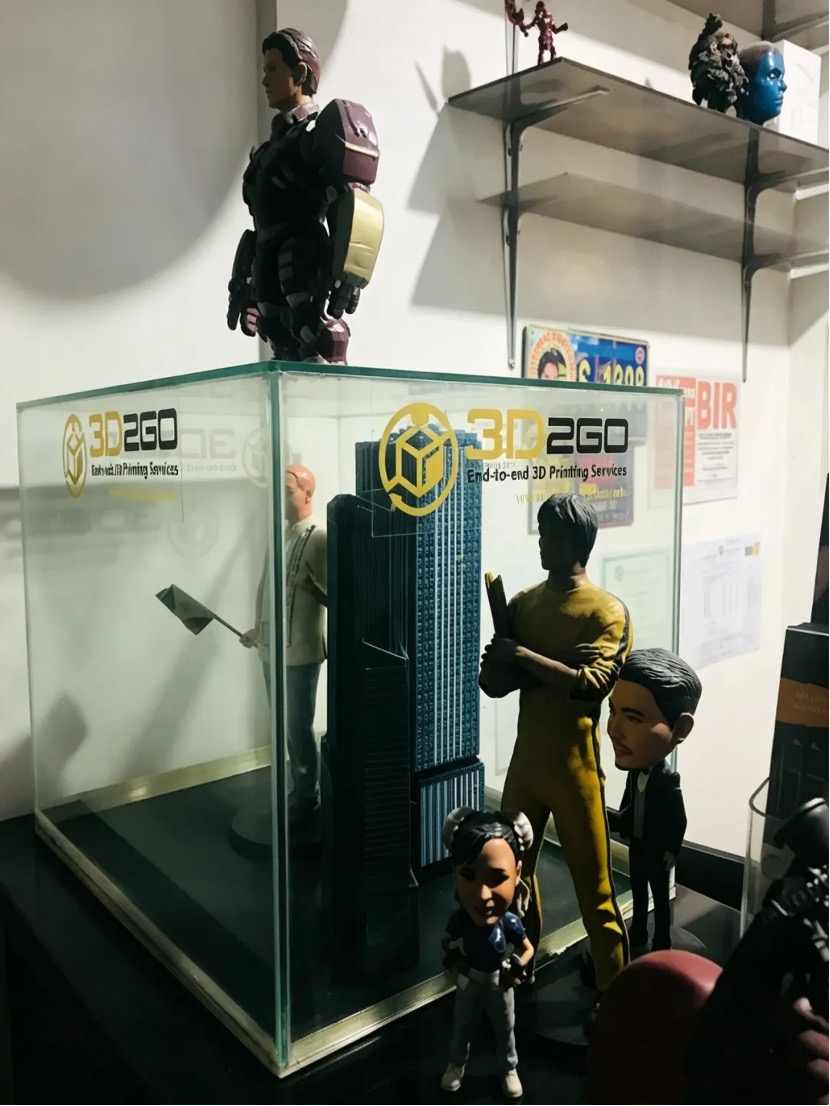
3D2GO showcases large-format and customized 3D printed models.
The Philippines Is Part of a Larger Southeast Asian Story
The Philippines is also part of a broader shift taking place across Southeast Asia. ASEAN’s strategy for the Fourth Industrial Revolution identifies additive manufacturing as an important emerging technology, with applications in spare parts, automotive and aerospace components, medical devices, and other areas. The report also notes the technology’s potential to reduce dependence on imports and warehousing.
But Southeast Asia should not be treated as a single AM market. Countries across the region have different manufacturing bases, customers, supply chains, and levels of technology adoption. The Philippine example is particularly interesting because private service businesses such as 3D2GO are developing alongside government-backed investment in advanced manufacturing infrastructure.
Why Southeast Asia Matters for 3D Printing Companies
For Chinese 3D printing companies expanding internationally, Southeast Asia offers an opportunity that may go beyond selling equipment and consumables through local distributors.
China has built a large 3D printing ecosystem that includes equipment, materials, software, design, content, services, and supply chains. Connecting those capabilities with local service providers and manufacturers could offer a different route into Southeast Asian markets.
Combining these capabilities with local Southeast Asian markets could create a different business model: international suppliers provide technology, equipment, materials, and manufacturing expertise, while local companies provide customer relationships, design needs, service networks, and knowledge of specific applications. This could be far more valuable than simply exporting a printer.
What 3D2GO’s Model Shows
Instead of beginning with “Do you want to buy a 3D printer?” the conversation begins with a much simpler question: “What do you want to make?” From there, the company can scan an object, create or modify a model, manufacture it, post-process it, and deliver a finished product. That is the value of a service-oriented 3D printing company.
The technologies supporting this model have also improved. AI tools are lowering some barriers to 3D modeling, scanners have become more accessible, desktop printers have become faster and more automated, and the range of available materials continues to grow. Together, those developments could make service-based digital manufacturing accessible to a wider range of customers and businesses.
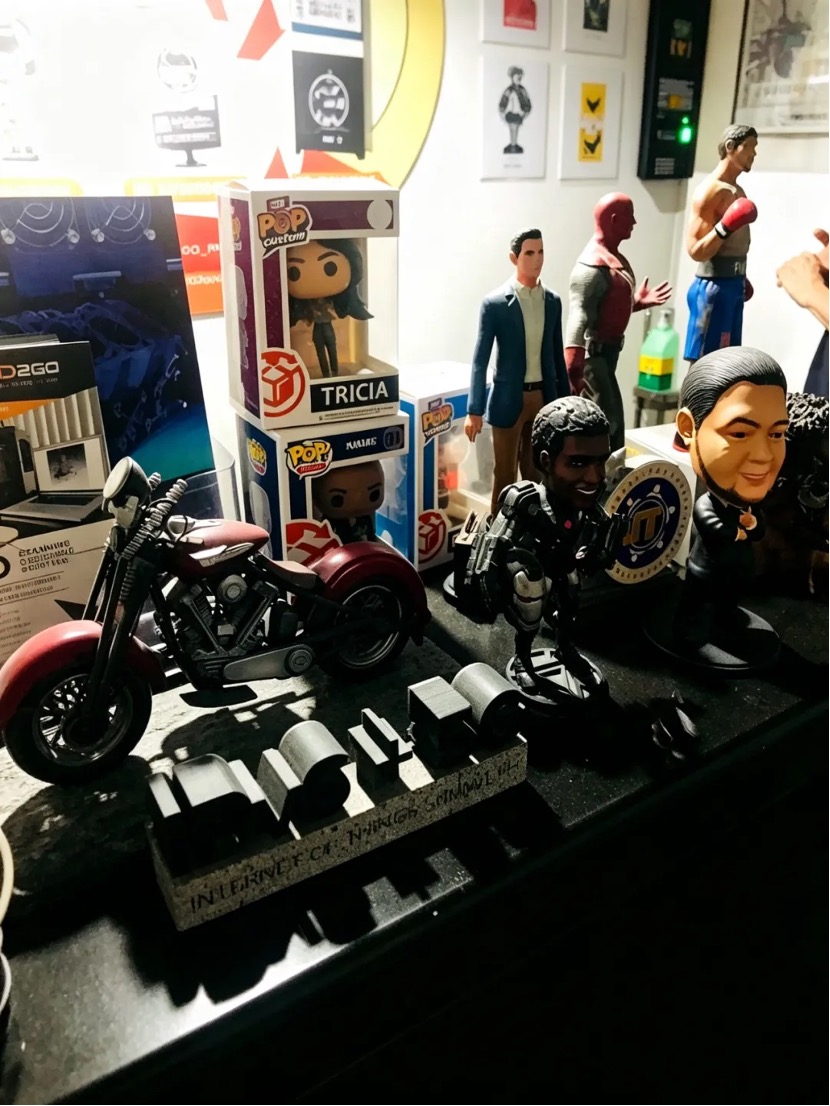
Examples of 3D printed figurines and custom products from 3D2GO.
The Philippine market offers several lessons for the wider 3D printing industry. First, customers may not need another printer as much as they need a company that can solve a manufacturing or design problem.
Second, Southeast Asia isn’t one market—it’s a collection of very different markets. Singapore, Malaysia, Thailand, Vietnam, the Philippines, and Indonesia each have different industrial structures, talent pools, and manufacturing foundations. A strategy that works in one country will not necessarily work in another.
Third, equipment is only one part of the opportunity. A printer may be sold once, and consumables may provide recurring sales, but design, data, software, training, services, applications, and local manufacturing capabilities can create longer-term relationships.
As AI, 3D scanning, digital design, and desktop manufacturing continue to develop, the cost and complexity of turning an idea into a physical product may keep falling. The Philippines is one example of how businesses can build services around that shift.
Whether Southeast Asia becomes one of the next major growth markets for additive manufacturing remains to be seen. But the region does not need to follow the same path as the United States, Europe, or China.
For companies looking at the region, the more useful question may not simply be, “How many printers can we sell?” It may be, “How can we work with local designers, manufacturers, universities, businesses, and entrepreneurs to build useful digital manufacturing services?”
Images courtesy of Xu Fanglei
Subscribe to Our Email Newsletter
Stay up-to-date on all the latest news from the 3D printing industry and receive information and offers from third party vendors.
Upload your 3D Models and get them printed quickly and efficiently.