Two barracks have been 3D printed at Texas’ Fort Bliss, and another eight will be completed by September. The barracks were printed by ICON, which got $62 million for the 10 barracks. In 2024, ICON made several test structures and a test barracks. The military then conducted extensive testing on walls and the overall structure. The buildings will house 560 soldiers for limited amounts of time. For now, the storied 101st Airborne will use the barracks. A part of their Task Force Bastogne will stay there as a part of the Joint Task Force Southern Border in support of Operation Ardent Vanguard.
The configuration of the barracks is open bay, which limits privacy and internal walls. The barracks are Unified Facilities Criteria compliant and can house 560 soldiers. The cost savings are estimated to be 9.3% over traditional methods. Printing is supposed to take 58 days, and the total elapsed time on the project has been nine months.
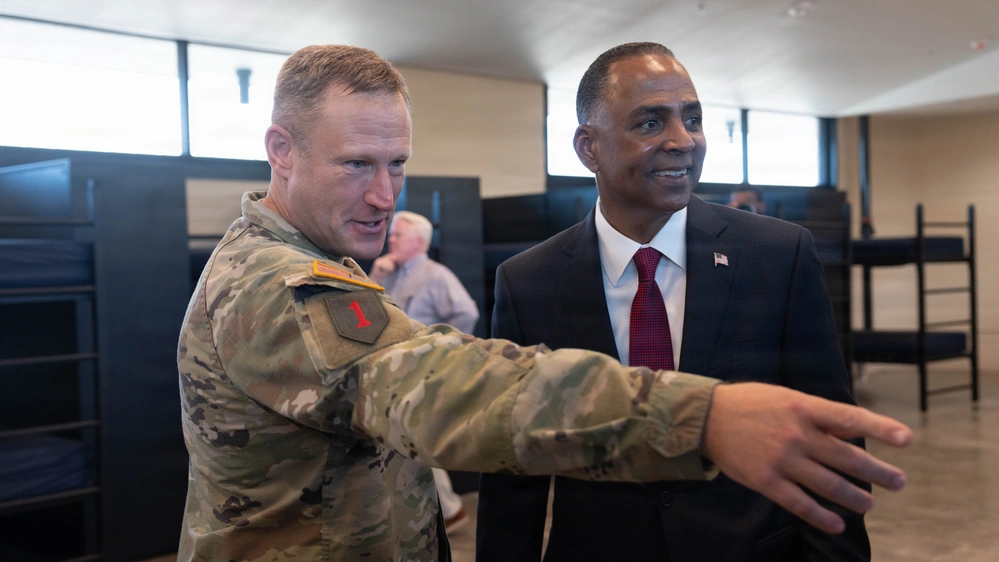
U.S. Army Col. Michael Soyka, Fort Bliss garrison commander, giving a tour to El Paso Mayor Renard Johnson. Image courtesy of the U.S. Army.
According to Fort Bliss commander Maj. Gen. Curtis Taylor,
“This project is about much more than statistics, 3D printing or cost savings. It is about combat readiness, and most importantly, it is about taking care of our people…This facility sends a clear and undeniable message to every Soldier who walks through its doors: We value you. We value your mission. And we value your sacrifice. In the coming weeks, when the next unit finishes a demanding shift on the border, they won’t have to drive an hour into the desert, Instead, they will return here—to permanent, energy-resilient, world-class housing just steps away from gyms, dining facilities and recreation areas.”
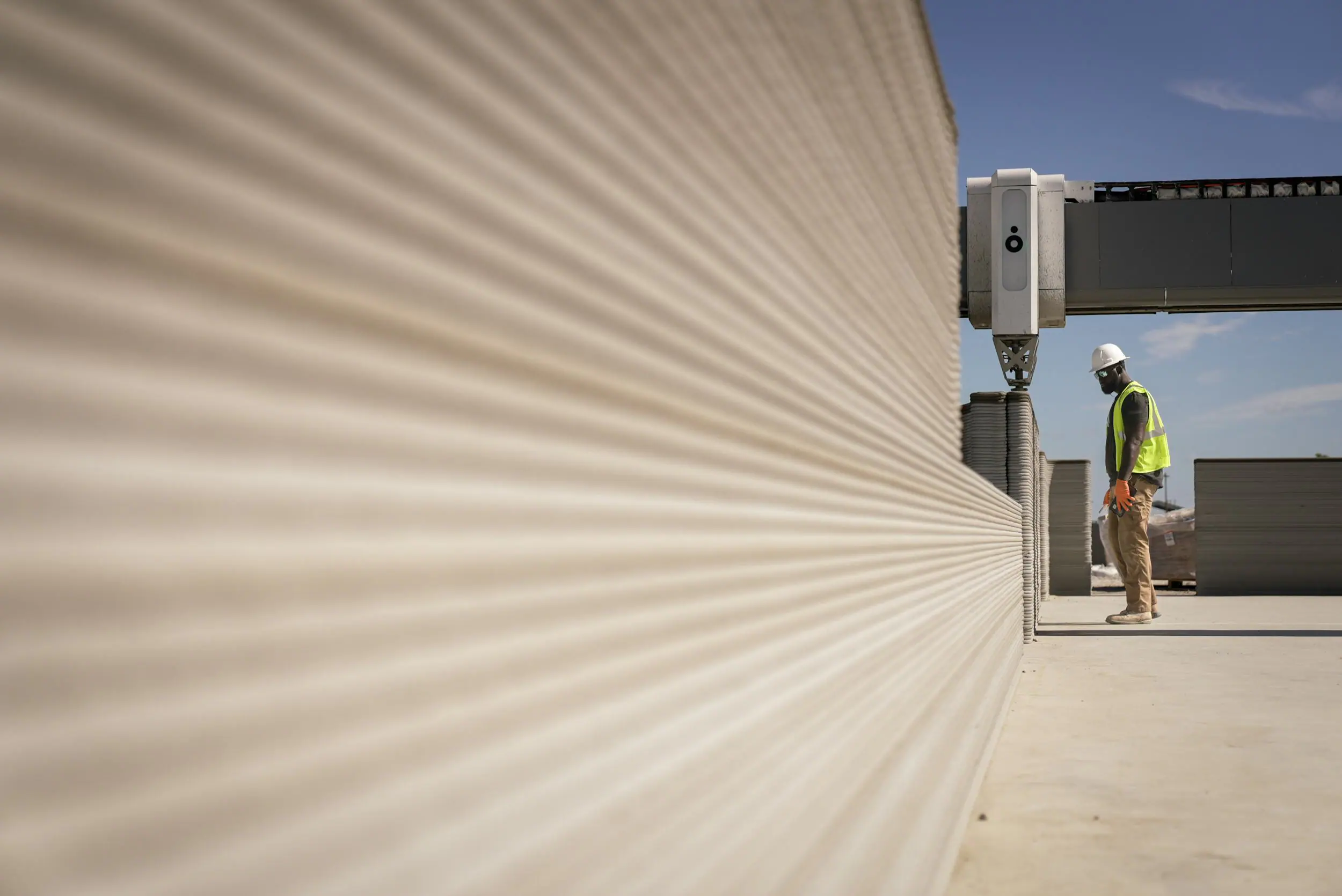
3D printing barracks. Image courtesy of ICON.
The current contract consists of 10 open-bay, 3D printed transient training barracks accommodating up to 560 service members. The printing phase of all 10 buildings took 58 days, with an estimated contract-to-delivery time of just nine months. This is a big win for ICON. As an American firm that has now passed many Corps of Engineers tests, they could become a big supplier to the military on a gigantic scale.
If the military is happy with the buildings and they continue to be cost-effective, then they could win some large contracts. The military spends around 19 billion a year on construction, which includes building extensive base housing for military families. So homes, barracks, shelters, ammo stores, bridges, and more could all be built by the military. And the more remote the structure is, the more valuable 3D printing will be. By limiting the number of people working at a base, less food, quarters, and fewer people protecting them means further reductions in food and materials shipments. So one less guy at a site really adds up in a forward-deployed scenario.
But even if there is no major overseas base building, the military has asked for extra money, bringing the construction budget up to $28 billion in May. They want the increase specifically to overhaul and improve barracks. So this could be a huge few years for ICON if they manage to get just a teeny slice of this. I’m still skeptical of 3D printed homes, but 3D printed infrastructure to me has a very attractive future. The more remote and time-critical something is, and the more pain it is to have people build it, the better the business case is for 3D printed infrastructure. The U.S. military basically builds cities at home and overseas in bases. And when it goes to war, it will build additional bases and beef up others. This is an ongoing, significant activity that will be a bright spot in 3D printed construction for many years.
Subscribe to Our Email Newsletter
Stay up-to-date on all the latest news from the 3D printing industry and receive information and offers from third party vendors.
Upload your 3D Models and get them printed quickly and efficiently.