In this weekend’s 3D Printing News Briefs, 3D People has integrated threaded inserts into its online quoting tool, AM Solutions has introduced a more compact solution for automated cleaning and surface finishing, and the new Cadillac Formula 1 team used several 3D Systems SLA printers to speed up wind tunnel testing and parts production. We’ll finish up with an interesting historical preservation case from Artec 3D.
3D People Integrates Threaded Insert Capability into Online Quoting Tool
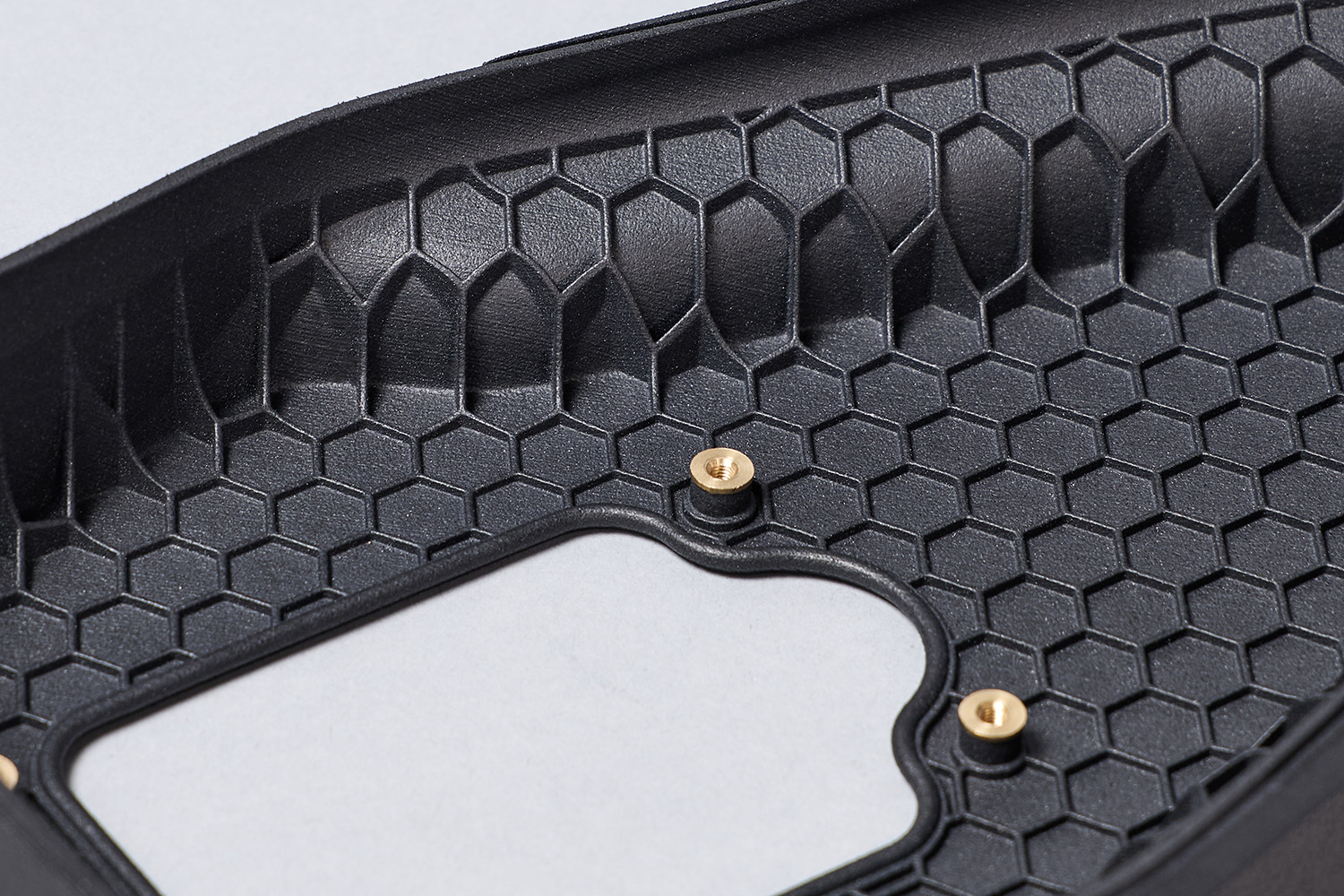
London-based 3D printing service bureau 3D People has improved upon its threaded insert capability by integrating the option into its workflow and making these available directly through the online quote tool. This may not seem like a big deal, especially because 3D People has offered these for many years, but the ability to configure them during quotation is new—this makes it easier to standardize a 3D print job’s fastening requirements over repeat orders or multi-part projects. By using threaded inserts rather than plastic threads alone, you can elevate a 3D printed part to something that will reliably work in the real world, not just as a prototype. 3D People customers can now specify and order insert installation as part of the bureau’s self-service workflow, which streamlines everything. Plus, 3D People now also offers dedicated installation equipment, with a standard option of a high-performance Tappex self-tapping metal insert. Heat-set inserts is a secondary option for 3D printed parts where the geometry restricts installation clearance around a hole.
“Additive manufacturing is about more than just printing geometry. It’s about delivering complete, usable parts. By incorporating threaded inserts in-house, we’re removing another barrier between design intent and real-world application,” said Sasha Bruml, Co-Founder of 3D People.
AM Solutions Premiering Compact S1 Basic at 3D Print Lyon
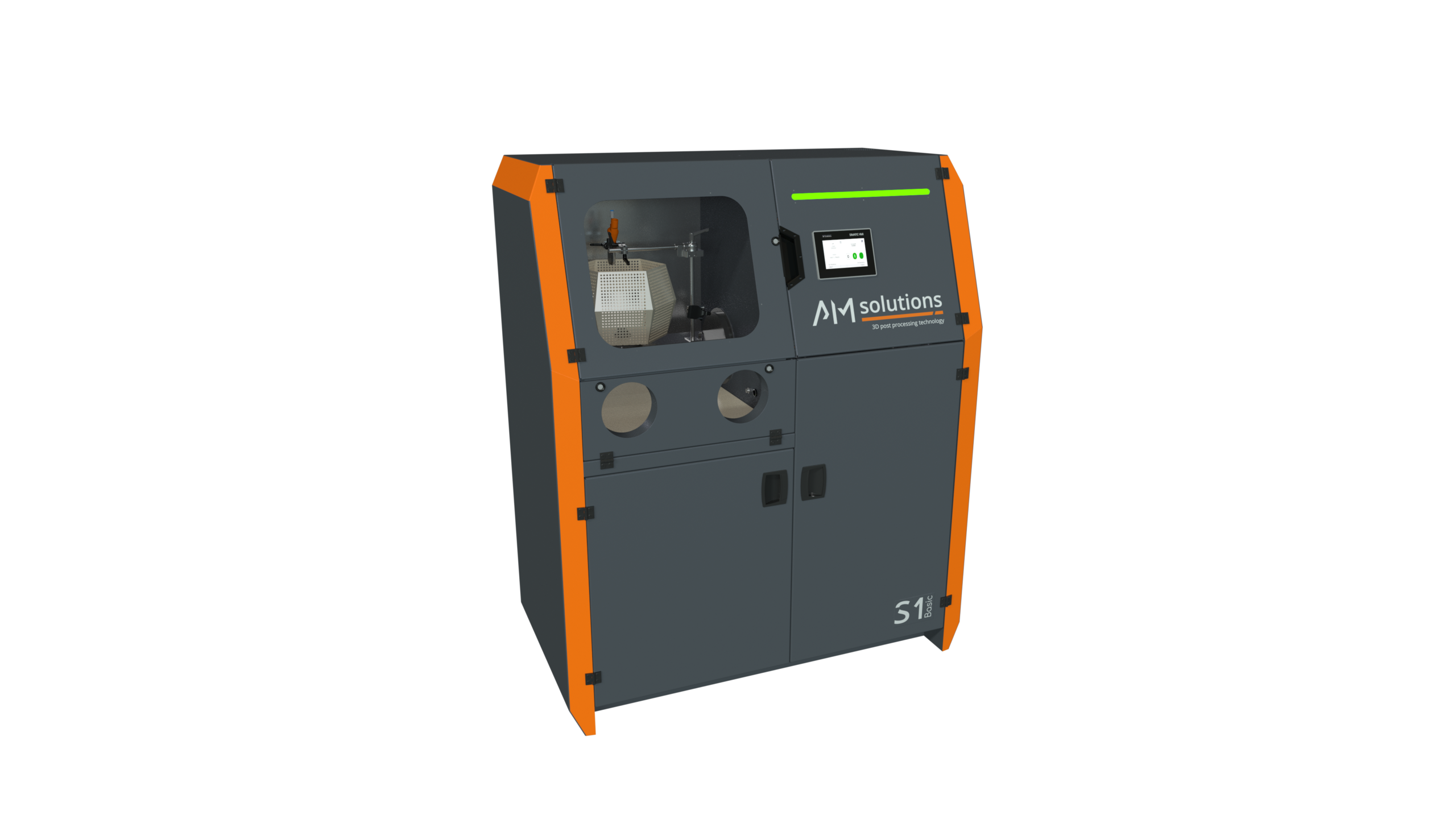
At the upcoming 3D Print Lyon show in France, AM Solutions – 3D post processing technology will premiere its latest post-processing solution. The S1 Basic is a compact, industrial, entry-level system for the automated cleaning and surface finishing of polymer 3D printed parts. In the entry-level segment of industrial AM, demand is increasing for automated post-processing solution to match more compact 3D printers for smaller batch sizes and parts. The new S1 Basic was developed to meet this demand, designed specifically for the automated cleaning and surface finishing of smaller batch sizes of polymer 3D printed parts. AM Solutions has plenty of experience in industrial post-processing technologies, shot blasting in particular, and created the S1 Basic to be stable, user-friendly, and robust. The S1 Basic will be available for purchase once it premieres live at 3D Print Lyon. As part of the official product launch at the event, the company will give a detailed technical presentation of the system.
“We see printer manufacturers clearly intending to provide solutions for entry into additive manufacturing at an industrial level, alongside large, high-performance systems for series production. Smaller, more accessible products are lowering barriers to market entry, but expectations for part quality remain consistently high. Regardless of this development, we recognized the need for a compact, industrial post-processing solution early on and began developing a corresponding system,” said David Soldan, Head of AM Solutions – 3D post processing technology. “With the S1 Basic, we will offer a commercially available product starting in June that fills this market gap, particularly for cost-effective and reproducible post processing of small batches.”
You can see the new S1 Basic for yourself at 3D Print Lyon, June 2-4, at the AM Solutions / Rösler France Booth C10 in Hall 7.
3D Systems’ SLA Technology Helps New Cadillac Formula 1 Team
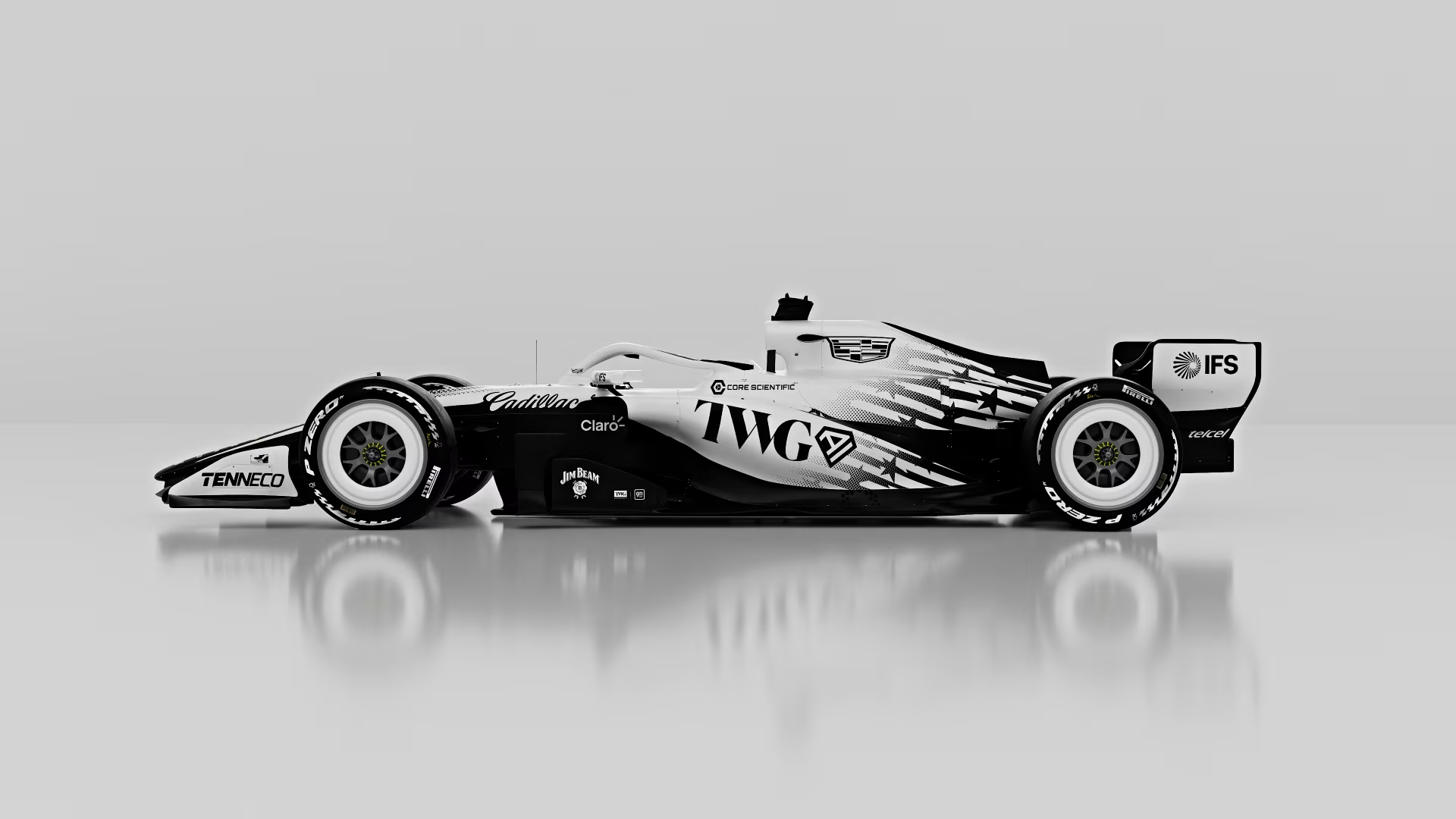
The newest entrant to the FIA FORMULA ONE WORLD CHAMPIONSHIP is the Cadillac Formula 1® Team, which had its first U.S. home race in Miami earlier this month. The team has moved from pre-season design and development into in-season development, and 3D Systems was an integral part of this phase. Ahead of its debut, the Cadillac F1 team used seven of the company’s large-format SLA 3D printers to help speed up critical wind tunnel testing and parts production, along with Accura® Xtreme White 200, Accura Xtreme Black, and Accura HPC materials, and 3D Systems software. These printers are meant for high-quality, efficient production, achieving sharp corners, embossed feature details, and smooth layer lines on angled faces. Additionally, the 3D Systems SLA printers enable tool-free printing, which reduces both costs and lead times. All of these qualities are why the Cadillac F1 team chose 3D Systems. Teams who race with FORMULA 1 are under extremely exacting requirements, so the Cadillac team worked with the global 3D Systems’ Application Innovation Group (AIG) to co-develop these solutions.
“3D Systems was founded on innovation, pioneering the additive manufacturing industry and we are continuing to lead it into an era of high-precision, highly repeatable production at scale. We are pleased that our work has enabled Cadillac Formula 1® team to enter the 2026 FORMULA 1 season despite the short timelines and strict qualification conditions,” said Elvis Perez, Senior Vice President, Sales, 3D Systems.
Using Artec 3D’s Scanners to Digitize Historic Castle in Japan
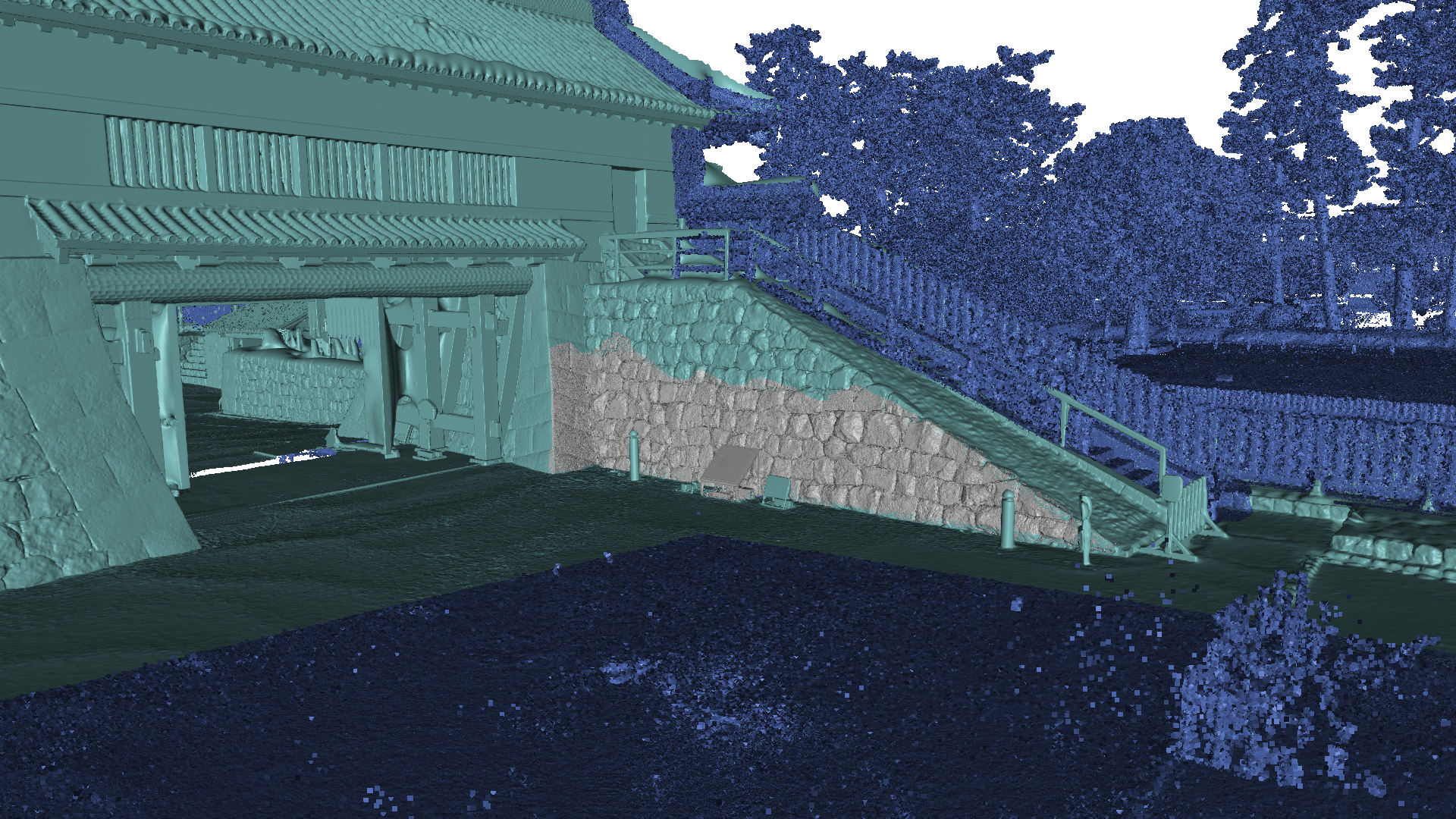
Artec Jet (dark blue), Artec Ray II (light blue), and Artec Leo (grey) point cloud data fused together for high detail on every scale.
Odawara Castle in Japan was built more than 500 years ago, and was fought over for generations due to its strong fortifications. But time hasn’t been too kind to the historic structure, though it was made a heritage site in 1938. So, while visiting the country on a recent trade mission, the Artec 3D team scanned and digitized the whole castle for heritage preservation and future restoration projects. In order to get every single detail, down to rivets on the gates, the team used not one, not two, but three of its scanners to accurately capture a single, high-density, interconnected point cloud. As the castle’s outer perimeter is 9 km long, and it was open to visitors, subtlety and speed were crucial in the 3D scanning process. The team used the Artec Ray II to scan the inner courtyard and gate, and the handheld Artec Leo for smaller details. But the lion’s share of the work was completed with the Artec Jet, which has a 300 m range and was attached to a backpack to scan the castle on foot; the scanner’s remote app offered real-time feedback, which helped with accuracy and speed. The data was sent via cloud sharing to Artec’s headquarters in Luxembourg to be processed in Artec Twins software, which enabled merging of data from all three scanners. The final dataset could be used for virtual tours, continuous monitoring, and even to create 3D models of the castle.
“Artec Jet scans in a linear fashion. If it takes you two minutes to walk, it’ll take two minutes to scan – the complexity of the scene has little bearing. In the same time it took for Leo to scan 2-3 walls, Ray II scanned a building, and Jet digitized an entire castle,” explained Artec 3D scanning expert Keynan Tenenboim. “Adding in Ray II & Leo was great for areas with accessibility issues – and capturing higher detail around the walls, gate, and courtyard.”
Subscribe to Our Email Newsletter
Stay up-to-date on all the latest news from the 3D printing industry and receive information and offers from third party vendors.
Upload your 3D Models and get them printed quickly and efficiently.