
When 3DPrint.com attended the PGA Show in Orlando this January, one booth stood out for a reason that had nothing to do with marketing hype or big-name tour pros — though Cobra has plenty of those, too. At the stand of Cobra Golf, the story was about something far more unusual in the golf world: fully 3D printed metal golf clubs.
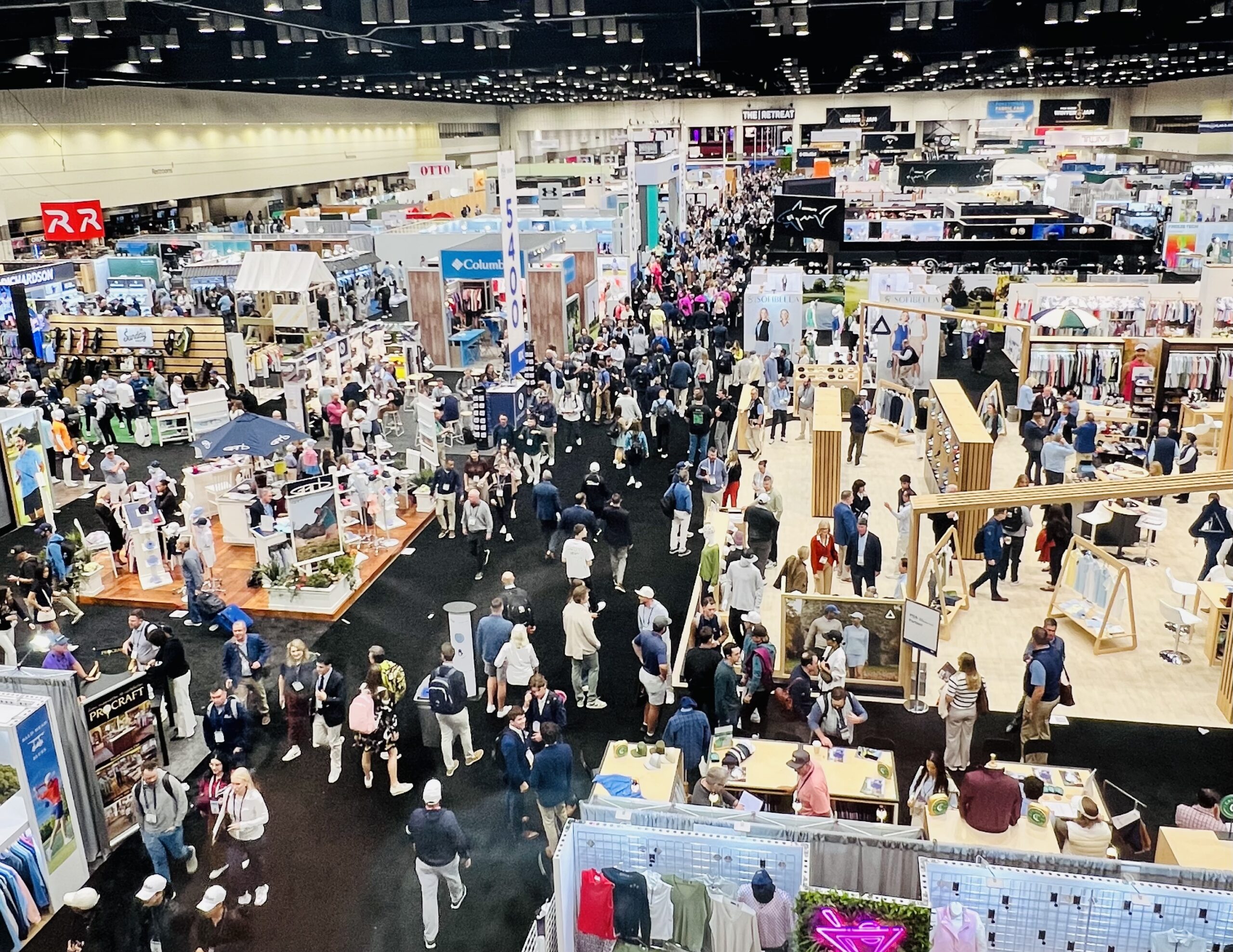
The PGA Show 2026. Image courtesy of 3DPrint.com.
Even after covering a large part of the massive PGA Show floor, 3D printing didn’t come up often. Companies like Callaway use it mostly for prototyping in R&D, and others like Avoda Golf experimented with printed clubs, but no one is pushing it into production quite like Cobra.
In fact, the company has been leaning into additive manufacturing in mainstream golf equipment. At the PGA Show, we spoke with Cobra’s Director of Innovation, Ryan Roach, about how technology is changing the way clubs are designed and why golfers are starting to notice.
“We launched the LIMIT3D Iron back in June of 2024,” Roach explained while showing the club’s internal structure. “Then we turned that into what is now the 3DP Tour iron. It did quite well for us, and because of that success, we’re growing the number of models we’re using 3D printing with.”
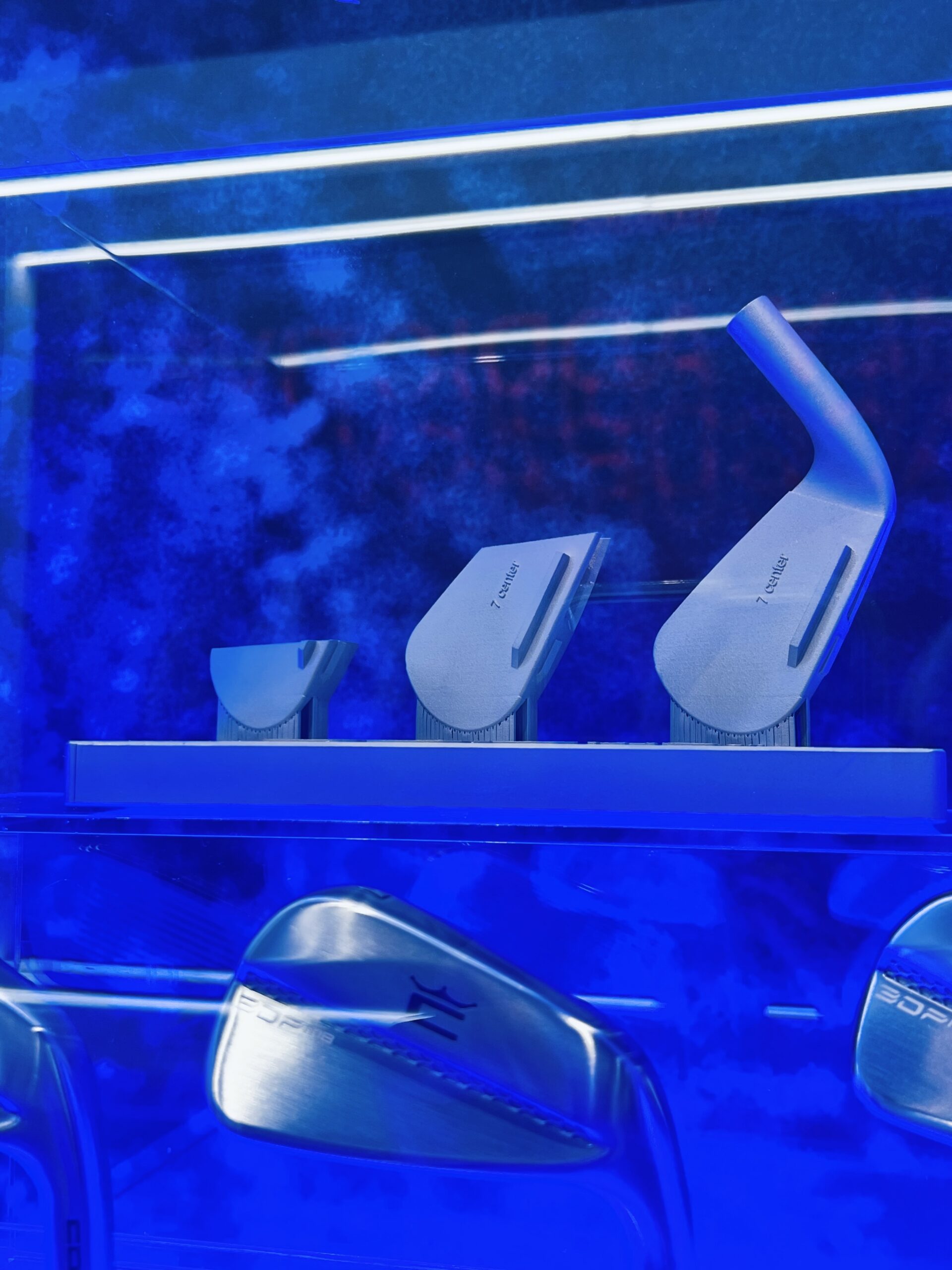
Cobra Golf’s 3D printed clubs at the PGA Golf Show 2026.
The atmosphere at the Cobra stand made it clear that the curiosity over the technology drew people in. The booth was packed, with people stopping to examine the clubs and ask questions about how they were made. Finding a quiet moment to look closely at the 3D printed irons was not easy. The clubs were displayed under glowing blue lights, alongside cutaway models that revealed the intricate lattice structures inside, something that can only be achieved with additive. Above a display of clubs, a large panel declared the booth the “home of 3D printing,” reinforcing the message that Cobra is leaning heavily into additive manufacturing as part of its future.
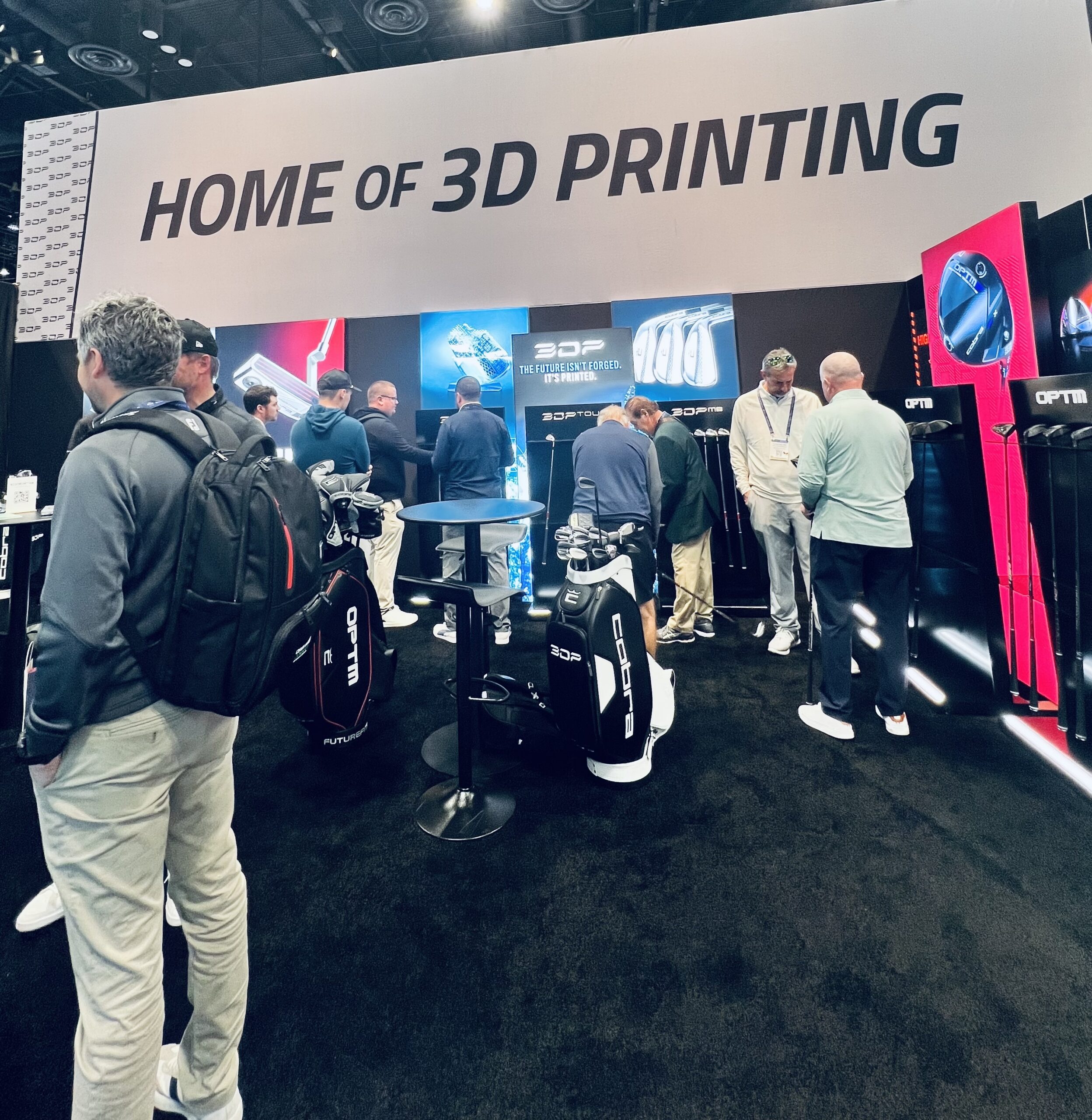
Cobra Golf’s stand at the PGA Golf Show 2026.
A Golf Club Built Around a Lattice
The key to Cobra’s approach is inside the club head. Instead of a solid interior, the company uses a complex 3D printed lattice structure that changes how weight is distributed.
“With us, we’re taking weight out of the inside and replacing it with that steel lattice,” Roach explained. “Then we reposition that weight while keeping the head size where we want it. This allows engineers to improve performance without increasing the club’s size. Normally, if you want something to be more forgiving, you make it bigger. But with the lattice structure, it’s more forgiving than it looks. It’s like a wolf in sheep’s clothing.”
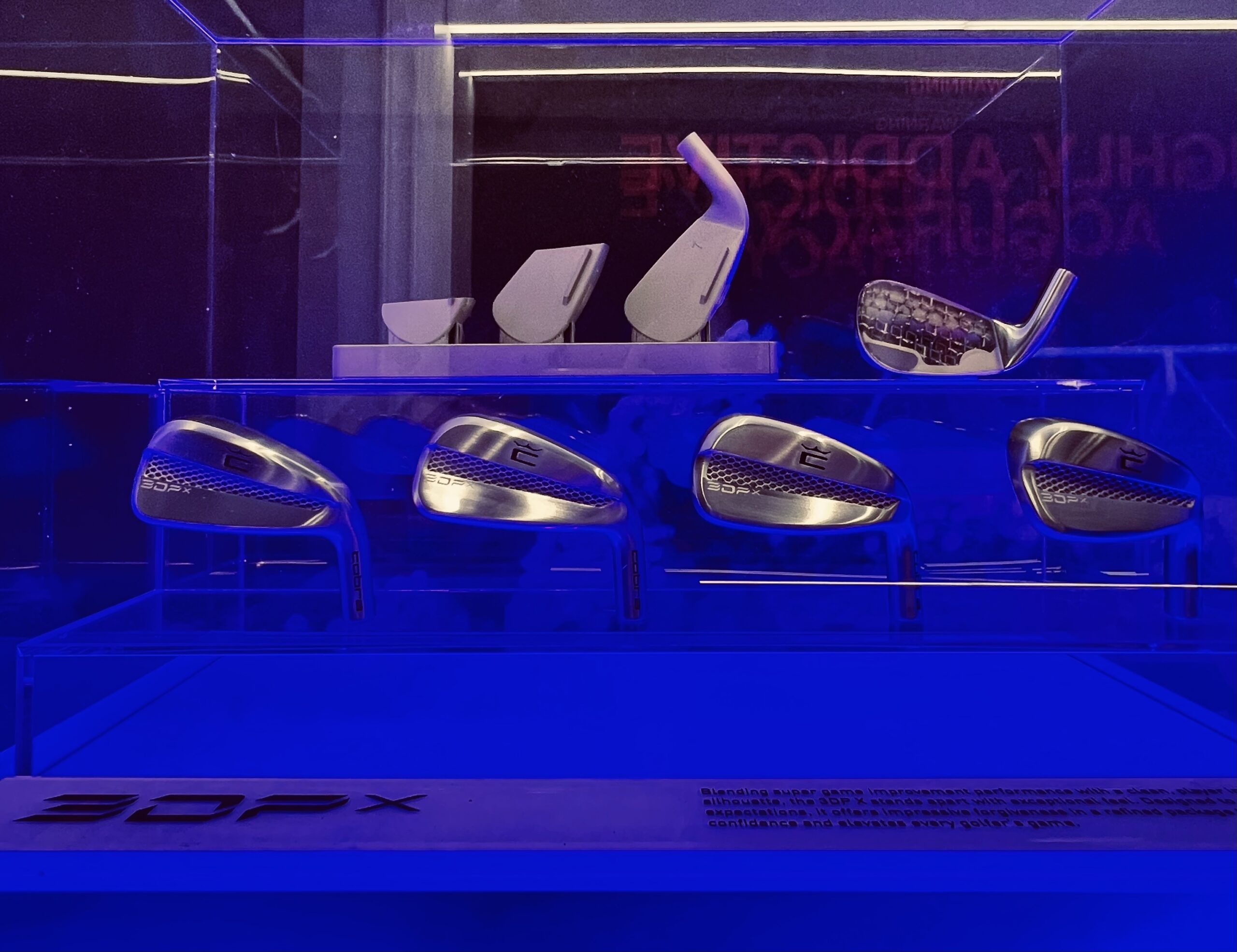
Cobra Golf’s 3D printed clubs at the PGA Golf Show 2026.
The clubs are printed in 316L stainless steel using laser powder bed fusion, a process that builds the part layer by layer from metal powder.
Each club head contains around 2,500 to 2,600 printed layers, and Cobra can produce 32 heads in about 24 hours using two build plates.
For a technology often associated with prototypes or hobby machines, the scale and precision are striking.
Faster Development, More Freedom
For Cobra’s engineers, one of the biggest advantages of additive manufacturing is the design freedom it offers.
Traditional golf club production relies on casting or forging, both of which require expensive tooling and long lead times. With 3D printing, that barrier disappears.
“The cool thing about 3D printing is there’s no tooling involved. The ability to go from design to part is so much faster. That speed also allows the company to experiment with customization for professional players. We can adjust a CAD model and just print it,” he explained. “That’s opened up new ways we can help our tour players.”
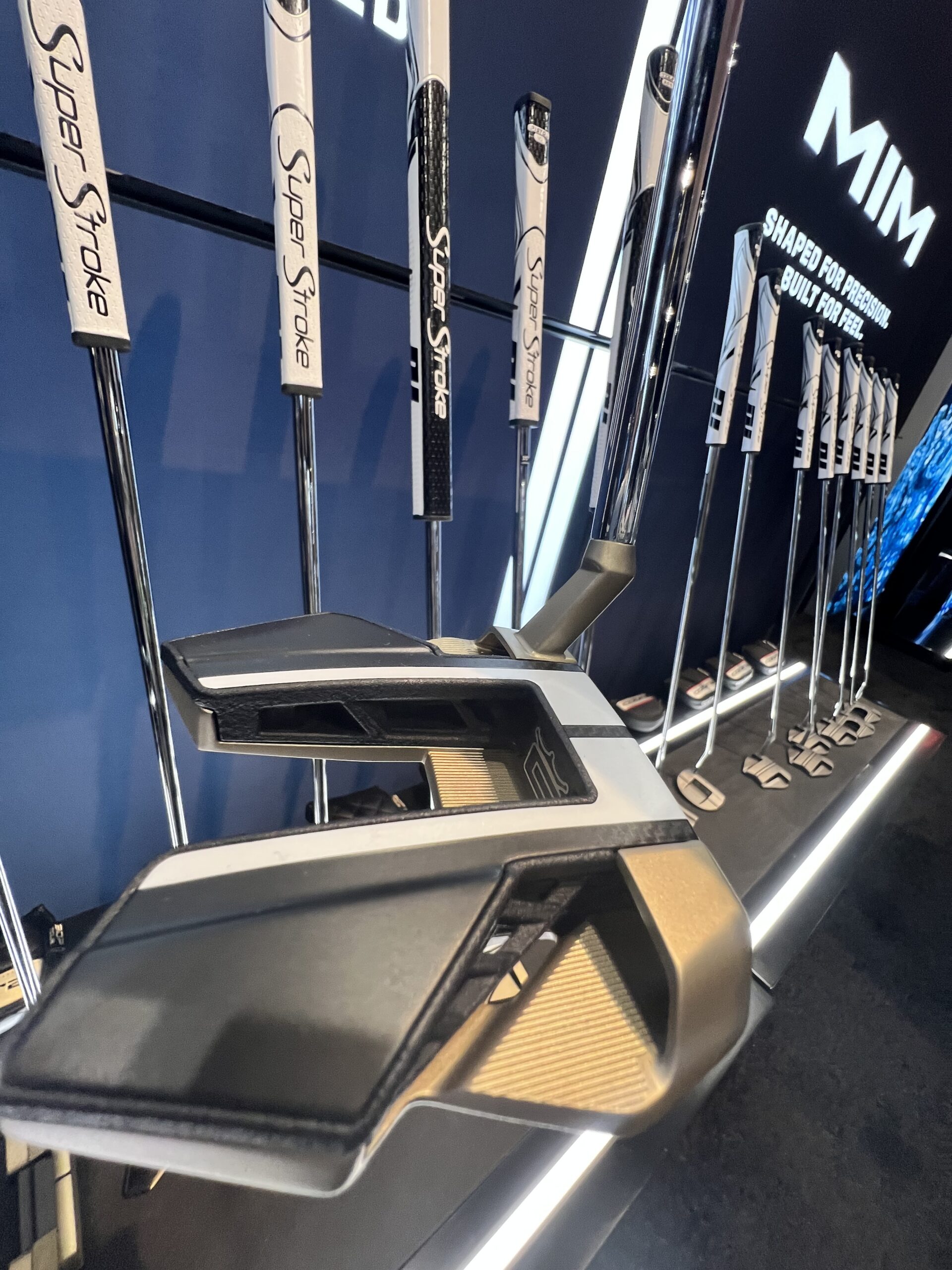
Cobra Golf’s clubs at the PGA Golf Show 2026.
The technology is not just experimental. Cobra says professional golfers have already begun adopting the clubs.
“When we first launched the LIMIT3D Iron, one of our European Tour players, Ángel Hidalgo, immediately put them in the bag,” Roach said. “A few months later, he won the Spanish Open. Other players have followed. Max Homa loved them so much that it helped convince him to join Cobra,” Roach said. “And Rickie Fowler recently put a set of 3D-printed irons into play as well. That kind of validation matters in a sport where equipment changes are often slow and cautious.”

Cobra Golf’s 3D printed clubs at the PGA Golf Show 2026.
The lattice inside the club head does more than just look futuristic and quite beautiful; it fundamentally changes how the club performs. Because the structure removes material from the center, engineers can move that saved weight to more strategic locations, such as tungsten inserts in the sole and toe.
“The difference in weight between a solid head and the lightweight lattice structure is what we are able to reposition in the head to drive performance. The structure also allows Cobra to create thinner club faces, while still maintaining strength and feel. We can make a pretty thin face, but the lattice supports it,” he noted. “That helps keep it stiff and gives it a solid feel.”
Expanding the Technology
Cobra first tested the market in June 2024 with a limited run of 500 sets of its LIMIT3D irons, one of the earliest commercially available metal 3D printed iron sets in golf. The positive response surprised even the company. But what began as a limited experiment quickly turned into a broader product strategy, explained Roach. The success of the LIMIT3D helped pave the way for Cobra’s KING 3DP Tour irons, which turned the concept into a full product line and brought it to more golfers.
“We started with that limited offering, and it went very well. So we’re making more and increasing the distribution so more golfers can experience them. Today, we offer multiple models using the technology, ranging from clubs aimed at elite players to designs for more everyday golfers.”
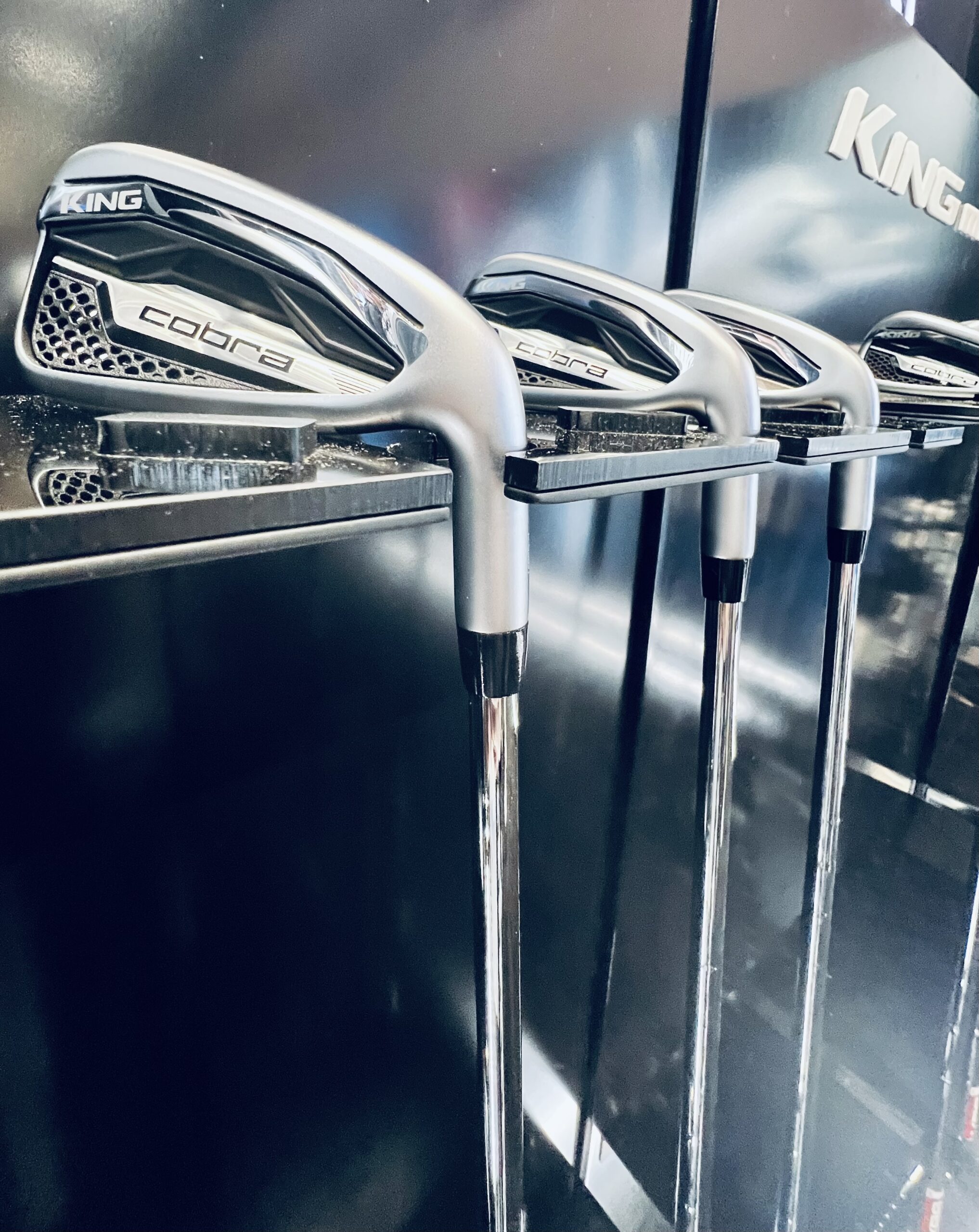
Cobra Golf’s clubs at the PGA Golf Show 2026. Image courtesy of 3DPrint.com.
Despite the impressive engineering, Roach says part of the challenge has simply been educating golfers about what modern additive manufacturing can do: “When people think of 3D printing, sometimes they think of a hobby printer. But this is industrial-grade manufacturing. It’s used in aerospace, in medical, in high-performance parts.”
In golf, the product’s visibility helps tell that story. Unlike many industrial applications of AM, these clubs are something players hold in their hands, look at before every shot, and talk to other golfers about.
“This isn’t a part inside an aircraft that no one ever sees,” Roach said. “This is something you hold in your hand every weekend.”

Cobra Golf at the driving range at the PGA Show 2026.
Cobra believes additive manufacturing could eventually influence every club in a golfer’s bag.
A typical golf set contains 14 clubs, from driver to putter. Roach says the company sees opportunities across the entire lineup.
“Our vision is that this technology could have a place in every club in the bag. For now, we continue to expand the line while working to reduce costs and bring the technology to more players. But after seeing the response at the PGA Show, it’s clear that 3D printing is no longer just a prototype tool in golf; it’s becoming part of the game itself. We just have to keep telling the story,” Roach concluded. “The golfing world is still discovering it.”

The Cobra Golf stand at the PGA Show 2026. Image courtesy of 3DPrint.com.
Images courtesy of 3DPrint.com
Subscribe to Our Email Newsletter
Stay up-to-date on all the latest news from the 3D printing industry and receive information and offers from third party vendors.
Upload your 3D Models and get them printed quickly and efficiently.