
Conflux Technology’s 3D printed transmission oil cooler took to the track on a Multimatic Motorsports car; this story kicks off today’s 3D Printing News Briefs. Then, MIT researchers developed a platform for 3D printing complex electric machines. Finally, Stryker introduced a 3D printed orthopaedic implant, and a global engineering nonprofit launched an NYC innovation center for assistive technology.
Conflux’s 3D Printed Configurable Oil Cooler for Multimatic-Engineered Car
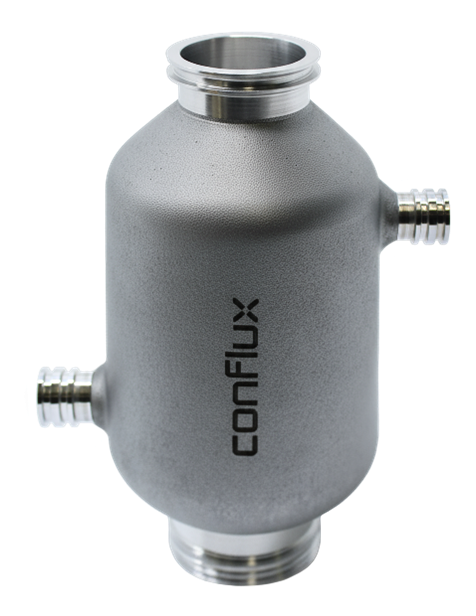
Conflux oil cooler used in a full-distance endurance race on a Multimatic-engineered car
Heat transfer technology leader Conflux Technology announced that a 3D printed, configurable transmission oil cooler it made for Multimatic Motorsports recently completed a full-distance endurance race. The cooling unit was adapted to specific boundary conditions using Conflux’s configurable design platform, and fabricated using metal AM in just two weeks for use on a Multimatic-engineered car. The compact cooler’s core increases heat transfer and controls pressure drop through the use of highly optimized internal channels, and uses engine coolant to manage oil temperatures in the gearbox within a shared water circuit. In addition to offering increased reliability, performance, and time-to-track, the 3D printed oil cooler also delivered about 20% higher heat rejection than an existing solution within the same packaging envelope. Conflux’s design platform makes it possible for engineers to quickly tune geometry for different gearboxes, duty cycles, and layouts, and this configurable oil cooler architecture is now available for other OEMs and top-level race operations to use.
“Endurance racing is the ultimate test for any cooling system. We’ve shown that our configurable, 3D-printed technology can move from design to race car in weeks, deliver significantly improved performance, and still be trusted to reach the finish line in some of the world’s toughest races,” said Glenn Rees, Principal Engineer at Conflux Technology.
MIT Researchers 3D Printing Complex Electric Multimaterial Machines

MIT researchers developed a 3D printing platform that can utilize multiple functional materials to fully print a complex electronic device, like an electric linear motor, in a matter of hours. Image: Courtesy of the researchers
A team of researchers from MIT are working to democratize the manufacturing of complex devices with a new multimaterial 3D printing platform that can supposedly fabricate a functioning linear motor in three hours. If a motor in an automated machine breaks, and engineers can’t quickly find a replacement part, expensive production delays can ensue. Instead of ordering one from a distributor, it would be better to make a new motor onsite, which is where MIT’s material extrusion system could potentially come into play. Most multimaterial extrusion systems can only switch between materials that come in the same form, like pellets or filaments, so the researchers had to make their own, designing each extruder to balance the limitations and requirements of the different materials used. Using four switchable extrusion tools, the team’s platform can process multiple functional materials, including magnetic and electrically conductive ones. They tested the platform by printing a linear motor, which is used in applications like baggage conveyors and pick-and-place robotics.
“This is a great feat, but it is just the beginning. We have an opportunity to fundamentally change the way things are made by making hardware onsite in one step, rather than relying on a global supply chain,” said Luis Fernando Velásquez-García, a principal research scientist in MIT’s Microsystems Technology Laboratories (MTL) and senior author of a paper describing the 3D printing platform. “With this demonstration, we’ve shown that this is feasible.”
Stryker Introduces 3D Printed Orthopaedic Implant at AAOS Annual Meeting

At the recent American Academy of Orthopaedic Surgeons’ (AAOS) 2026 Annual Meeting in New Orleans, medical technology leader Stryker introduced the latest additions to its Triathlon Total Knee System. This included Triathlon Gold, the company’s first commercially available femoral component. No stranger to metal AM, the orthopaedic implant is 3D printed, but was specifically designed for patients who have metal sensitivity concerns. Triathlon Gold features a titanium nitride surface and Triathlon cementless technology, and was designed to enable fixation and long-term durability with superior scratch resistance. In addition to the Triathlon Gold implant, Stryker also launched the Triathlon Media Stabilised (MS) Insert. While this device is not 3D printed, it’s supposed to “allow customers to leverage the advantages of Mako SmartRobotics and Triathlon Cementless technologies” and offer better stability for Triathlon primary knee patients.
“With more than 20 years of proven outcomes, the Triathlon system has set a high standard in knee replacement. Triathlon Gold and the Triathlon Medial Stabilized (MS) Insert represent the next evolution of that legacy – solutions shaped by customer insight and designed to meet the evolving needs of patients,” said Lisa Kloes, Vice President and General Manager of Stryker’s Knee business.
Nonprofit Medical Device Platform Launches Innovation Center in NYC
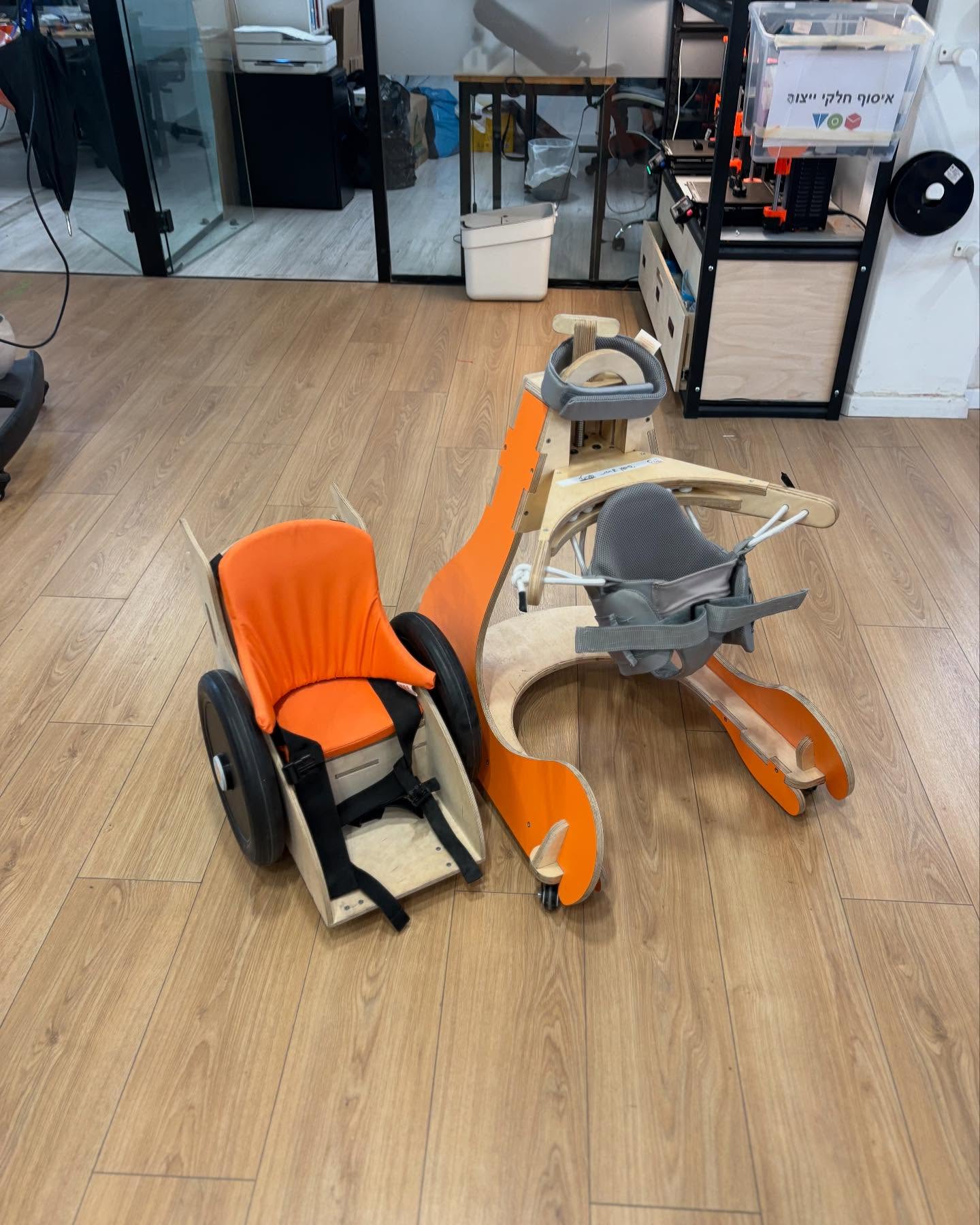
Image courtesy of TOM via Facebook
Tikkun Olam Makers (TOM) is an American and Israeli nonprofit movement for accessible, open source assistive technology. It recently announced the opening of a New York innovation center, TOMIC NYC, which will be a strategic US hub for the organization’s product development, community engagement, and distributed manufacturing. In Hebrew, Tikkun Olam means “repair the world,” which is what TOM is trying to do by creating the world’s largest portfolio of open source solutions for assistive technology. One of its core principles is “frugal innovation,” and thousands of volunteers have collaborated to create open source, customizable solutions, like prostheses and mobility devices, that are affordable, effective, and easy to replicate, typically using desktop 3D printing. The goal is to lower the cost of these solutions and make them globally available. Joining TOMIC TLV in Tel Aviv, the new TOMIC NYC will be the organization’s second international innovation center, and will specialize in “last-mile product-development of open-source solutions.”
“The objective of TOMIC NYC is to help millions of people, including Americans across the U.S. and from New York. The TOM Innovation Center in Israel developed a unique methodology to ensure affordability and accessibility of our open-source solutions. Moving forward, TOMIC NYC will be the hub and cornerstone of our operations in the Tristate Area and for serving all Americans. We will bring together designers, engineers, care professionals, students and local makers to develop affordable assistive technologies faster and share them wider,” stated Gidi Grinstein, the Founder and President of TOM.
Subscribe to Our Email Newsletter
Stay up-to-date on all the latest news from the 3D printing industry and receive information and offers from third party vendors.
Upload your 3D Models and get them printed quickly and efficiently.